A retaining wall is structural work, not decoration
Retaining walls do a real job. They hold back a slope, manage a grade change, stop erosion, and turn ground you cannot use into ground you can. On the rural and hillside lots common across Tooele County, they are often the difference between a back yard and a bank.
That means the parts you cannot see matter more than the parts you can. Almost every failed wall we get called to look at failed for one of two reasons: an inadequate compacted base under the first course, or no proper drainage behind the face. Water collecting behind a wall creates hydrostatic pressure, and that pressure pushes walls out, bulges them and eventually takes them down. It is not a slow, forgiving process.
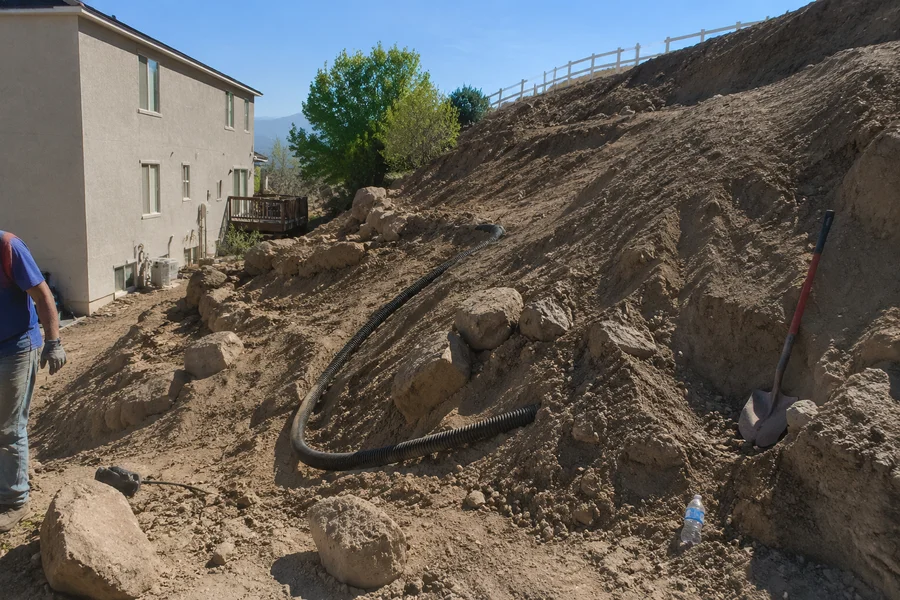
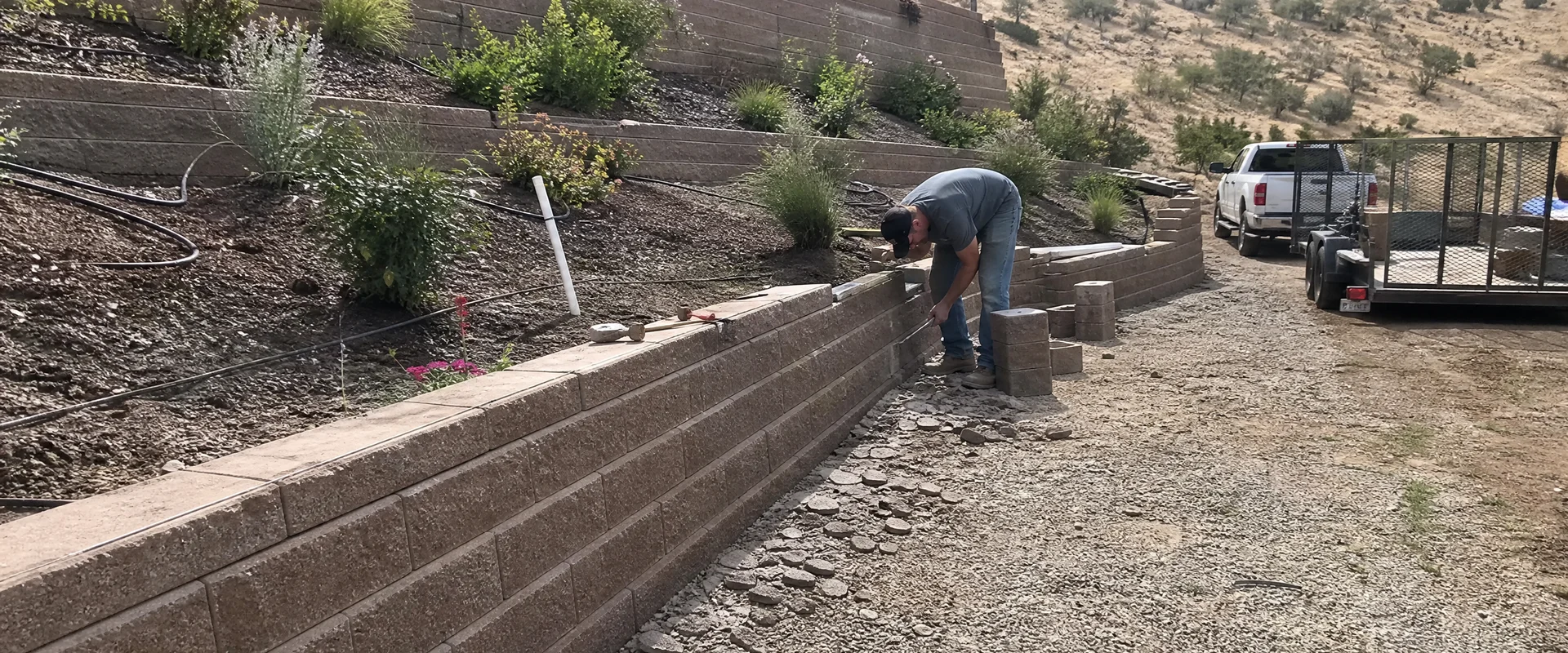
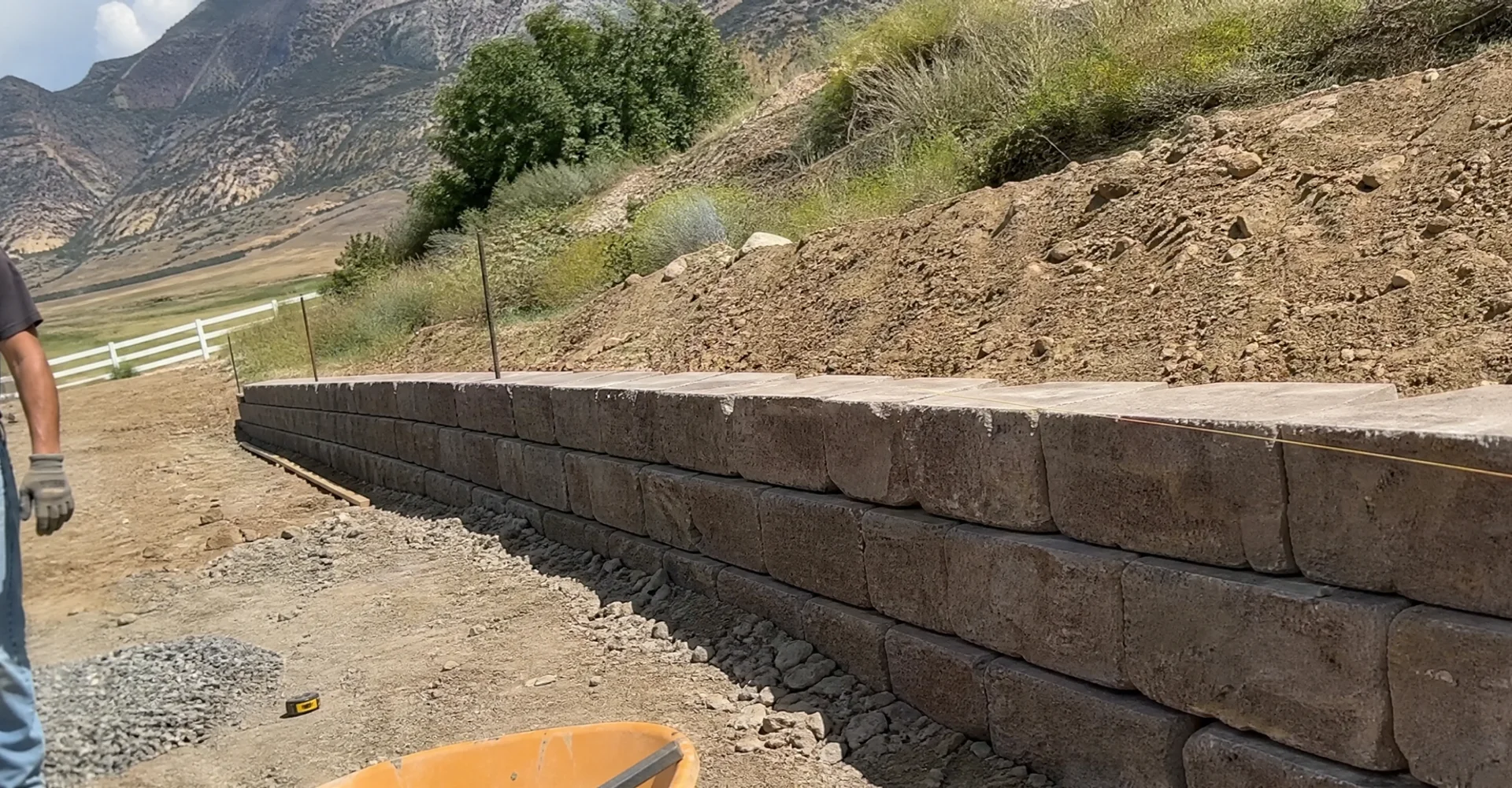
So every wall we build gets a properly excavated and compacted road-base footing, clean drain rock backfilled behind the face, perforated drain tile at the base to carry water away, filter fabric so fines do not clog the rock, and geogrid reinforcement where the height calls for it. Weep holes let anything remaining escape through the face rather than build up.
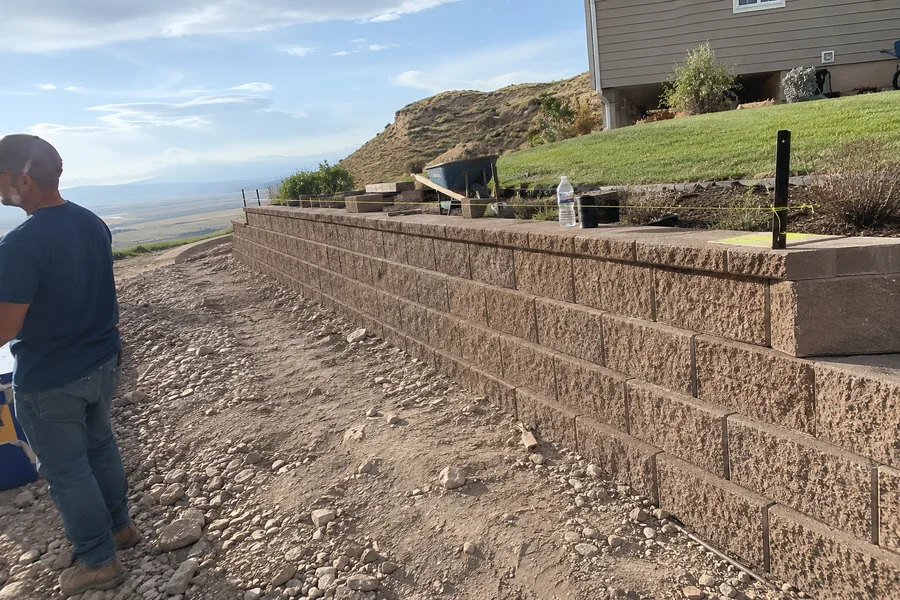
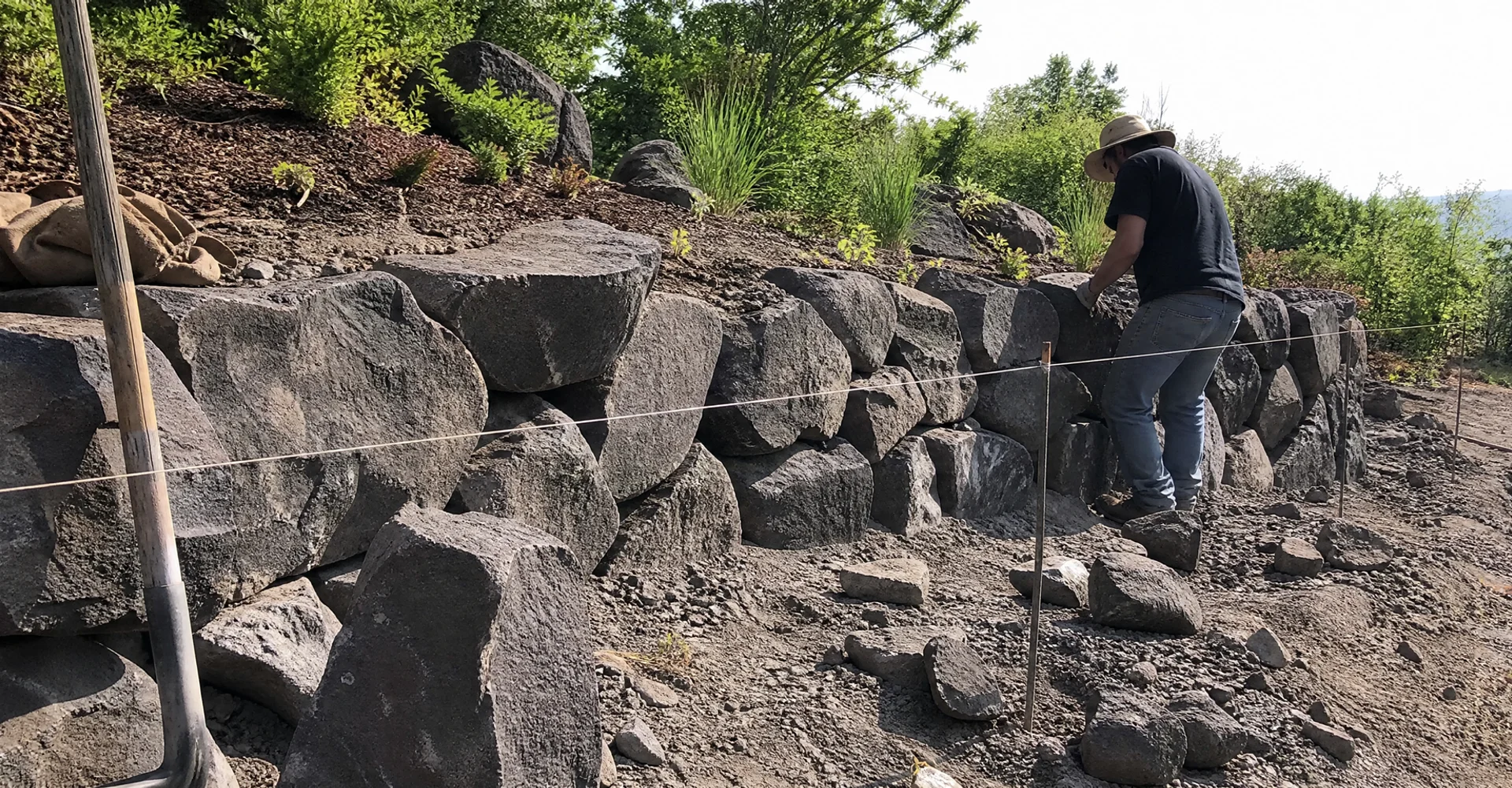
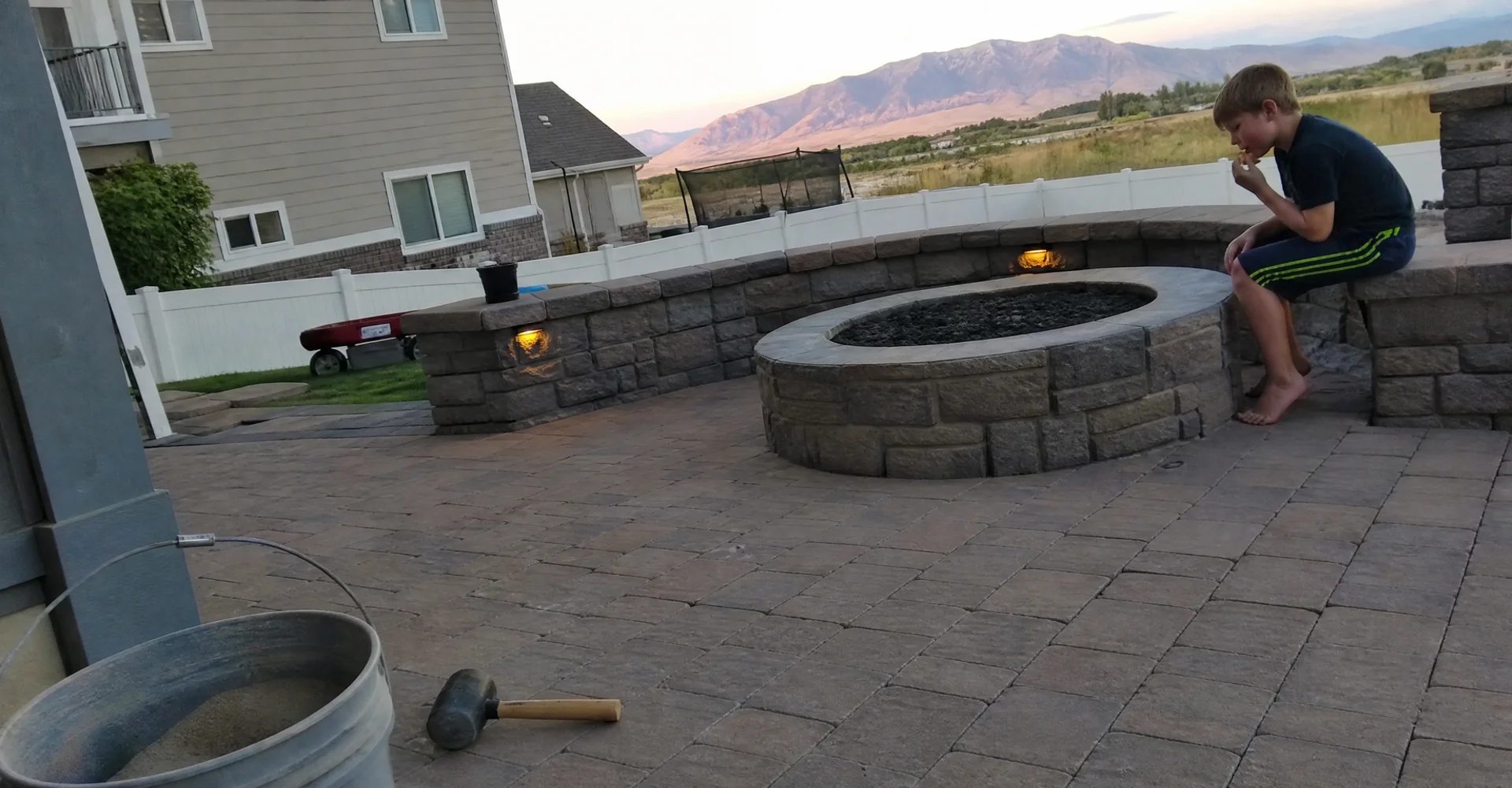
We build segmental block, boulder and natural stone. Block is usually the most cost-effective at standard heights and gives clean, uniform lines. Boulder and fieldstone suit rural and hillside properties in Erda, Pine Canyon and up on the benches, where manufactured block can look imported. We will walk you through the trade-offs rather than pushing whatever we have in stock.
What’s included
- Site assessment: grade change, soil, water paths and access
- Excavation and compacted road-base footing
- Wall construction with correct batter and course alignment
- Clean drain rock envelope and filter fabric
- Perforated drain tile at the base with a safe outlet
- Weep holes through the wall face
- Geogrid reinforcement where height requires it
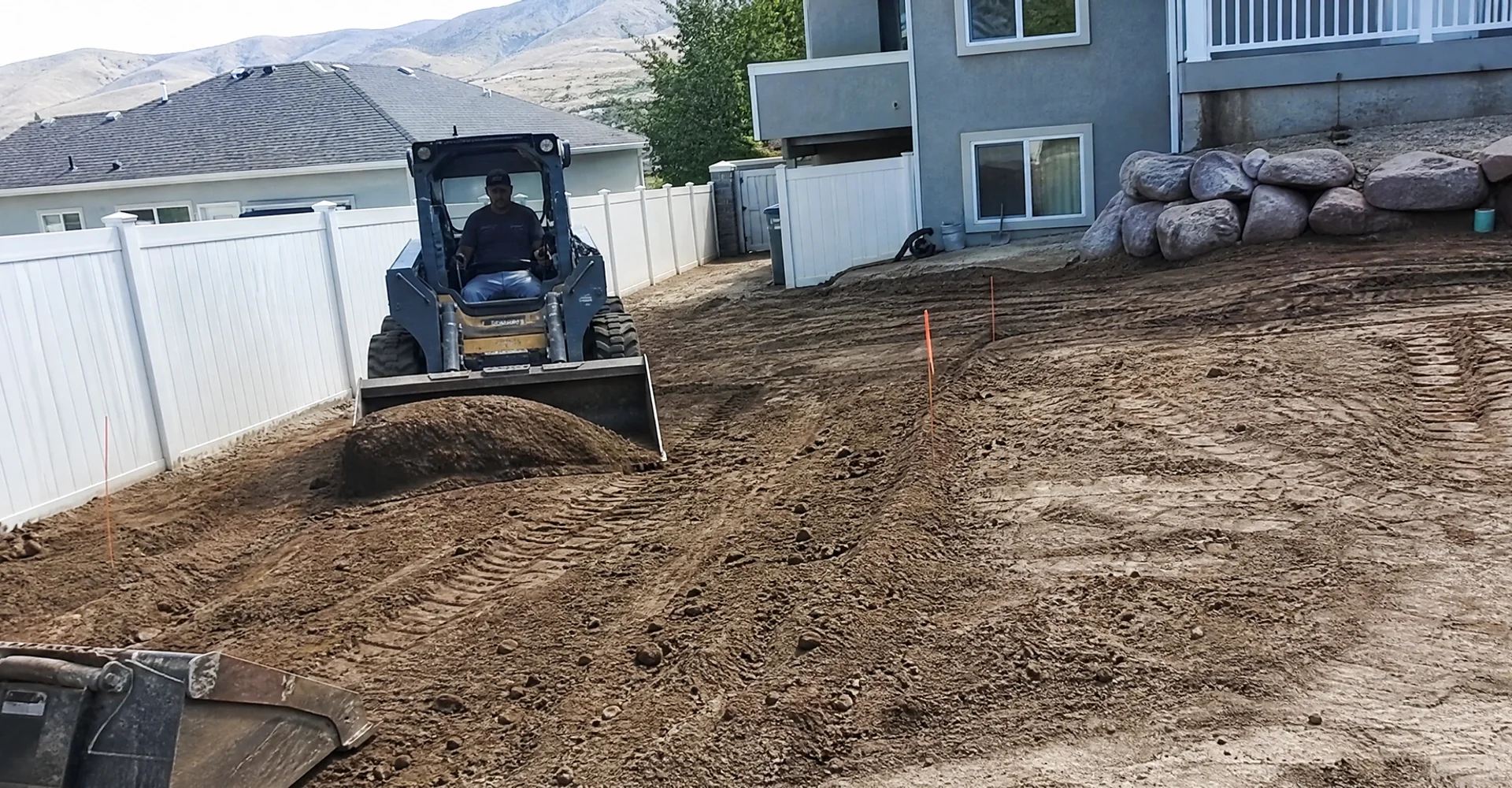
- Compacted backfill, cap course and finish grading above and below
Common problems we solve
A slope that keeps washing out
Every storm takes a bit more soil down onto the patio, the driveway or the neighbour’s lot. A wall combined with proper grading and planting stops the movement instead of managing it annually.
Half a back yard you cannot use
A steep bank behind the house is dead space. Terracing it into stepped levels with planting between usually recovers more usable area than a single tall wall, and costs less to engineer.
Water pooling against the foundation
If the ground falls toward the house, no wall on its own solves it. We correct the grade, cut a swale where runoff concentrates, and use the wall to hold the new profile.
An old wall that’s bulging or leaning
Almost always drainage. Sometimes a section can be rebuilt; sometimes the whole wall has to come out. We will tell you which and why, and we do not pretend a failing wall is cosmetic.
What affects the price
- Wall height: the dominant factor, since height drives base depth, drainage and reinforcement
- Wall length and total square feet of face
- Material: segmental block, boulder or natural stone
- Access. Whether machinery and material can reach the work area
- Excavation conditions: rock, existing structures, utilities
- Engineering where height or loading requires it
- Grading and drainage work around the wall
A dramatically low bid on a retaining wall almost always means the drain rock, drain tile or geogrid has been left out. Those are the components that keep the wall standing, and they are the expensive things to add back after a failure.
Where we build
Retaining walls are steady work for us across Erda, Tooele, Grantsville, Pine Canyon and the benched lots in Bountiful and Park City, plus scheduled runs into West Jordan and Herriman.
Our guides cover when a yard needs a retaining wall, retaining wall materials compared, how retaining wall drainage works, and what a retaining wall costs in Utah.