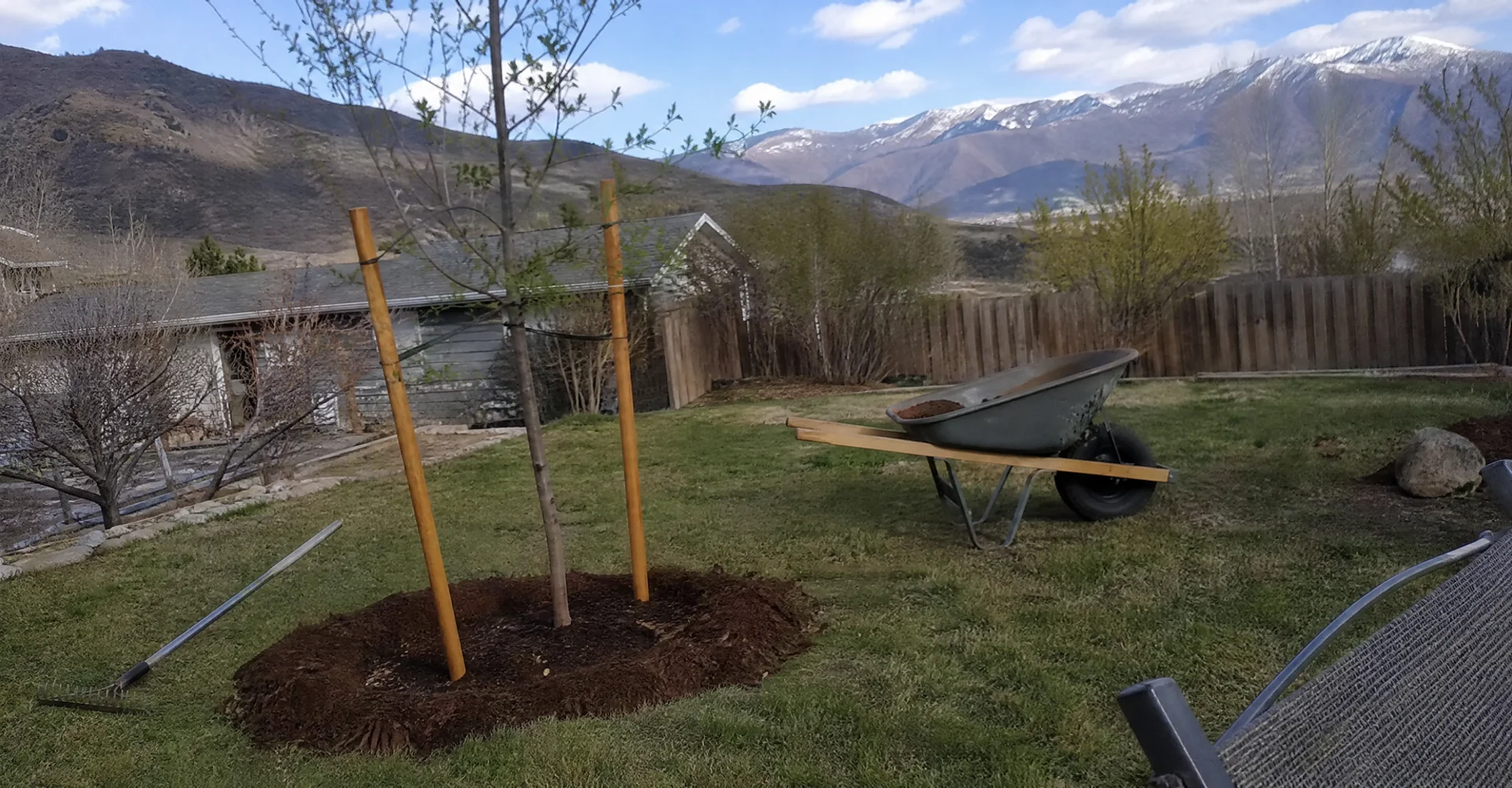
The right tree, in the right place, planted properly
A tree is the longest-lived thing you will put in a yard. Get the species and the position right and it adds shade, privacy, wind protection and property value for decades. Get them wrong and you are either watching something decline for three years or paying to remove it later because its roots found the driveway.
We handle selection, placement and installation for trees, shrubs and perennials across the Tooele and Salt Lake valleys. Selection starts with conditions, not catalogues: alkaline soil, Zone 6 and 7 winters, dry summers, and, depending where you are, serious wind. Lake Point sits where the valley funnels air through, Eagle Mountain is high and open, and rural Erda lots have nothing to break it. Those sites need tougher species and proper staking through the first season.
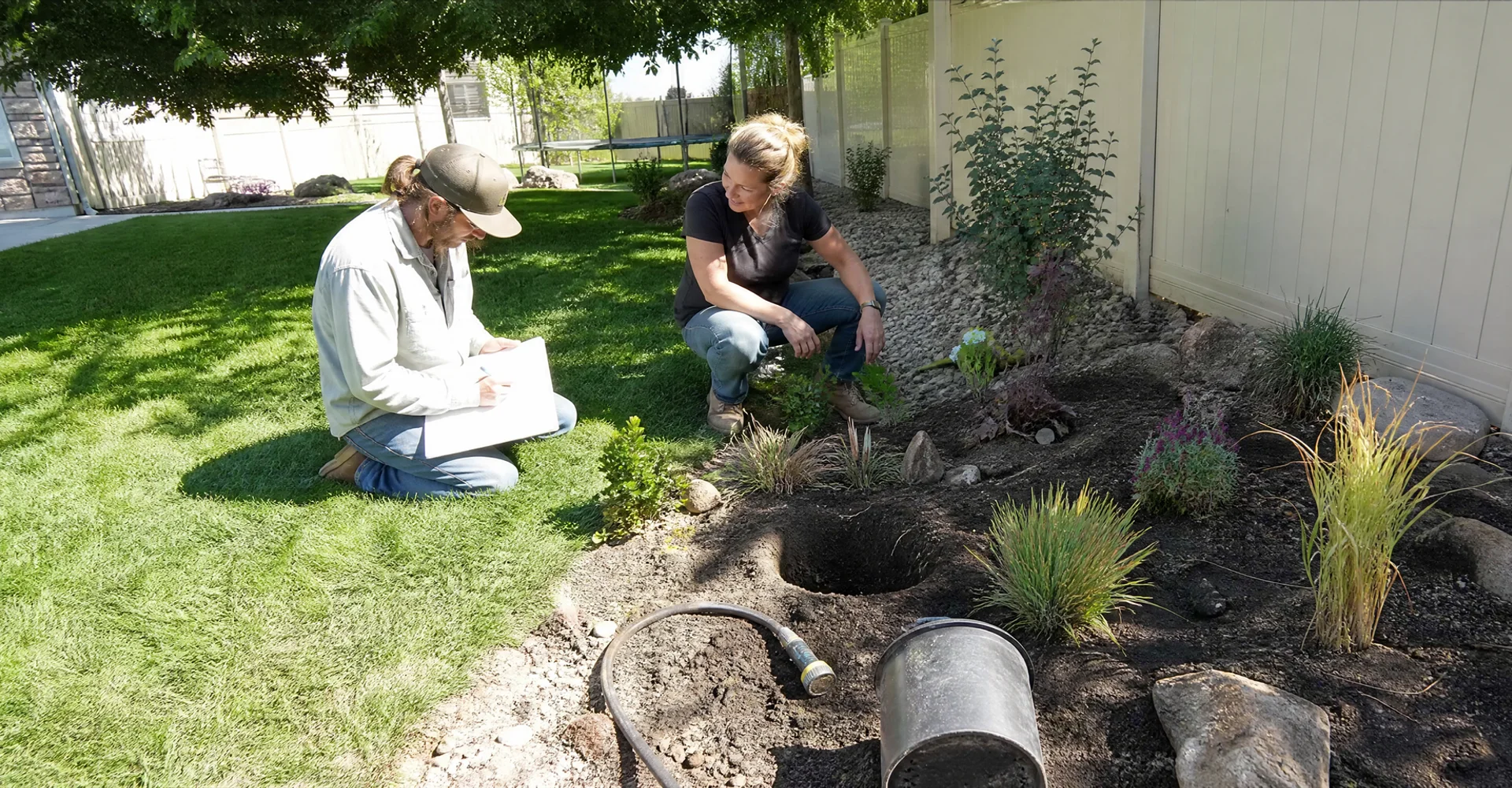
Placement is the other half. We check mature canopy width and root spread against your house, driveway, fence line, septic and utility runs before anything gets planted. A sapling that sits comfortably three feet off the drive today is a problem in fifteen years.
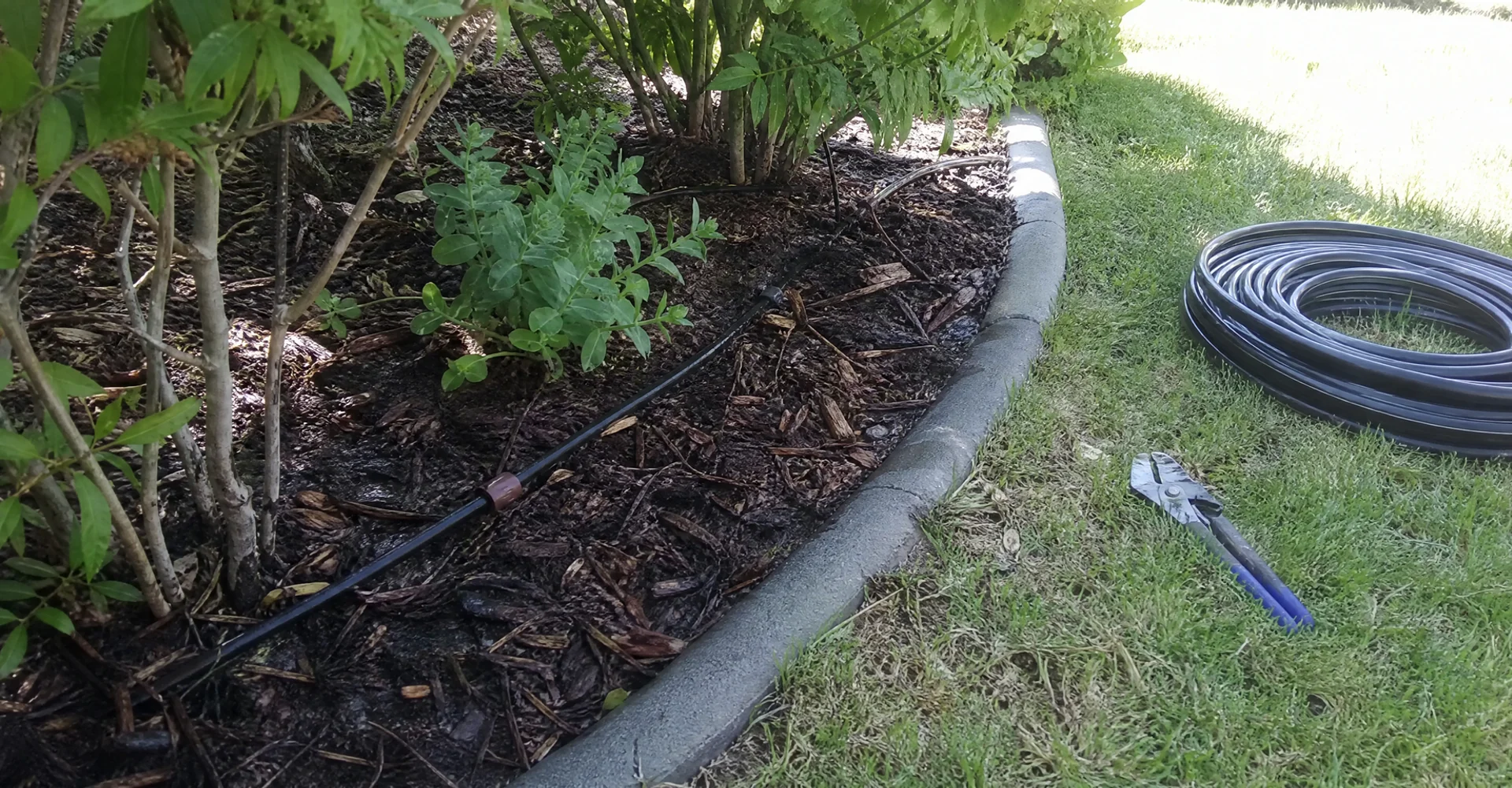
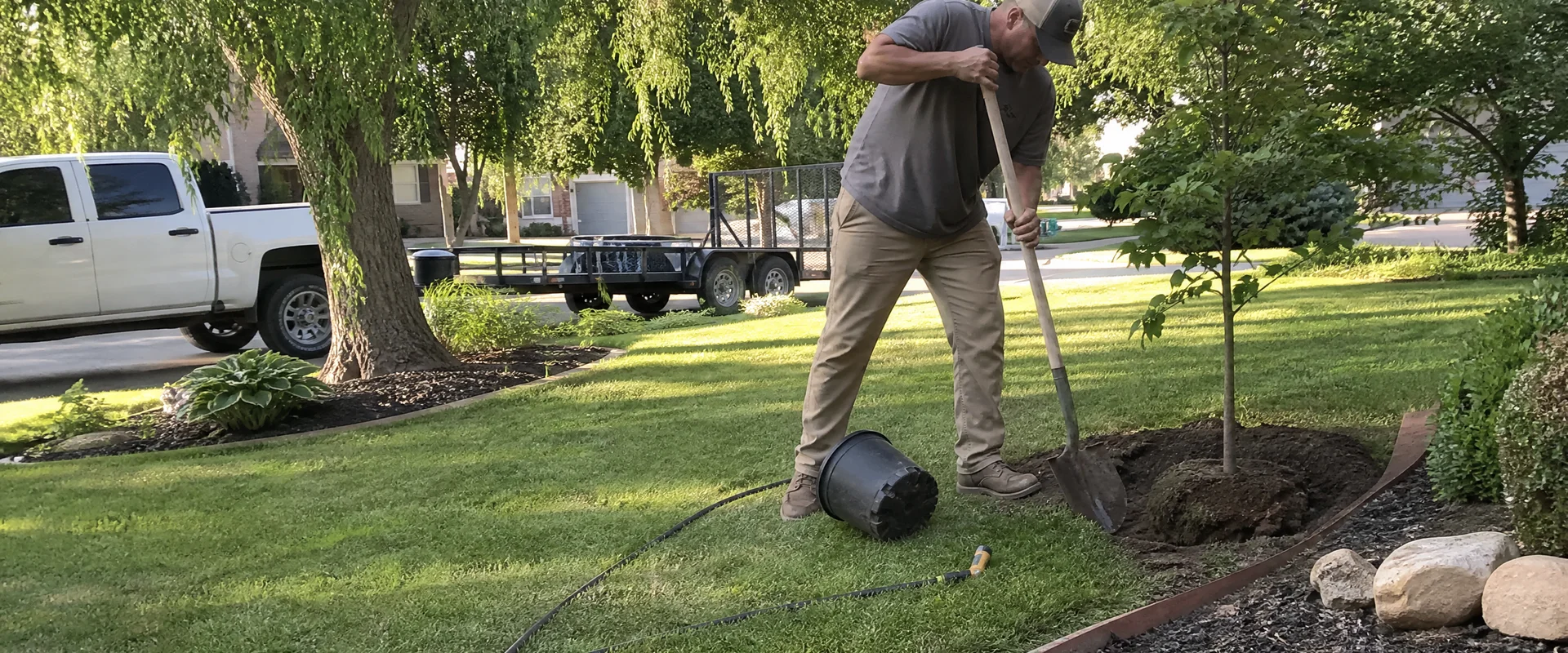
Then the actual planting. Holes sized for the root ball rather than dug to fit, soil amended where our ground needs it, set at the correct depth, backfilled and settled, mulched with a ring that does not pile against the trunk, and given its own drip emitter sized to the plant rather than a share of the lawn’s spray schedule. That last detail decides a surprising share of survival outcomes.
What’s included
- Site assessment: sun, wind, soil, space and utilities
- Species selection matched to your conditions and goals
- Bed preparation and soil amendment, not just hole digging
- Correct planting depth, backfill and settling
- Staking where wind exposure requires it
- Mulch ring or decorative gravel finish
- Drip emitters sized per plant where irrigation exists
- A written first-season establishment and watering plan
Common problems we solve
Plants that keep dying in the same spot
Usually the wrong species for the soil, a hot dry microclimate nobody accounted for, or a bed being watered on a turf schedule. All three are fixable, and none of them are the plant’s fault.
A tree leaning permanently after one windy season
Unstaked young trees on exposed lots set a lean that never fully corrects. Proper staking through the first season, then removing the stakes on time, prevents it.
Nothing to break the wind
Rural and high-desert lots take a beating. A well-placed evergreen row does more for the rest of the landscape than any single ornamental will.
Mulch piled against trunks
A common DIY mistake that traps moisture against the bark and invites rot. We build proper rings with the flare left exposed.
What affects the price
- Species and size at planting. Larger stock costs considerably more
- Quantity of trees, shrubs and perennials
- Bed preparation and how much amendment the soil needs
- Mulch or decorative gravel over the finished beds
- Drip emitters added or extended for new planting
- Access and whether machinery is needed for larger stock
Where we plant
Planting work runs across Grantsville, Tooele, Erda, Lake Point and Stansbury Park, with scheduled runs into Eagle Mountain, Herriman and South Jordan.
Our guides go further on the best trees to plant in the Tooele and Salt Lake valleys, when to plant trees in Utah, and what mulching costs and whether it’s worth it.