
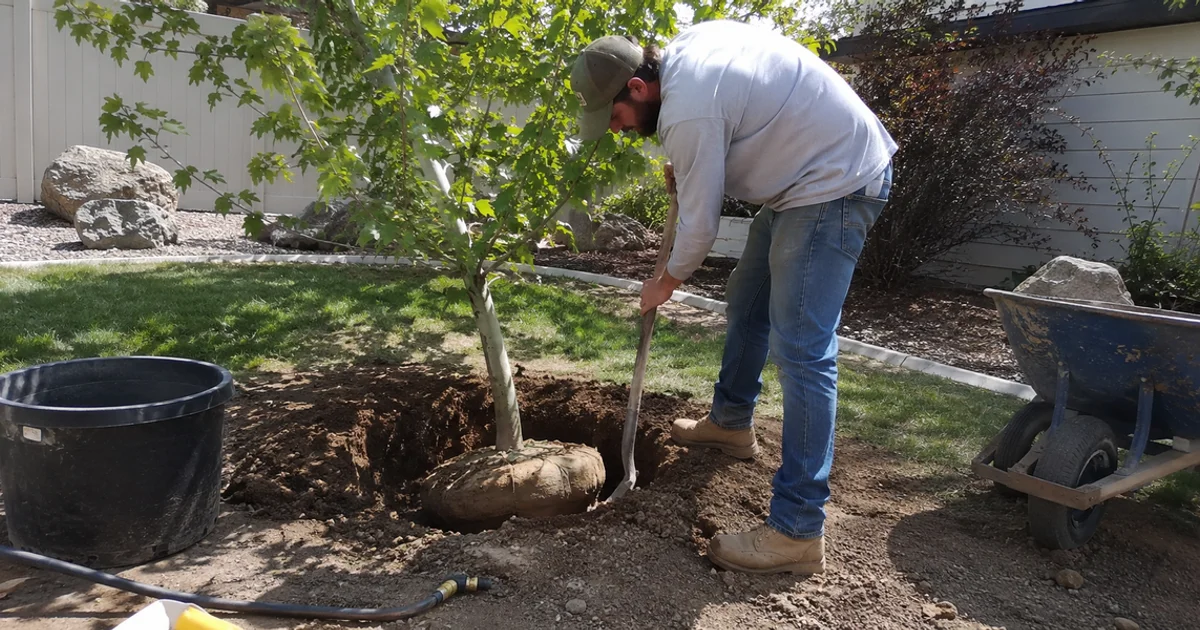
The short answer
Fall and spring are both good. Fall has a slight edge for root establishment; spring has the edge if you want visible growth in the same year. Summer is workable with discipline. Deep winter, when the ground is frozen, is the one window that genuinely doesn’t work.
That’s the whole answer, but the reasoning behind it changes how you water and what you should expect, so it’s worth understanding for any tree and plant installation project.
Why fall works well here
When you plant in fall, air temperatures are dropping but soil stays warm for weeks afterward. Trees respond by putting energy into roots rather than leaves, because there’s no top growth to support. Cooler air also means far less water lost through foliage, so the tree isn’t fighting to keep up.
By the time the following summer’s heat arrives, a fall-planted tree has had months of root development plus a full spring. That’s a meaningful head start, and it’s why fall planting is often recommended for our climate.
The caveat is timing within the season. Plant late enough that the ground freezes before roots establish and you get the disadvantages of winter dormancy with none of the benefits. Earlier in fall is better than later.
Why spring also works
Spring planting gives the tree the entire growing season ahead of it. You see leaf growth and visible progress the same year, which matters if you’re planting for shade or screening and want to feel like something is happening.
The trade-off is that the tree has to establish roots and support new foliage at the same time, and it hits its first summer with less root system than a fall-planted tree would have. That means the watering through that first summer is doing more work.
Early spring, once the ground is workable but before serious heat, is the sweet spot.
Summer planting
We do it, and it’s fine, but the margin for error narrows considerably. A newly planted tree in July has a limited root system trying to supply a full canopy in high heat and low humidity. Miss a couple of watering cycles and you can lose it.
If you’re planting in summer: water more frequently, mulch properly to hold soil moisture and moderate temperature, and consider some temporary shade for particularly exposed positions.
The real determinant isn’t the season
It’s the first-season watering. A well-watered summer planting outperforms a neglected fall planting every time. Season sets the difficulty; care decides the outcome.
First-season watering, in practice
The goal is consistent moisture at the root ball and just beyond it, encouraging roots to extend outward into surrounding soil.
- Water deeply rather than frequently. Short daily sprinkles keep roots shallow and dependent.
- Aim at the root ball and out to the drip line, not the trunk.
- Taper frequency as the season progresses while keeping depth.
- Keep it up through the whole first season, not just the first month.
- Continue into the first fall so the tree goes into winter with moisture available.
If the tree is on irrigation, it wants its own drip emitters sized for a tree, not a share of the lawn’s spray schedule. That’s a design detail that decides a lot of outcomes.
Mulch and staking
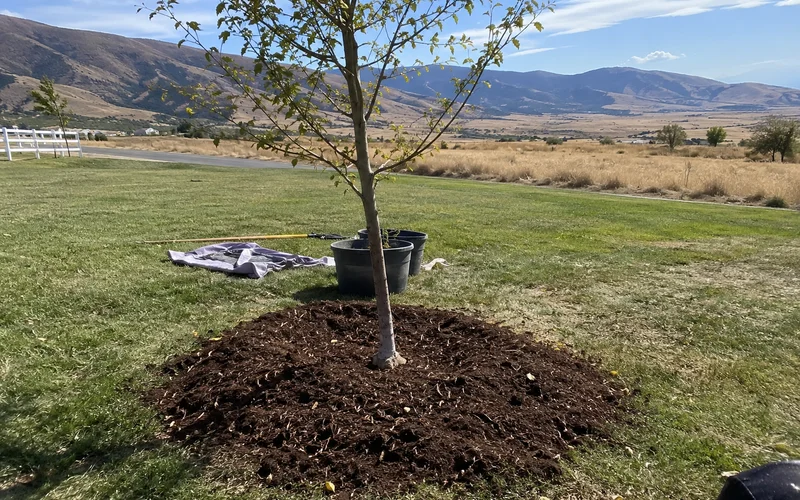
A proper mulch ring conserves soil moisture, moderates soil temperature and keeps mowers away from the trunk. Keep it clear of the trunk itself. Mulch piled against bark traps moisture and invites rot.
On exposed sites in Lake Point, Eagle Mountain or rural Erda, stake through the first season so wind doesn’t set a permanent lean. Then remove the stakes on time; leaving them too long prevents the trunk from strengthening naturally.
Booking around the season
Spring and fall are also our busiest planting windows, so scheduling ahead matters. If you know you want trees in this year, a call in late winter gets you a spring slot rather than a “we’ll see” in April.
Choosing the right species matters as much as timing. See our guide on the best trees to plant in the Tooele and Salt Lake valleys for what performs here.