New sod transforms a yard in a day. If the prep is right
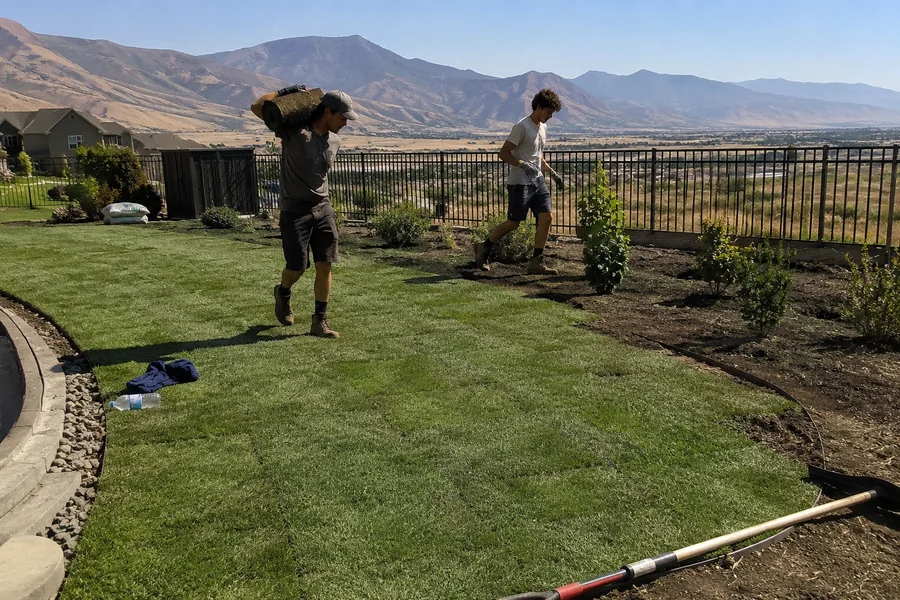
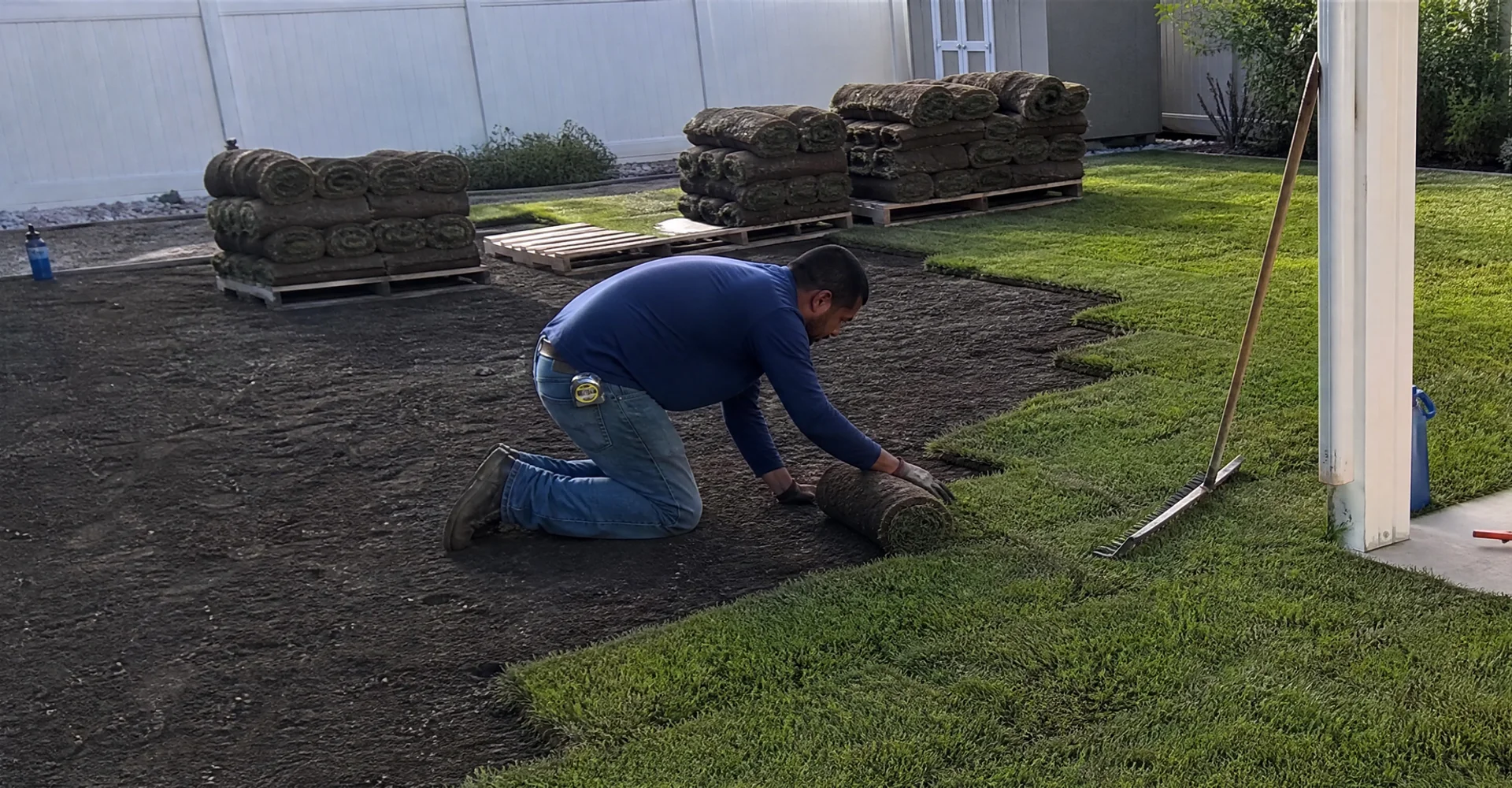
There is nothing else in landscaping that changes a property as fast as sod. Bare dirt in the morning, finished green lawn by the afternoon. That speed is exactly why it gets done badly so often: it’s tempting to skip everything underneath and just lay the turf.
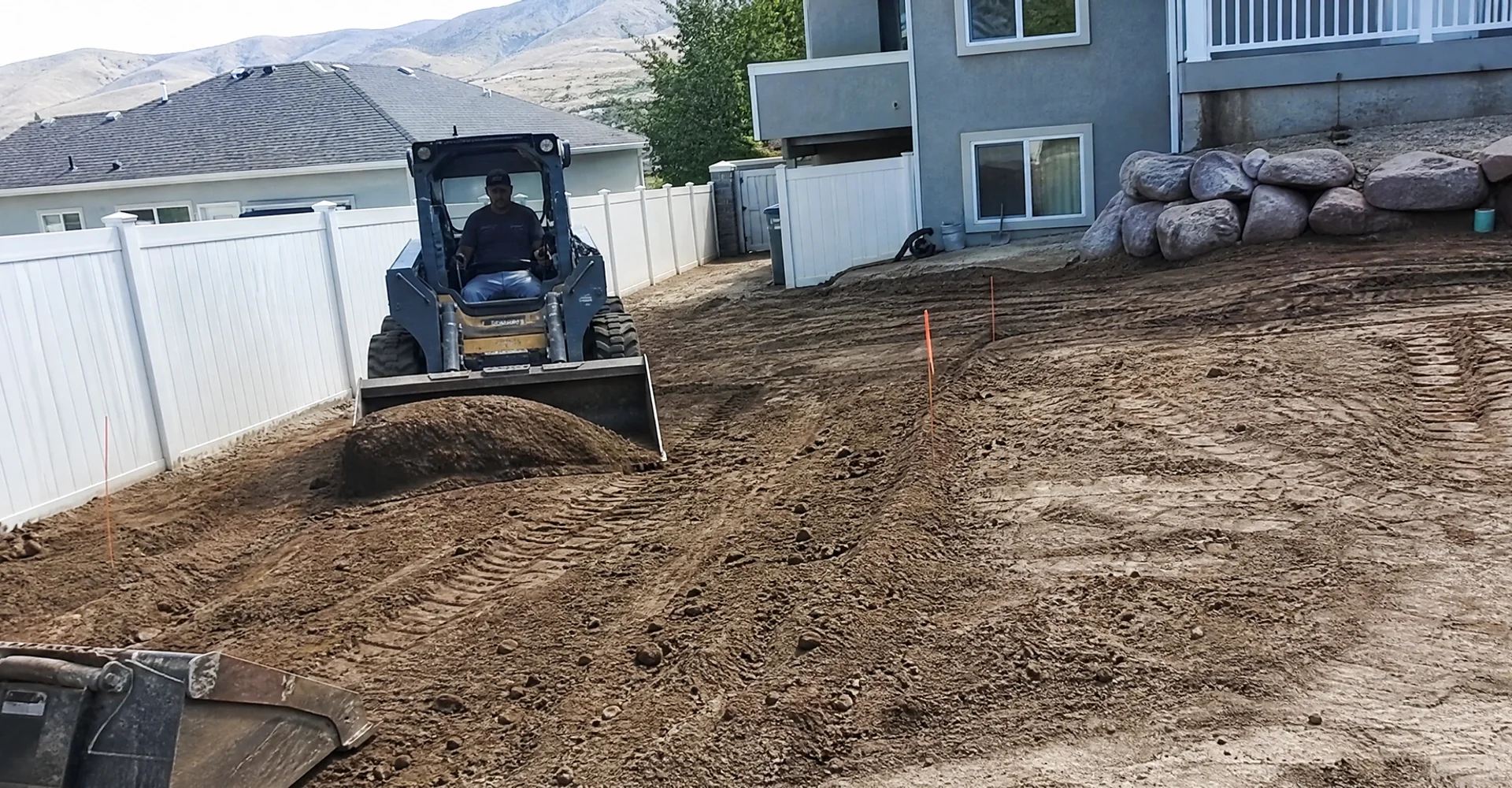
We do it the other way round. Old turf comes out and gets hauled away. The grade gets corrected so water runs away from the house instead of pooling. Compaction gets broken up, rock gets screened out, and screened topsoil goes in wherever the existing soil is too thin or too poor to root into. Only then does sod arrive.
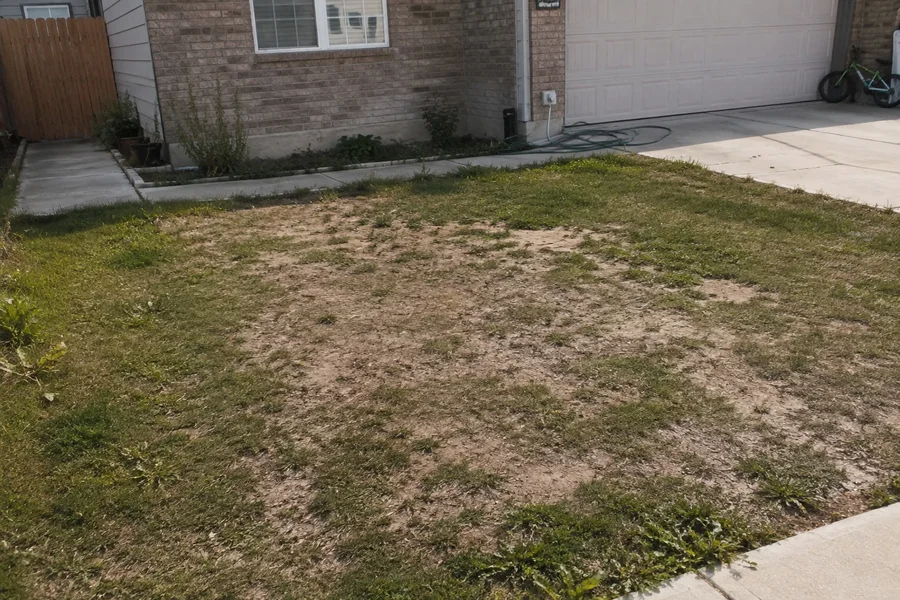
That sequence is the difference between a lawn that’s still thick in three years and one that thins out by its second August. We have been called out more than once to redo a new lawn that failed because a previous contractor laid it straight onto compacted builder dirt with no topsoil. Redoing it costs more than doing it right the first time.
We also do removal-only work, and quite a lot of it. Homeowners taking out thirsty turf for a water-wise conversion, or clearing an area for a patio, walkway or retaining wall, call us to cut, roll and haul the old lawn. Those jobs are usually quick. One Tooele customer called on a Tuesday and had a full removal finished by Friday afternoon.
What’s included
- Old turf cut, rolled and hauled off site
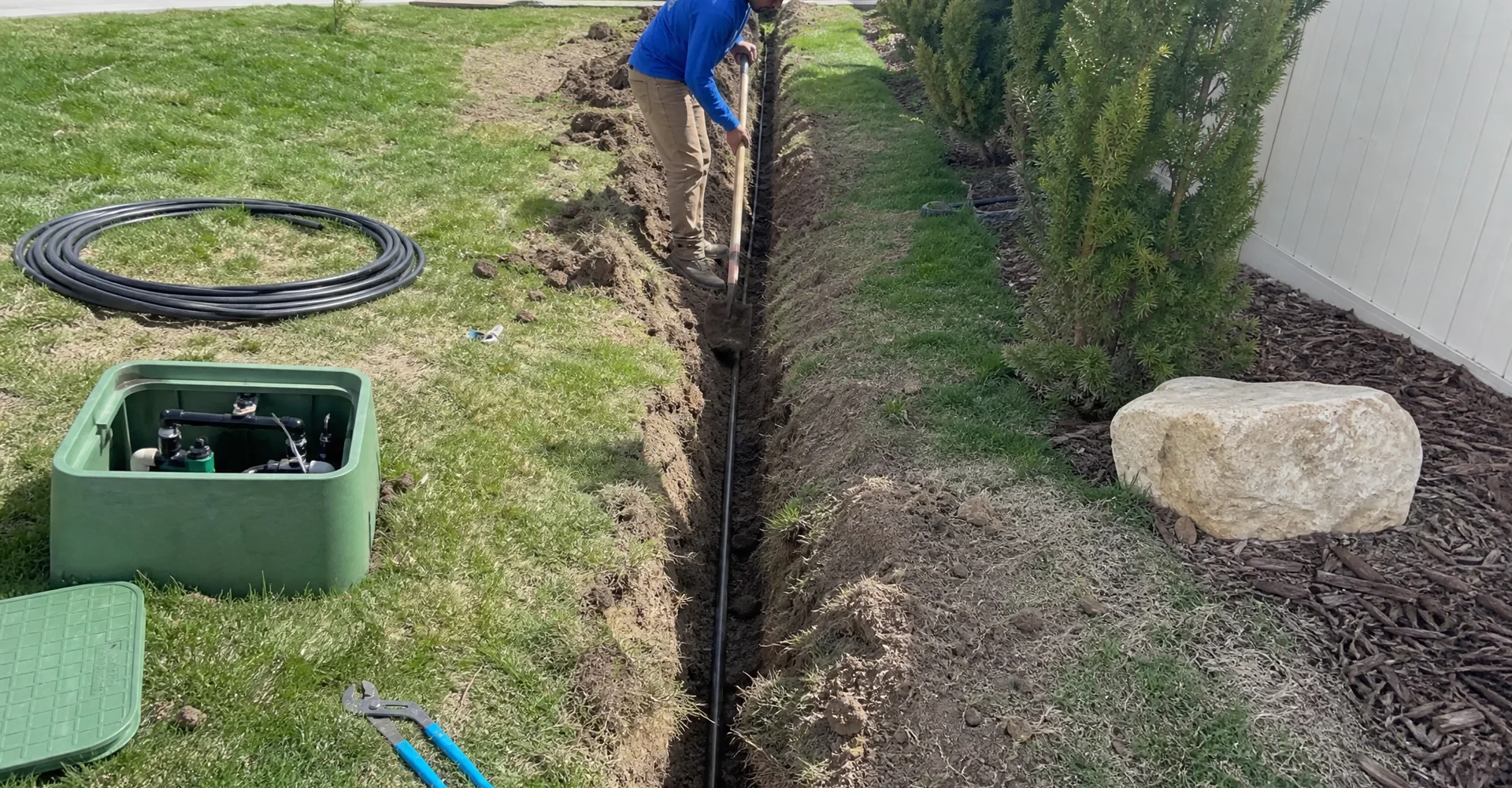
- Protection of existing sprinkler heads, valve boxes and control wiring
- Grade correction for positive drainage
- Compaction relief, rock screening and rototilling
- Screened topsoil where the site needs it
- Starter fertilizer and quality palletized sod
- Tight staggered seams, clean cuts to beds and hardscape, rolled in
- Irrigation set for establishment plus a written watering plan
Common problems we solve
A lawn that died in its first summer
Nearly always a prep failure. Roots could not get through the compacted layer, so the turf lived off surface water until the heat arrived. Fixing it means starting again properly, and we will tell you honestly if that’s what your yard needs.
Thin, patchy grass over an old lawn
Decades of thatch build-up, compaction and uneven irrigation. Sometimes aeration and overseeding are enough; often a full removal and reset gives a better result for the money. We look before recommending either.
Water pooling in the lawn
A grading problem, not a grass problem. New sod on a bad grade will sit in the same puddle. We correct the fall while the turf is off, which is the only time it’s cheap to do.
Turf you no longer want to water
Removing part of the lawn and converting it to drip-irrigated water-wise beds cuts outdoor water use substantially, and qualifying conversions may be eligible for Utah Water Savers rebates.
What affects the price
- Lawn area. The single biggest factor
- Removal scope. How much old turf has to come out and be hauled
- Topsoil volume. How thin or rocky the existing soil is
- Grading work: correcting fall, filling low spots, drainage
- Access. Whether we can get equipment and pallets close to the work
- Sod type. Bluegrass and tall fescue price slightly differently
Where we lay sod
We install and remove sod across Grantsville, Tooele, Stansbury Park, Erda and Lake Point, and on scheduled runs into West Valley City, Kearns, Magna and Orem.
For more detail, see our guides on the best sod types for Utah lawns, how to care for new sod through the first season, and sod versus seed.