
The two that dominate here
Walk any established neighbourhood in the Tooele or Salt Lake valleys and you’re looking at Kentucky bluegrass, turf-type tall fescue, or a blend. Both are cool-season grasses suited to our climate, both tolerate alkaline soil, and both are widely available as palletized sod.
Everything else (warm-season grasses, fine fescues, specialty blends) is either poorly suited to our winters or serves a narrow purpose. For most sod installation projects, the decision is between these two.
Kentucky bluegrass
What it looks like. Fine blade, dense growth habit, the deep colour most people picture when they think “lawn.” It’s the classic look.
Self-repairing. This is bluegrass’s real advantage. It spreads by underground rhizomes, so bare patches from wear, pet damage or a dropped tool fill back in on their own. Fescue doesn’t do this. A bare patch in fescue stays bare until you reseed it.
Water demand. Higher. Bluegrass has a shallower root system and will go dormant and brown in extended heat without consistent water.
Traffic. Handles moderate traffic and recovers well thanks to the rhizomes, but heavy sustained use wears it faster than fescue.
Shade. Moderate at best. Bluegrass wants sun.
Turf-type tall fescue
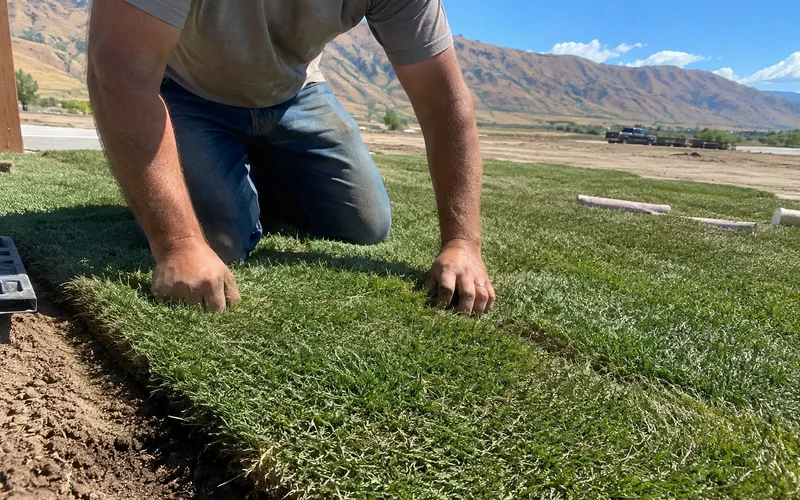
What it looks like. Slightly coarser blade than bluegrass, though modern turf-type cultivars are much finer than the old pasture fescues people remember. Colour is typically a touch darker.
Deep roots. Fescue roots go considerably deeper, which is the source of most of its advantages. It reaches moisture that bluegrass can’t and stays green through heat with less irrigation.
Traffic tolerance. Better than bluegrass under sustained use. If you have kids, dogs, or a lawn that’s genuinely walked on rather than looked at, fescue holds up.
Doesn’t self-repair. It’s a bunch-forming grass, so damage doesn’t fill in on its own. Worn patches need overseeding.
Shade. Better than bluegrass. Fescue tolerates partial shade reasonably well.
Choosing for your yard
| Situation | Better fit |
|---|---|
| Full sun, want the classic look | Bluegrass |
| Kids and dogs using the lawn daily | Tall fescue |
| Want lower summer water use | Tall fescue |
| Partial shade from mature trees | Tall fescue |
| Willing to water for appearance | Bluegrass |
| Want damage to fill in by itself | Bluegrass |
| Hot, exposed west-facing frontage | Tall fescue |
The honest recommendation
If your lawn is primarily decorative and gets full sun, bluegrass looks better. If it’s a working lawn that takes real use, or you want to reduce summer watering, fescue is the more practical choice. Most Utah households would be well served by fescue and choose bluegrass for the look.
What matters more than the choice
Both grasses fail on bad soil preparation, and neither succeeds without it. Compacted builder dirt with no topsoil kills bluegrass and fescue equally.
If you’re deciding between grass types while also deciding whether to pay for proper soil prep, spend the money on the soil. The difference between the two grasses is a preference; the difference between prepared and unprepared ground is whether you have a lawn in two years.
Blends
Bluegrass sod is usually a blend of several cultivars rather than a single variety, which gives useful resilience. Different cultivars have different disease and stress tolerances, so a problem that affects one doesn’t wipe out the lawn.
Mixing bluegrass and fescue in the same lawn is done, and there’s a logic to it (fescue’s drought tolerance plus bluegrass’s self-repair). In practice the blade textures differ enough that it can read as patchy. We’d generally pick one and commit.
Getting the right sod
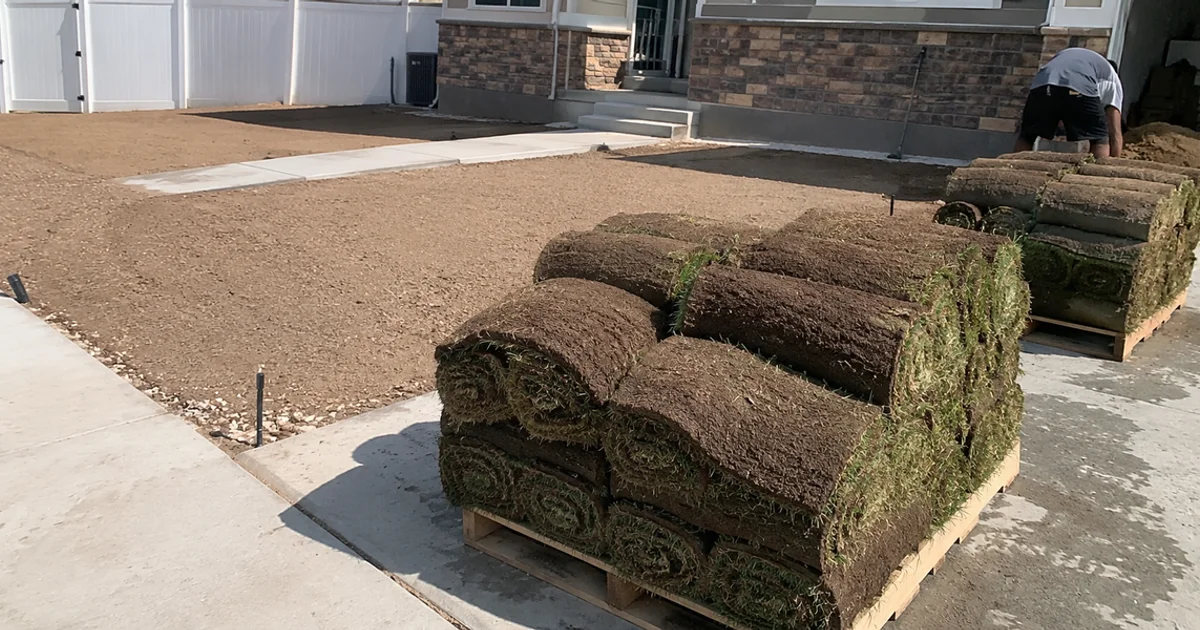
We source palletized sod and lay it the day it arrives, because sod left stacked on a pallet in summer heat starts breaking down fast. If you’re comparing us against another bid, ask when the sod is delivered relative to when it’s laid.
Still deciding between sod and seed entirely? Our guide on sod versus seed covers that comparison.