
The trade-off in one line
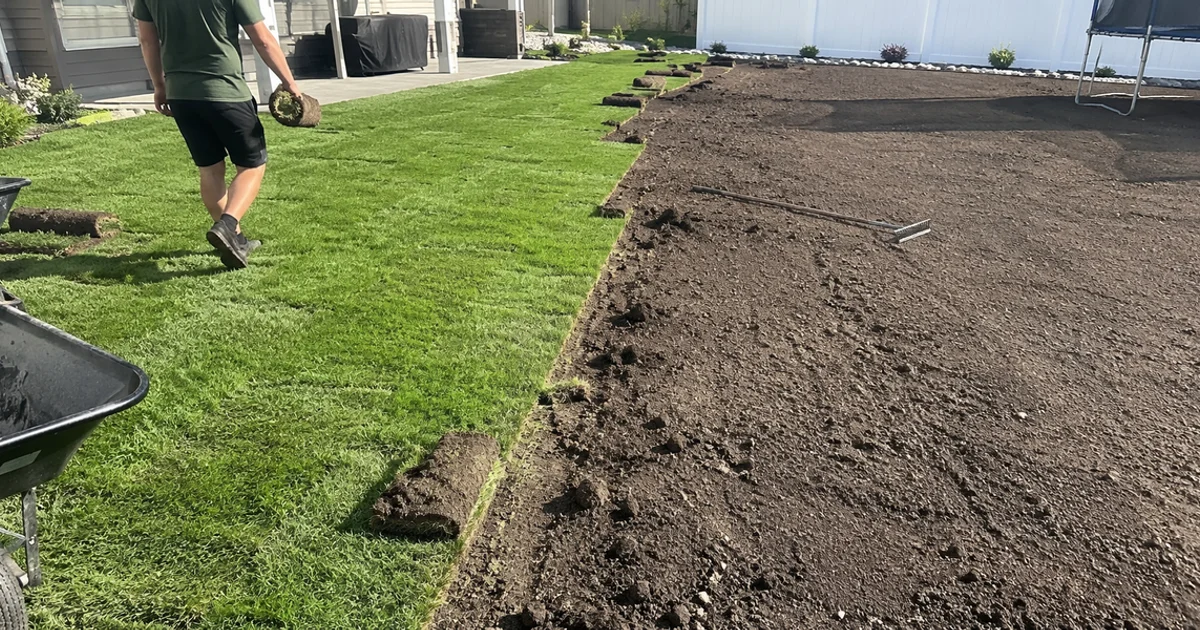
Seed is cheaper and slower with more risk. Sod is more expensive and instant with less risk. Everything else is detail.
For most residential sod installation projects in the Tooele and Salt Lake valleys, sod wins, not because it’s better grass, but because the conditions here are hard on establishing seed.
Side by side
| Sod | Seed | |
|---|---|---|
| Material cost | Higher | Considerably lower |
| Soil prep cost | Same | Same |
| Time to usable lawn | Two to three weeks | A full season or more |
| Time to look finished | Immediate | Weeks to months |
| Weed competition early | Minimal, turf is already dense | High, bare soil invites weeds |
| Erosion risk on slopes | None. Holds immediately | High until established |
| Watering demand early | Frequent for two weeks | Constant moisture for longer |
| Risk of failure | Low with proper prep | Moderate: heat, washout, birds |
| Installation season window | Wide | Narrower |
| Grass variety choice | What’s available as sod | Very wide |
Why seed is harder here than people expect
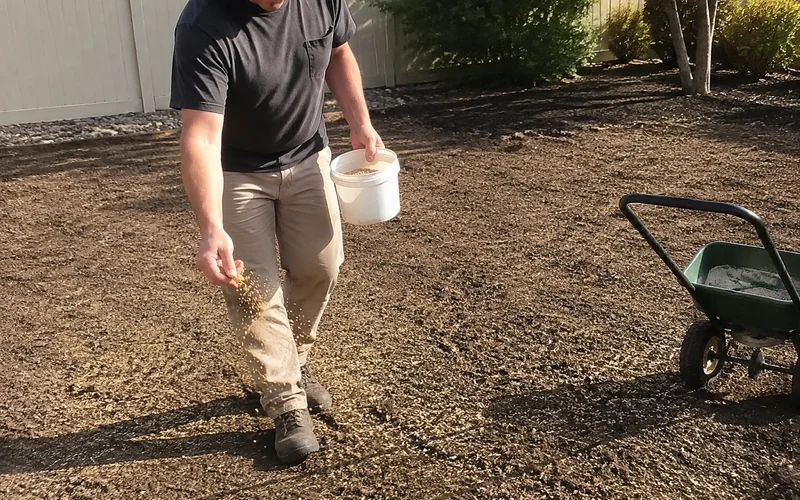
Germinating seed has to stay consistently moist. Not damp for most of the day: consistently moist, because a seed that starts germinating and then dries out is a dead seed.
In a Utah spring that’s manageable. In a Utah summer, with low humidity, high temperatures and wind, keeping bare soil moist means watering several times a day and losing a lot of it to evaporation before it does any good. Miss a hot afternoon and you can lose a large share of the germination.
Then there’s washout. A single heavy storm on a freshly seeded slope moves both seed and topsoil downhill and leaves you with stripes. Birds take their share too.
None of this makes seed impossible. It makes it demanding, and it means seed is a project you have to be present for.
Where sod earns its cost
Instant results. The yard is finished the day it’s laid. On a new build with an HOA compliance date, that matters practically. A seeded lawn in its germination phase may not read as “landscaped” to an inspector.
Erosion control. Sod holds soil immediately. On any slope, that’s decisive.
Weed suppression. Dense turf from day one leaves no bare soil for weed seeds to exploit. Seeded lawns compete with weeds through their whole establishment period.
Predictability. With proper soil preparation, sod almost always takes. Seed has more variables you don’t control.
The cost comparison people get wrong
The soil preparation is identical either way: grading, compaction relief, rock screening, topsoil. That’s a large share of the total cost and it doesn’t change. The difference between sod and seed is narrower as a percentage of the whole job than the material prices suggest.
Where seed still makes sense
Very large areas. On acreage where the cost difference becomes substantial and instant results aren’t essential.
Rural or secondary areas. Back paddocks, overflow areas, anywhere that doesn’t need to look finished immediately.
Specific grass varieties. The range available as seed is much wider than the range available as sod. If you want something specific, seed may be the only route.
Repair and overseeding. Thickening an existing lawn or filling worn patches is a seed job, not a sod job.
Fall timing with patience. A fall seeding, watered attentively, with the whole of the following spring to fill in, can work well if you’re not in a hurry.
What we’d recommend
For a front yard, a compliance deadline, a slope, or anywhere that needs to look right soon: sod. For large rural areas where budget dominates and appearance can wait a season: seed is reasonable.
Whichever you choose, spend the money on soil preparation first. A seeded lawn on good soil beats a sodded lawn on compacted builder dirt every time.
If you’re going with sod, our guide on the best sod types for Utah lawns covers the bluegrass versus fescue decision.