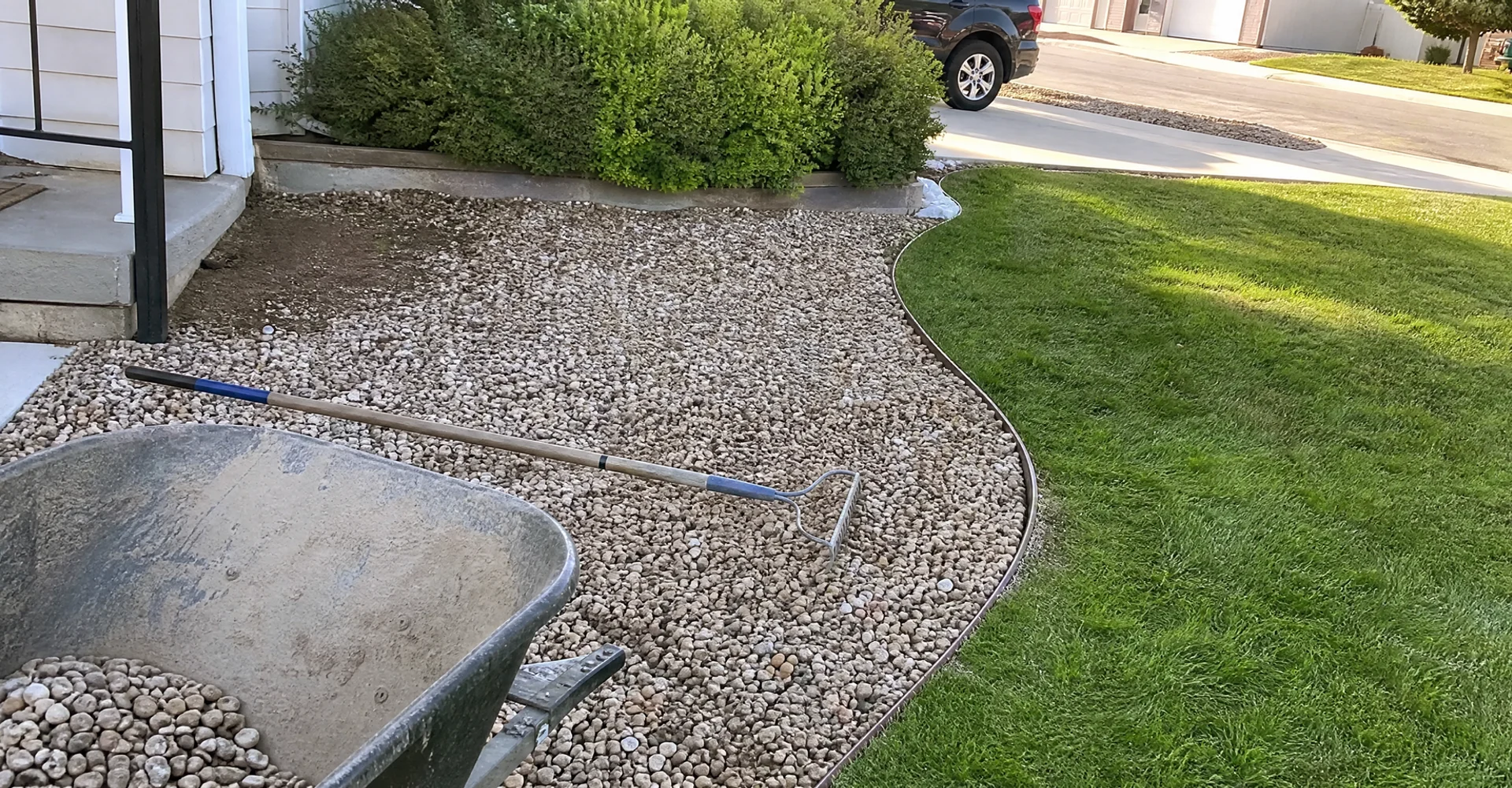
Crisp lines and low-water beds
Decorative rock and clean edging are the finishing details that make a yard look considered rather than assembled. They also happen to be the lowest-maintenance, lowest-water surface you can put down in a Utah landscape.
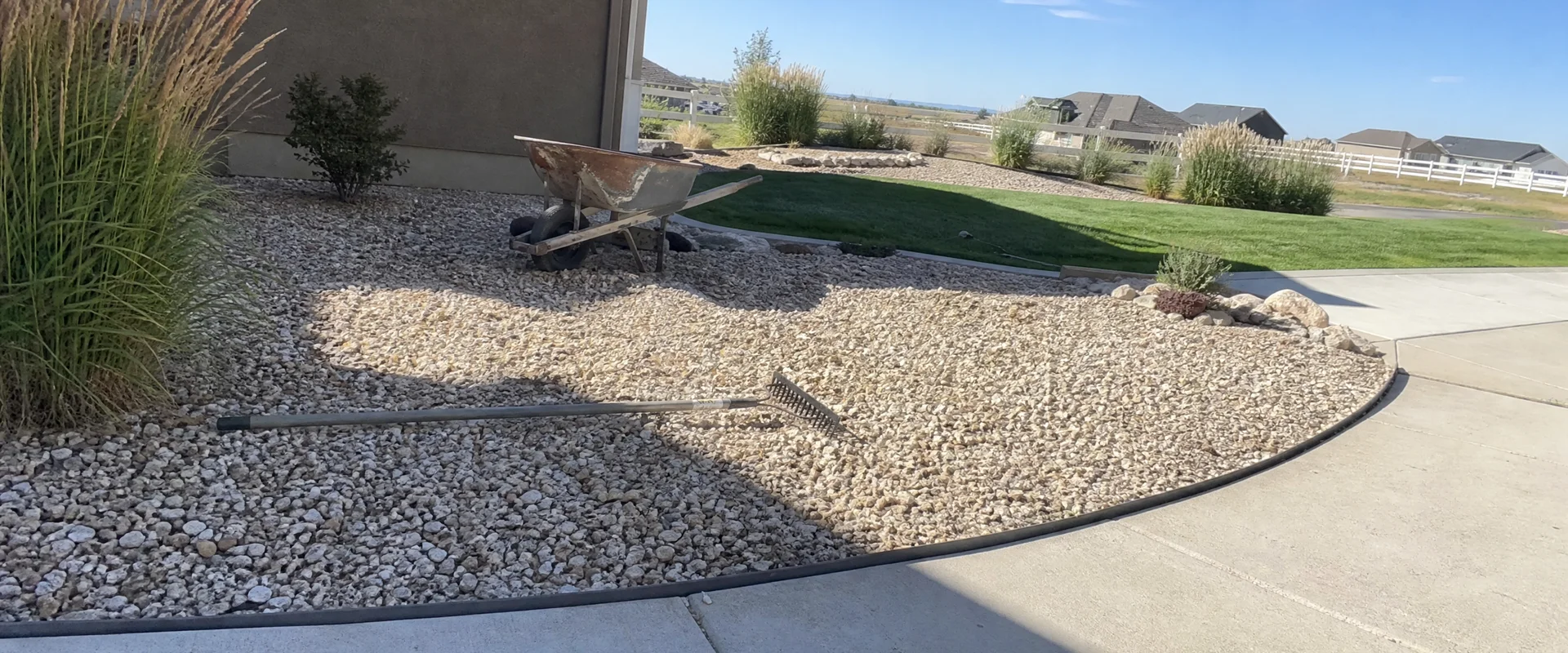
The finished quality of a gravel bed comes down to three things, and none of them are the rock. First, the bed line: a curve that flows or a straight run that’s actually straight, staked out on site so you see it before anything is dug. Second, the edge: a physical barrier that keeps rock out of the lawn and lawn out of the rock, because without one the line blurs within two seasons. Third, depth over quality geotextile fabric, because gravel spread thin lets light through and weeds follow.
We install steel, poly and concrete curbing. Steel gives the cleanest, thinnest line and holds a curve well. Concrete curbing is heavier, more formal and effectively permanent. Poly is the budget option and does the job in lighter-duty positions. We’ll tell you which suits your bed rather than defaulting to whatever is on the truck.
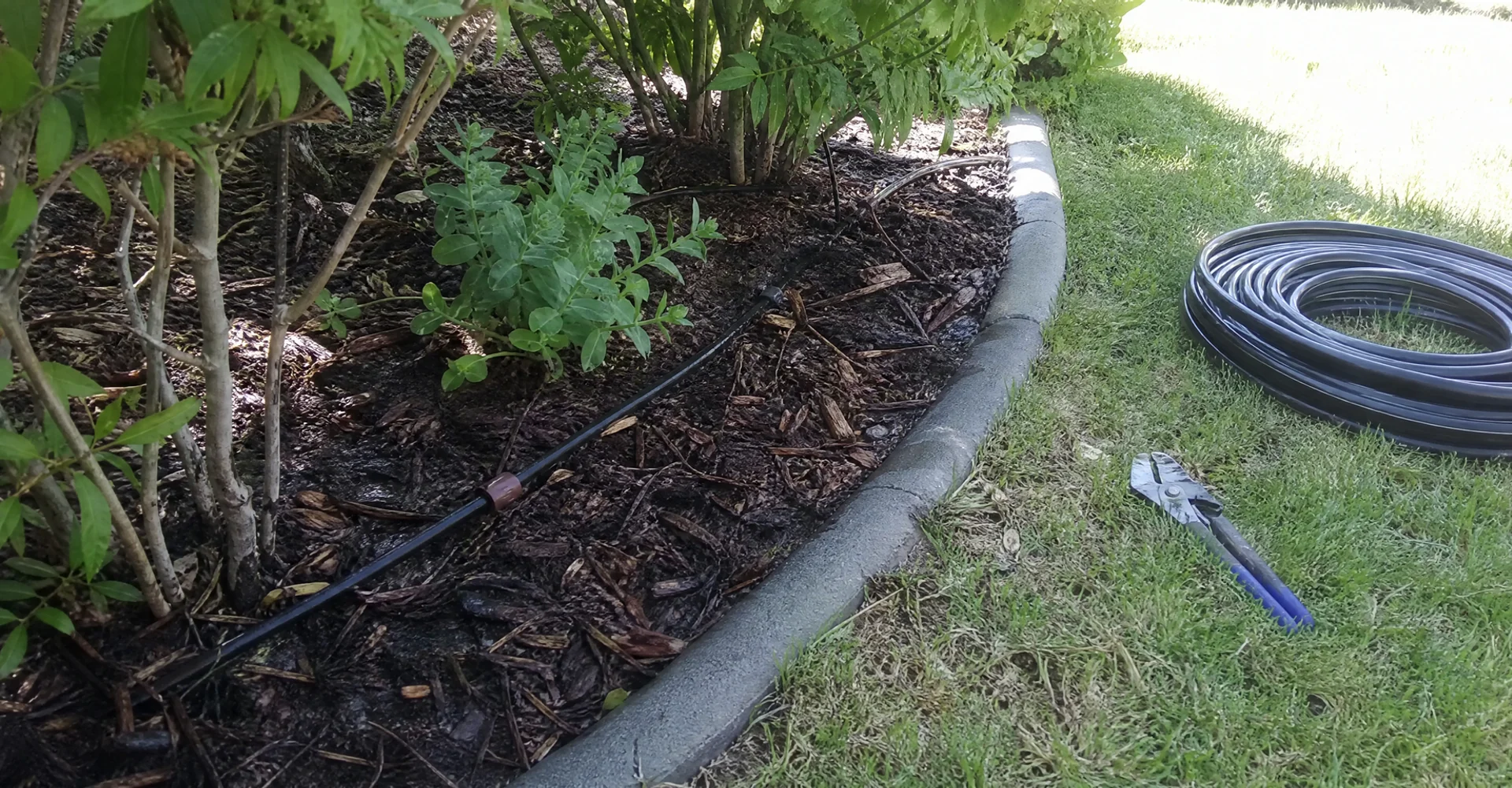
Gravel work usually pairs with a change in how the bed is watered. Spray heads over gravel are wasteful and often pointless. The water lands on rock. Beds going to gravel generally want drip underneath, sized to the planting. We plan the two together so you’re not burying an irrigation layout that no longer makes sense.
What’s included
- Bed lines laid out and staked on site before work starts
- Removal and haul-off of existing turf, weeds or tired bark
- Base levelling and preparation
- Steel, poly or concrete edging set and secured
- Quality woven geotextile fabric, correctly overlapped
- Decorative rock or gravel spread to proper depth
- Drip lines run beneath where planting is involved
- Full clean-down of lawn, drives and paths
Common problems we solve
A gravel bed full of weeds
Almost always depth or fabric. Thin gravel lets light through, and cheap plastic sheeting tears and traps water. Correct depth over woven geotextile solves most of it permanently.
Rock migrating into the lawn
No edge, or an edge that has worked loose. Mowing and rain push gravel outward until the bed line disappears. A properly set steel or concrete edge stops it.
Beds being sprayed instead of dripped
Spray heads throwing water over rock is money on the ground. Converting the bed to drip cuts the consumption and keeps the plants healthier.
A yard that needs less watering and less mowing
Reducing lawn area and replacing it with edged gravel beds and drought-tolerant planting is the most direct way to cut both. Qualifying conversions may be rebate-eligible through Utah Water Savers.
What affects the price
- Bed area and the gravel depth required
- Rock type and size. Decorative options vary in cost
- Linear feet of edging and material choice
- Removal of existing turf, weeds or old bark
- Drip installation under new beds
- Access for material delivery and wheelbarrow runs
Where we install
Gravel and edging work runs across Grantsville, Tooele, Stansbury Park, Erda and Lake Point, plus South Jordan, Eagle Mountain and Magna where water-wise front yards are increasingly the norm.
More detail in our guides on decorative gravel and rock options for Utah landscapes, landscape edging types, and gravel versus mulch for low-water beds.