
Why edging matters more than it looks like it should
Edging is the least glamorous line item on a landscape bid and one of the most consequential for how the finished yard reads.
The difference between a gravel bed that looks designed and one that looks dumped is almost entirely the edge. A crisp boundary between lawn and bed makes both look intentional. A blurred one makes the whole yard look unmaintained, regardless of how good the planting is.
It’s also functional. Without a physical barrier, gravel migrates into the lawn and grass creeps into the bed, and within two seasons you’re maintaining a boundary that no longer exists. That’s why edging is bundled with the gravel and edging work rather than treated as optional.
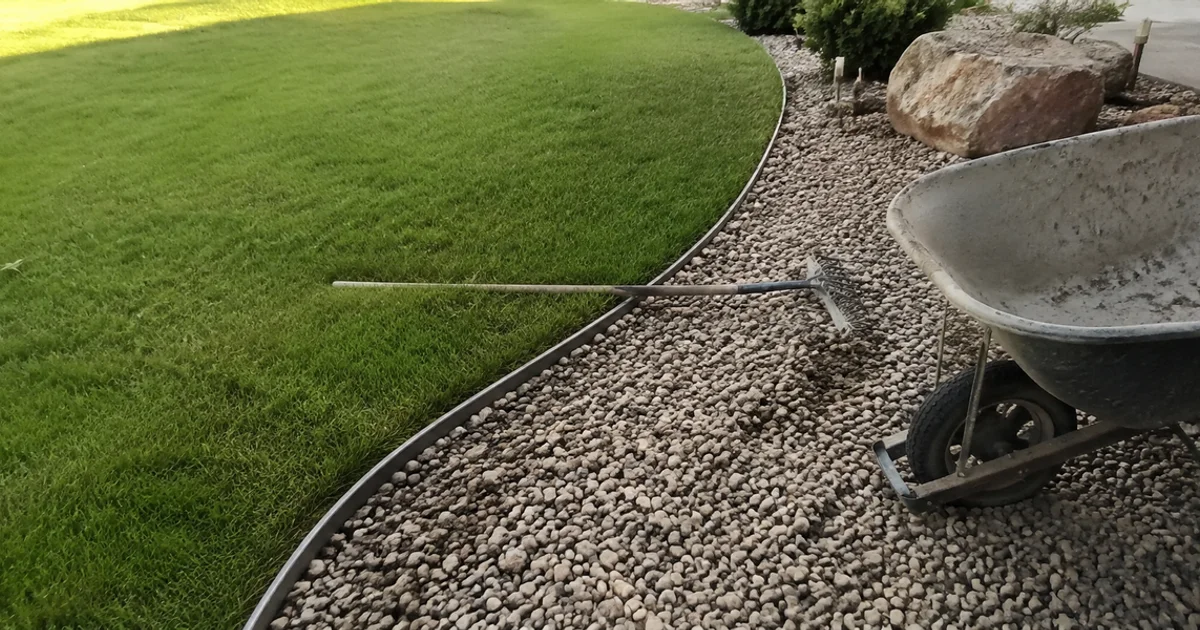
Steel edging
Rolled steel strip, set into the ground and staked, standing slightly proud of the surface.
Strengths. The thinnest visual line of any option, from a few feet away it essentially disappears, leaving what looks like a clean cut between lawn and bed. Holds curves beautifully. Very durable, takes mower contact without damage, and doesn’t lift or warp. Handles freeze-thaw well.
Limits. Higher material cost than poly. Needs careful installation to sit at the right height. The top edge should be set flush enough to run a mower wheel along without catching.
Best for. Modern and minimal designs, curved bed lines, anywhere you want the planting rather than the edging to be the visible thing.
Concrete curbing
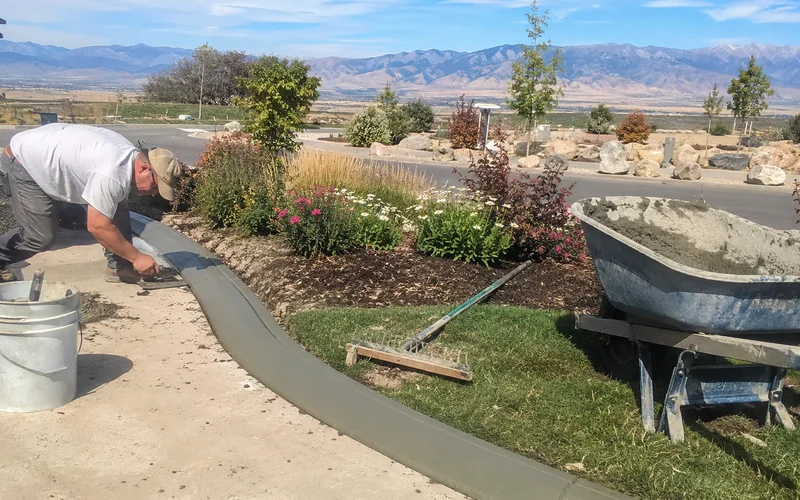
Continuous concrete extruded or formed in place along the bed line, in various profiles.
Strengths. Essentially permanent. Substantial enough to define a bed strongly, which suits formal designs. Can be coloured and stamped. Excellent at containing gravel because of the mass. Handles vehicles crossing it far better than steel or poly.
Limits. The most visually prominent option, which is a feature or a problem depending on your design. Higher cost. Not easily changed once it’s in: if you want to reshape a bed later, it comes out with a breaker. Can crack in freeze-thaw if the base under it wasn’t prepared properly.
Best for. Formal front yards, driveway edges, situations where the edge takes real physical abuse, and designs where a strong defined line is wanted.
Poly edging
Flexible plastic strip with a rolled top edge, staked into the ground.
Strengths. The lowest material cost. Very flexible, so it follows tight curves easily. Simple to install and easy to remove or adjust later.
Limits. The least durable. Freeze-thaw cycling gradually pushes it up out of the ground, and once the top edge is standing proud it looks untidy and catches mowers. Impacts damage it. Realistically it’s a shorter-term solution than the other two.
Best for. Budget-conscious projects, interior beds that don’t meet lawn, temporary layouts, and situations where you may want to change the bed shape later.
Side by side
| Steel | Concrete curbing | Poly | |
|---|---|---|---|
| Durability | Very high | Highest | Moderate |
| Cost | Middle | Highest | Lowest |
| Visual presence | Minimal | Strong | Low |
| Curve flexibility | Good | Good | Excellent |
| Freeze-thaw resistance | Excellent | Good with proper base | Poor. Lifts over time |
| Changeable later | Yes | No, requires demolition | Yes, easily |
| Contains gravel | Well | Very well | Adequately |
The installation detail that decides everything
Height. Edging set too high catches mowers and trips people. Set too low and gravel washes over it. The right height lets a mower wheel run along the edge without contact, which also means you never have to trim that line by hand.
Matching edging to the bed
The general pattern we follow: steel where the bed meets lawn and the design is contemporary, concrete curbing where the line needs to be strong or takes abuse, and poly in interior or lower-priority positions where budget matters.
Whichever you choose, it wants to be installed before the fabric and gravel go down, so the surface material is contained from day one. See our guide on decorative gravel options for how the two work together.