
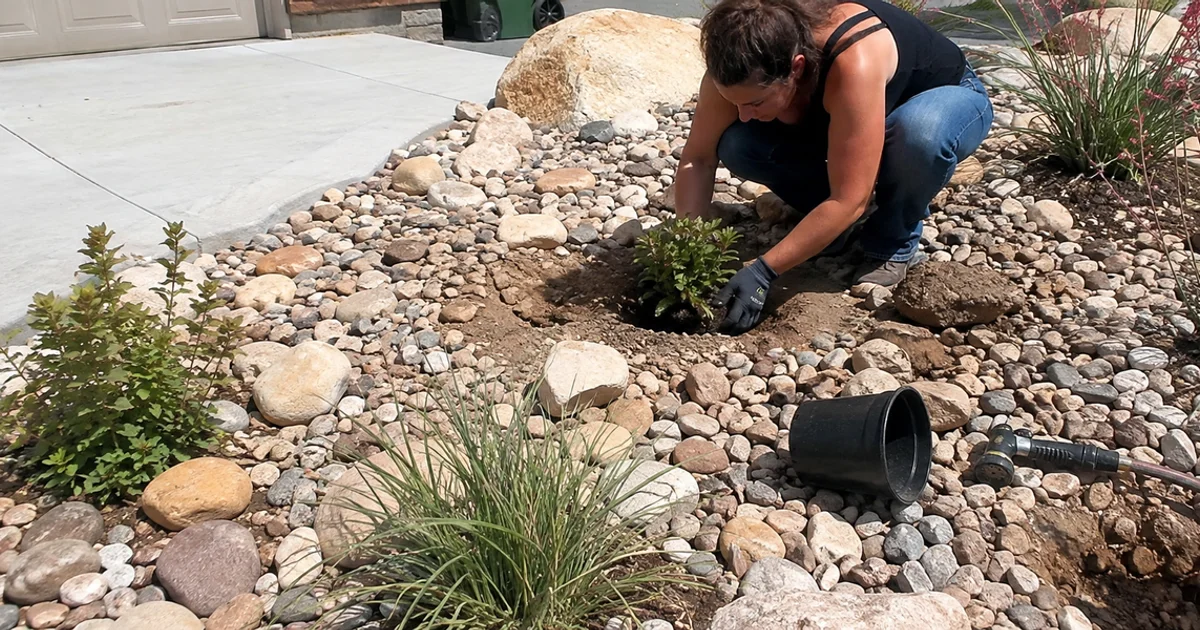
Choosing rock is mostly about scale and colour
There are a lot of decorative rock products available, and the differences that actually matter to a finished landscape come down to two things: the size of the stone and how its colour relates to everything else in the yard.
Get those right and almost any product looks good. Get them wrong and the most expensive rock in the yard still looks like it was chosen from a photograph. That’s where we start on any gravel and edging project.
Size and what it does
Fine gravel and crushed products. Compact well, give a smooth uniform surface, and are comfortable to walk on. Best for paths, sitting areas and beds you cross regularly. They do pick up in shoe treads and can migrate into lawn without a firm edge.
Mid-size rounded or angular rock. The workhorse for planting beds. Large enough to stay put, small enough to read as a surface rather than individual stones. This is what most Utah front-yard beds use.
Larger cobble. Bold, textural, and stays exactly where you put it. Good for drainage swales, dry creek features and areas where you want visual weight. Less practical to walk on or plant densely into.
Boulders and feature stone. Not really ground cover. These are landscape elements placed individually for structure and accent.
Mixing sizes within one design works well when it’s deliberate: a mid-size field with occasional larger accent stones reads more natural than a single uniform grade everywhere.
Colour
The useful rule is that rock should relate to something already on the property: the house, the roof, the trim, existing hardscape, or the natural stone visible in the surrounding landscape.
Warm greys and tans sit well against most Utah housing and echo the natural palette of the valleys. Darker rock creates contrast and makes green planting pop, though it holds more heat. Very light rock is bright and reflective, which can be harsh in full summer sun and shows dirt.
A practical tip: look at samples outdoors, in the position they’ll be used, in daylight. Rock looks completely different under a yard’s lighting than under a supplier’s.
Depth and coverage
Gravel is bought by volume and installed by area and depth. Depth is what determines whether it works.
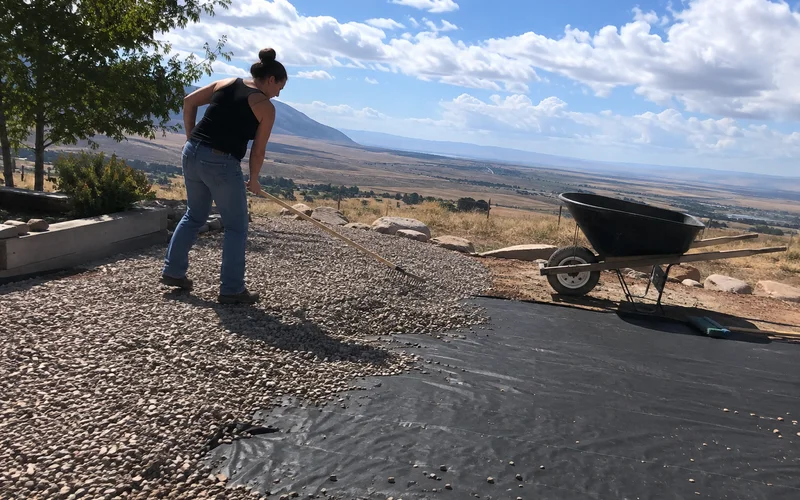
Too thin and light reaches the fabric and the soil below, which means weeds. It also means the fabric shows through when the rock inevitably shifts. Too thick is wasteful and makes planting into the bed awkward.
The right depth varies with rock size. Larger stone needs more depth for the same light blocking, since the gaps between individual pieces are bigger.
Where DIY gravel beds go wrong
Almost always depth. Buying enough rock to cover the area visually is not the same as buying enough to suppress weeds. The difference between a bed that stays clean and one you’re weeding every fortnight is usually one more load of rock.
Weed fabric
Quality woven geotextile is the right product. It lets water and air through while stopping soil fines from migrating up into the rock and giving weeds a rooting medium.
Solid plastic sheeting is not a substitute. It holds water against plant roots, degrades under UV into shreds that surface everywhere, and prevents the soil below from functioning.
Fabric handles weeds from below. It cannot stop seeds blowing in and germinating in dust that accumulates in the rock over time: that’s a top-down problem, and it’s why even a well-built gravel bed needs occasional spot weeding.
Why gravel suits Utah
No water. The bed surface itself needs none, which matters in a climate where outdoor irrigation dominates summer usage.
No refresh. Unlike bark mulch, it doesn’t break down and doesn’t need topping up annually.
Handles heat and wind. It doesn’t blow away, wash out or bleach.
Complements water-wise planting. Drought-tolerant species generally prefer the sharp drainage and warmth that gravel provides at the crown.
The trade-off is heat retention and no soil improvement over time. Our guide comparing gravel versus mulch covers when each is the better call.