Outdoor living space that survives Utah winters
A patio extends your house into the yard. It is where the table goes, where the fire pit sits, and where a back yard stops being something you look at and becomes somewhere you spend time. Done properly, it is also the single hardscape element that gets used the most per dollar spent.
The thing that decides whether a patio still looks good in ten years is the base. Utah freeze-thaw cycles are unforgiving: water that gets trapped in a shallow or poorly compacted base freezes, expands, and lifts the surface unevenly. That is why we excavate to depth and compact road base in lifts rather than dumping and levelling in one pass. It is invisible work and it is most of the job.
We build with pavers, flagstone and concrete. Pavers are what we recommend for most back yards here, because the jointed field flexes with seasonal movement instead of cracking, and individual units can be lifted and replaced if one is ever damaged or stained. Flagstone gives a softer, more natural look and suits garden walkways and rural properties, at a higher labour cost. Concrete is smooth and economical up front, but a crack in a slab is permanent.
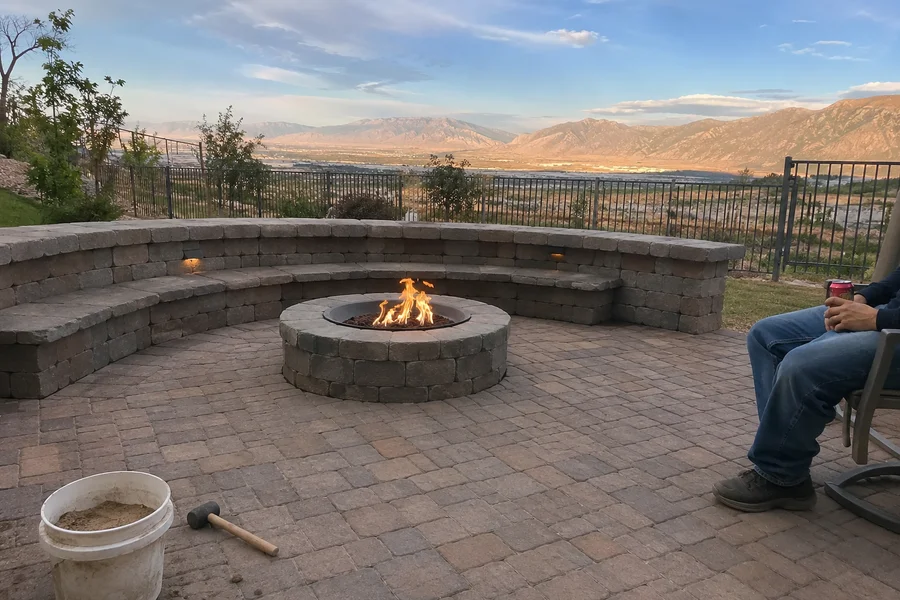
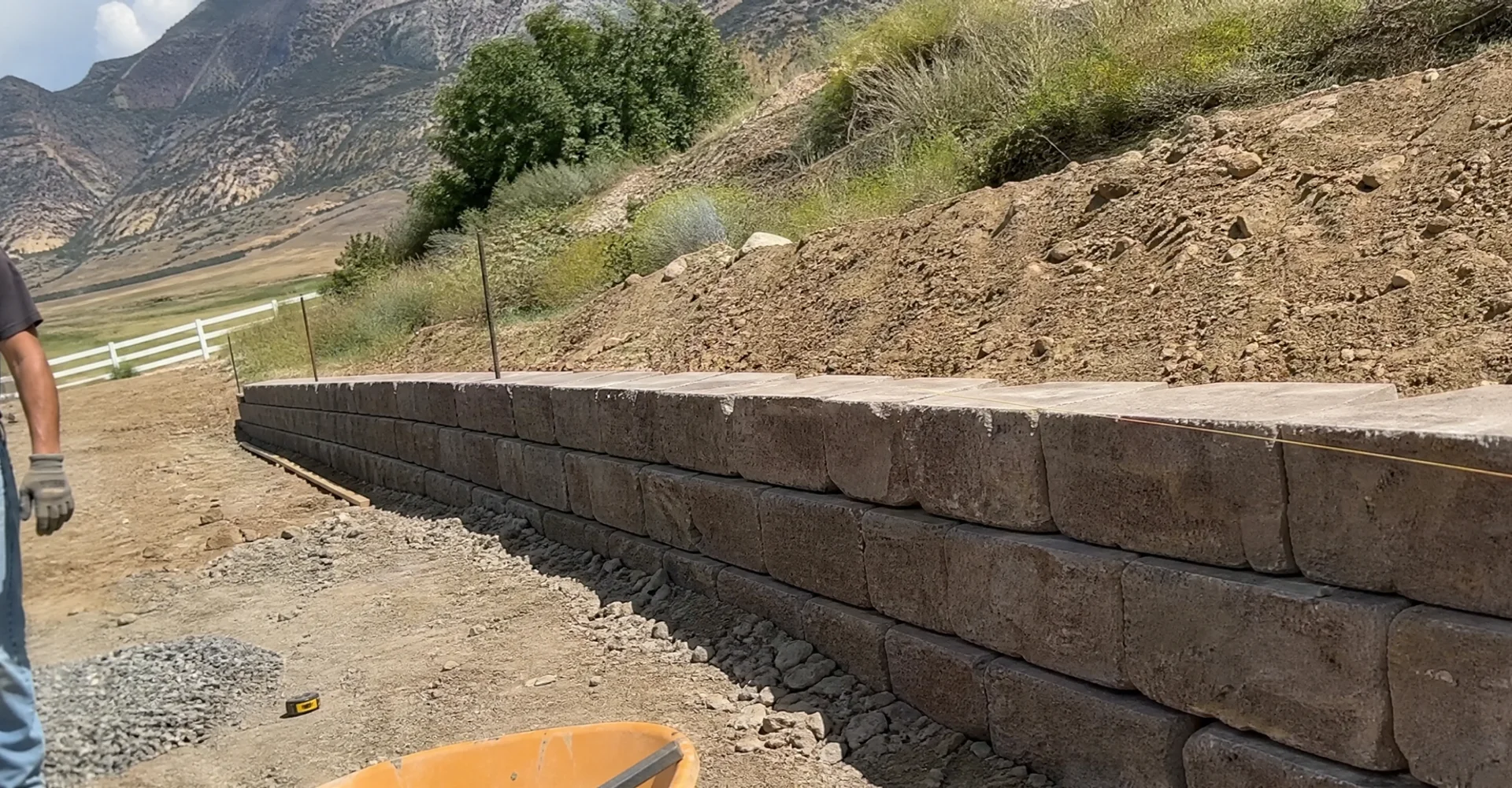
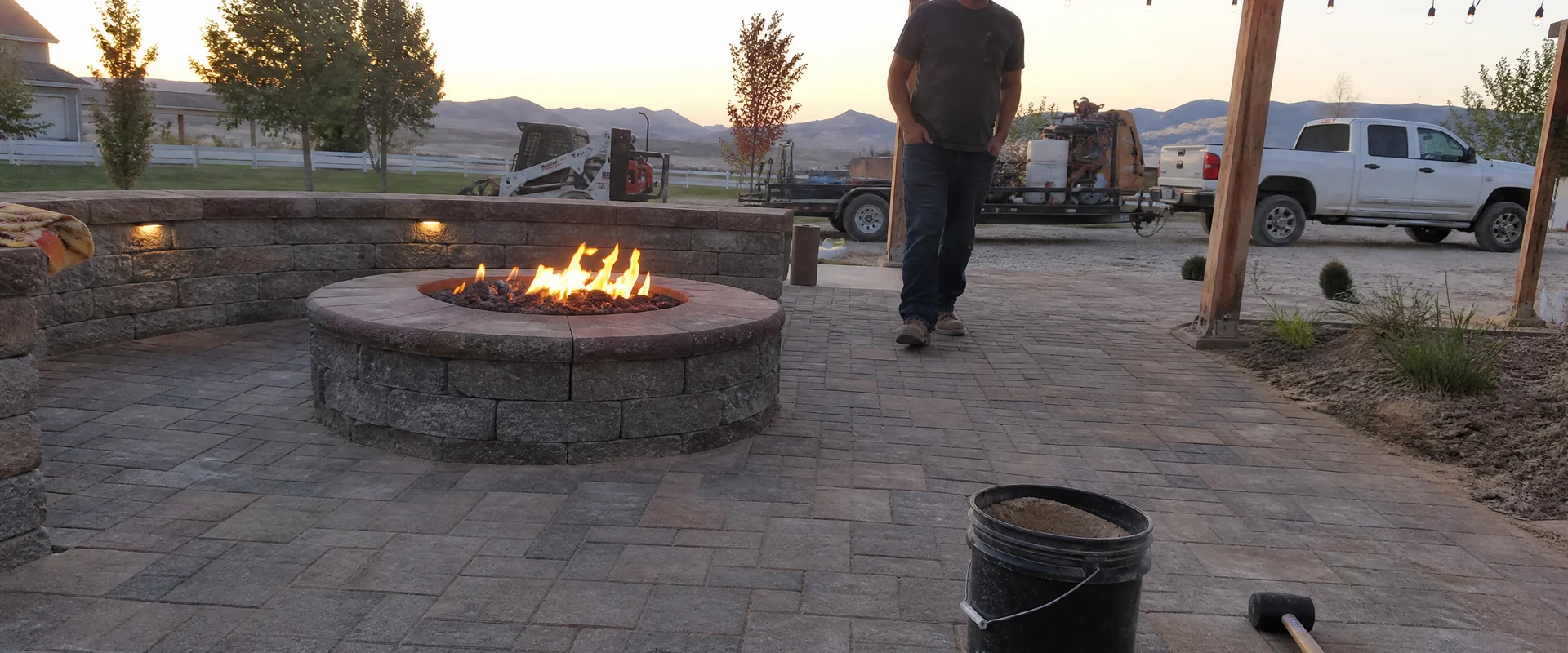
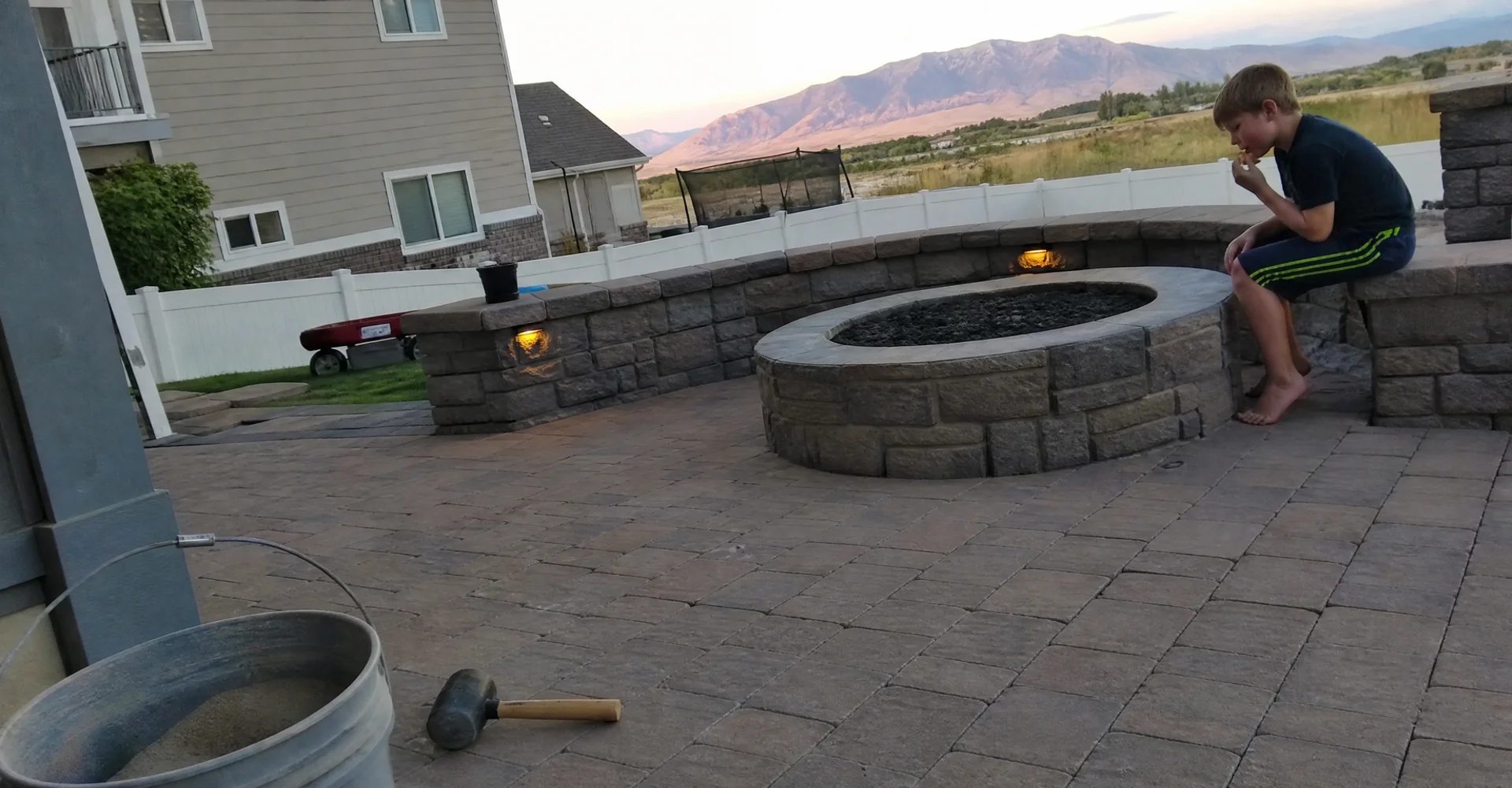
Beyond the patio itself we build seating walls, fire pits, steps and walkways. Fire pits in particular get disproportionate value from thoughtful placement: clearance from the house and fences for safety, and an eye on prevailing wind so you are not sitting in smoke. We stake the layout on site so you can walk it before we dig.
What’s included
- On-site layout staked and strung so you can walk the shape
- Excavation to depth for our freeze-thaw conditions
- Road base compacted in lifts, screeded bedding layer
- Paver, flagstone or concrete surface laid to pattern
- Clean edge cuts and proper edge restraint
- Polymeric sand swept and set into joints
- Fall set away from the house, tied into surrounding grade
- Seating walls, fire pits and steps where they’re part of the scope
Common problems we solve
A back yard with nowhere to sit
Grass is not furniture. A properly sized patio, even a modest one, changes how much a yard gets used more than almost anything else you could spend the same money on.
A patio that has heaved or sunk
Base failure, essentially always. Sometimes a section can be lifted, re-based and relaid; sometimes the whole field needs redoing. We’ll tell you which after we look at how it’s moving.
Water running the wrong way off hard surfaces
A patio sheds water somewhere. If nobody planned where, it often ends up against the foundation or in a neighbouring bed. We set the fall and tie the drainage into the wider yard.
A small yard that feels smaller
In tight lots, Daybreak and the newer subdivisions especially, a compact patio and a low seating wall recover far more usable space than another strip of lawn ever will.
What affects the price
- Square footage of the patio or walkway
- Material: concrete, pavers or natural flagstone
- Excavation depth and soil conditions
- Access. Whether equipment can reach the work area
- Add-ons: fire pit, seating wall, steps, lighting
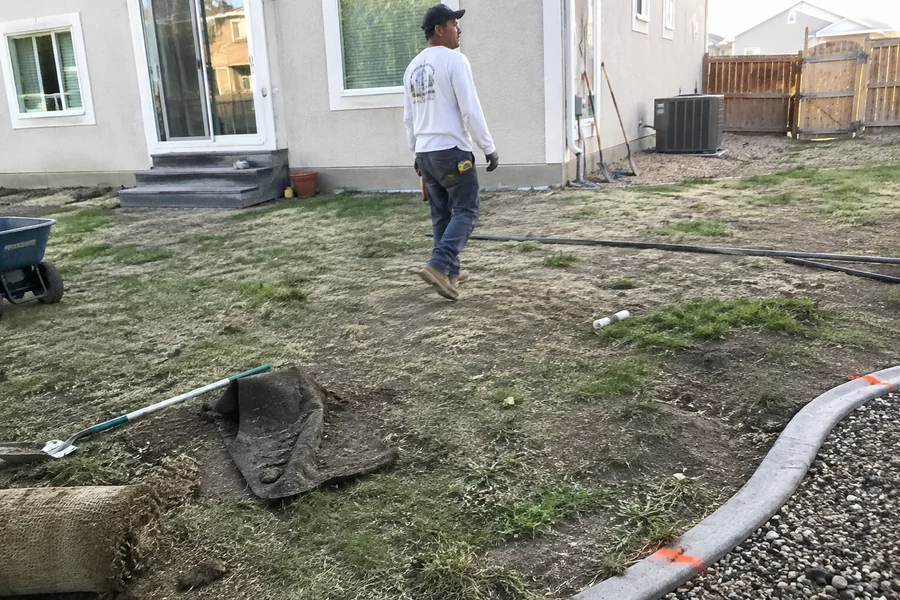
- Existing removal. Old concrete or turf that has to come out first
Where we build
Patios and outdoor living areas are steady work across Grantsville, Tooele, Stansbury Park and Erda, with scheduled runs into South Jordan, West Jordan and Herriman where small-space hardscape is the most common request.
Read more in our guides on paver patios versus concrete versus flagstone, planning a backyard patio and fire pit, and what a paver patio costs in Utah.