What a landscape design gets you
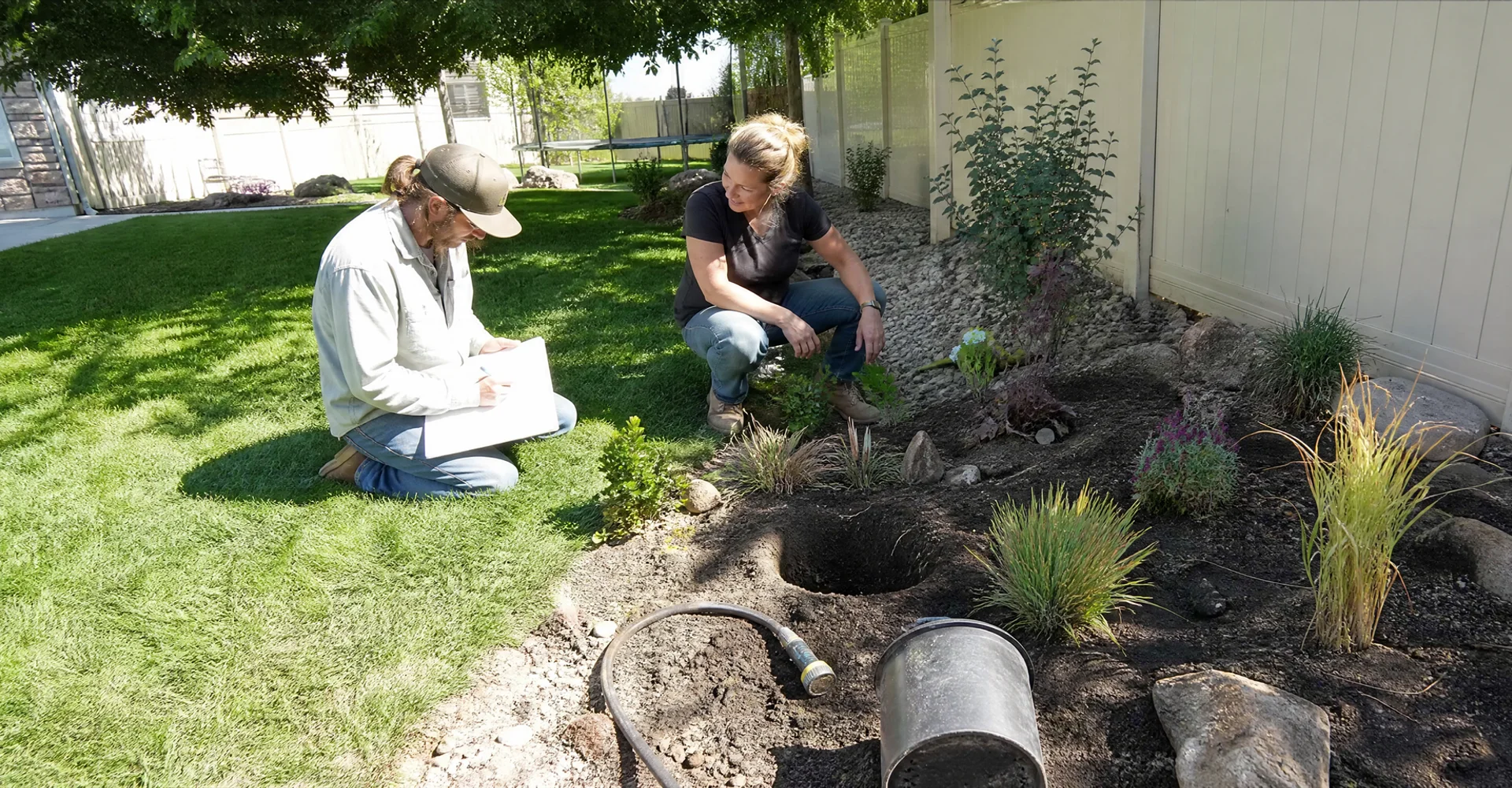
A good yard starts with a plan, and a plan starts with somebody standing in your yard. We walk the property, look at where the sun lands through the day, where the wind comes from, how the ground falls, what soil we’re dealing with and what water source feeds the irrigation. Then we listen to how you actually want to use the space: kids, dogs, entertaining, low maintenance, growing things, or simply not looking at bare dirt any more.
From that we produce a plan showing bed lines and lawn shapes, hardscape like patios and walls, planting with species named rather than “shrub”, edging, lighting where it matters, and hydrozones so the irrigation makes sense. It is a working document, not a pretty picture. Our own crew builds from it.
That last part matters more than it sounds. When the designer and the installer are different companies, the plan gets reinterpreted in the field. Usually toward whatever is easiest that day. Because we build what we draw, the grade the patio was designed for is the grade it gets, and the plant list is one we know establishes here rather than one that looked good in a catalogue.
Design is also where budget conversations happen most usefully. While we are still drawing, you can trade a larger patio against more planting, or decide to phase the back yard to next season. Making those calls on paper costs nothing. Making them mid-build costs real money.
What’s included
- On-site consultation and full site measurement
- Sun mapping, wind exposure and microclimate assessment
- Soil and water-source review before anything is specified
- Named plant, tree and hardscape selections suited to Utah
- Hydrozoning so irrigation groups plants by water need
- Bed edging, gravel and mulch treatment
- Lighting layout where it’s part of the scope
- A plan that feeds directly into installation
Common problems a design solves
A yard that was built piecemeal
Beds added one summer, a patio the next, sprinklers moved twice. Nothing is wrong exactly, but nothing quite works together and half the yard is watered the same as the lawn. A design puts a coherent structure back over the top of it.
Plants that keep dying in the same spot
Usually one of three things: the wrong species for alkaline soil, a hot dry corner that needs a tougher plant, or a bed on a lawn irrigation zone getting far too much or far too little water. All three are design problems, not gardening problems.
Water bills nobody can explain
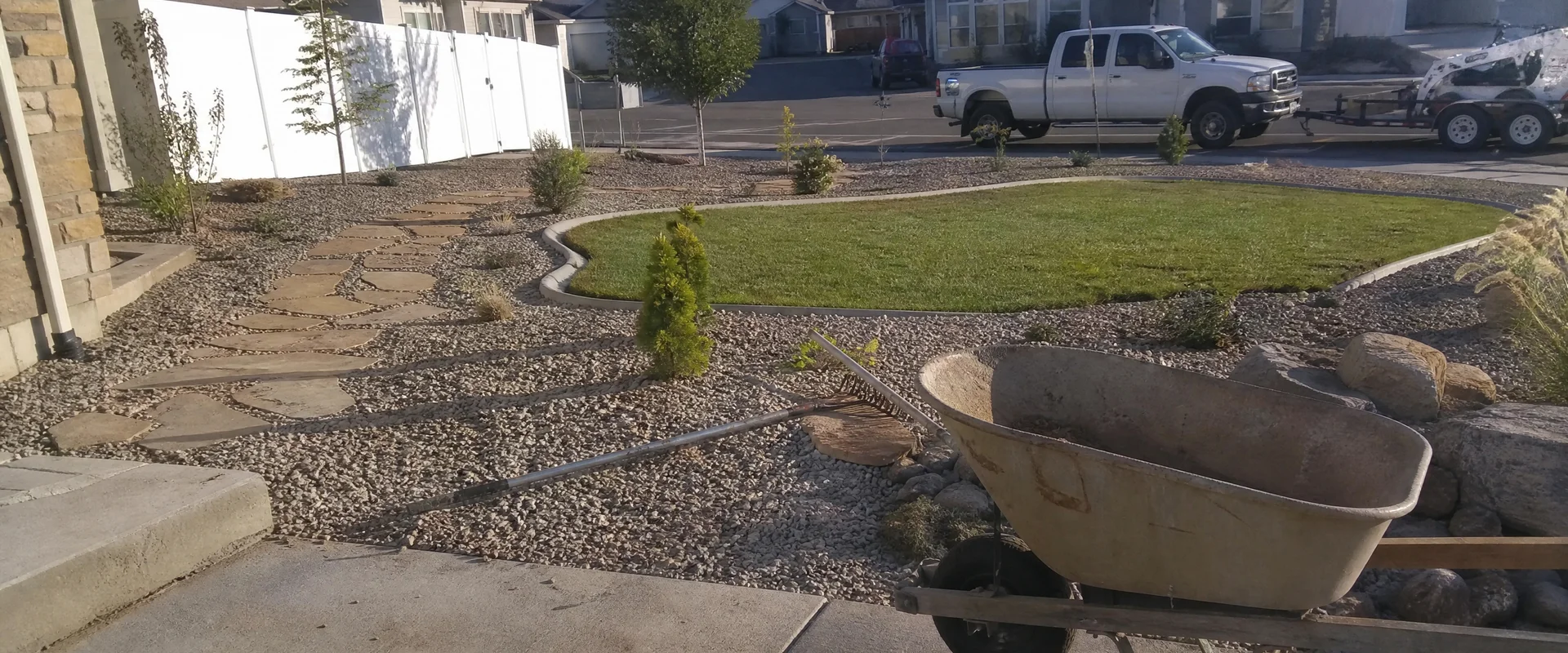
Wall-to-wall turf on spray heads is expensive to run in a Utah summer. A design that keeps a usable lawn panel and converts the rest to hydrozoned, drip-irrigated beds cuts consumption significantly without making the yard look bare.
Not knowing where to start
Big empty yards are paralysing. A design breaks the project into stages with a sensible order: grading and irrigation first because they’re the hardest to retrofit, then hardscape, then planting.
What affects the price
Design fees generally track the complexity of what you’re asking for:
- Property size and how much of it is in scope
- Grade change, drainage issues and anything structural
- Hardscape content: patios, walls and lighting need more detail than planting alone
- Revision rounds and how settled you are on direction
- Whether it feeds an install. The fee is commonly credited when we build it
Where we design
We design across Grantsville, Tooele, Stansbury Park, Erda and Lake Point, and on scheduled runs into South Jordan, Herriman and Eagle Mountain where water-wise retrofits are the most common request.
For background reading, our guides cover what to expect from a professional landscape design, the best drought-tolerant plants and trees for Utah, and water-wise versus traditional lawn.