
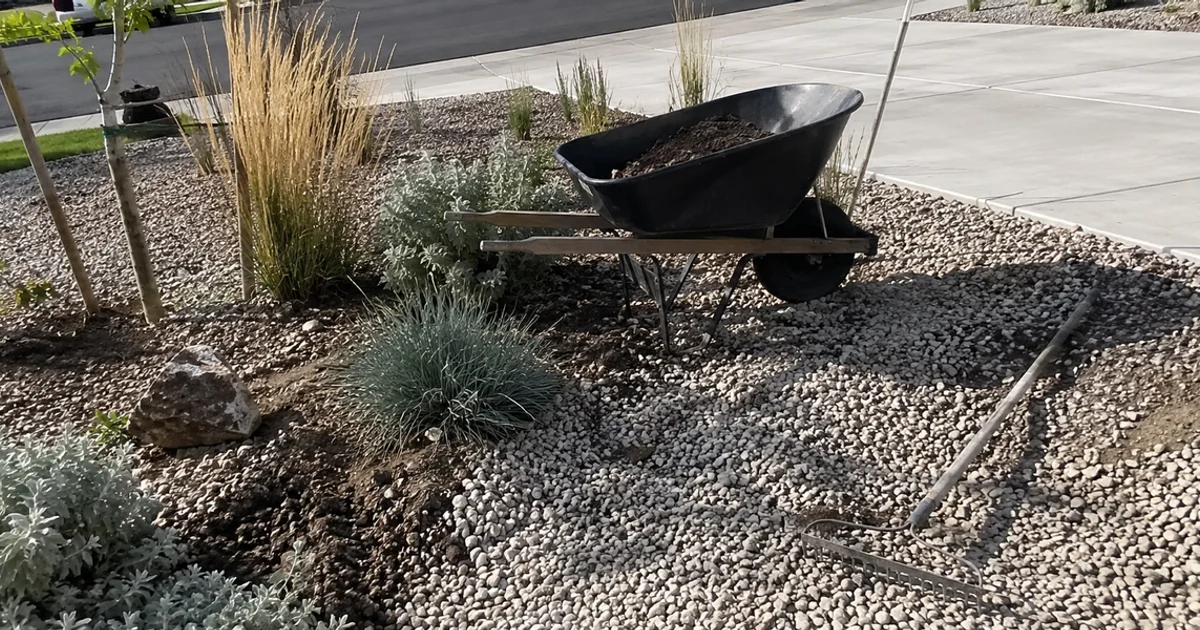
Start with the conditions, not the plant list
Plant selection in the Tooele and Salt Lake valleys is governed by three things: alkaline soil, USDA hardiness zones roughly in the 6 to 7 range depending on elevation and exposure, and long dry summers with wind. Choose for those and a plant needs ordinary care. Choose against them and it needs constant intervention to stay alive.
That’s why we start every landscape design with the site rather than a wish list. A plant that thrives in a sheltered Salt Lake back yard may struggle badly on an exposed lot in Lake Point or Eagle Mountain, and the difference has nothing to do with the gardener.
Categories that work here
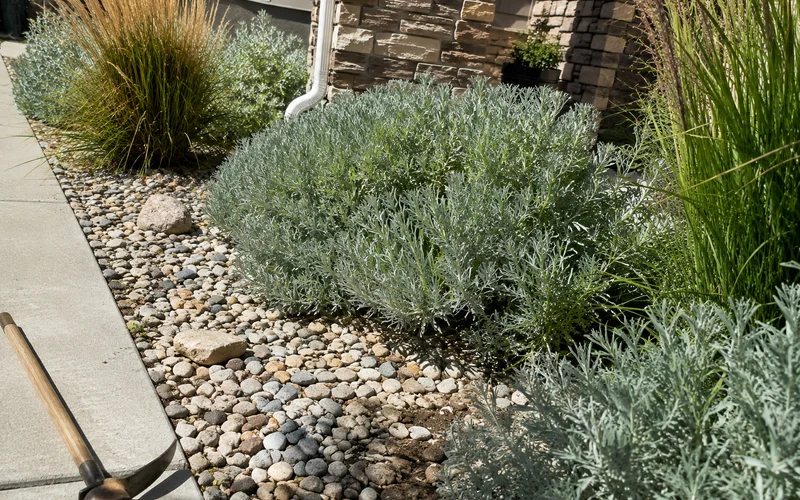
Drought-tolerant perennials. The backbone of a water-wise bed. Look for silver or grey foliage, fine or needle-like leaves, and aromatic herbs. All adaptations to dry conditions. These give you seasonal colour without the water demand of traditional bedding.
Ornamental grasses. Excellent value in a Utah landscape. They handle heat and wind, hold structure through winter, need minimal water once established, and add movement that static planting doesn’t.
Adapted and native shrubs. Species already suited to alkaline, well-drained soil form the mid-layer of a water-wise design. Many have the added benefit of supporting local pollinators.
Shade trees. A large canopy tree is the highest-value water-wise investment in a yard, because the shade it casts reduces evaporation and heat stress on everything beneath it. Choose for alkaline tolerance, wind resistance and mature size.
Evergreens. Year-round structure and, on rural or exposed lots, genuine wind screening. A row along a windward boundary changes the growing conditions for the whole property.
What alkaline soil actually does
Higher soil pH makes certain nutrients, iron in particular, less available to plants, even when the nutrient is physically present. The visible symptom is chlorosis: yellowing leaves with green veins, most obvious on susceptible species. Acid-loving plants such as blueberries, azaleas and rhododendrons are perpetual patients here rather than plants.
You can amend soil, and we do where it helps. But amendments buffer at the margin rather than changing the fundamental chemistry, and the effect fades. Selecting alkaline-tolerant species from the start is the durable answer.
The establishment caveat
“Drought tolerant” describes a mature plant, not a new one. Everything needs consistent water through its first full season while roots extend. Plant a xeriscape bed and water it like a xeriscape from day one and you’ll be replacing most of it.
Hydrozoning: the design decision that matters most
Hydrozoning means grouping plants by water requirement so each irrigation zone waters things that genuinely want the same schedule. It sounds obvious and it’s the most commonly ignored principle in Utah residential landscapes.
The classic failure is a bed of drought-tolerant shrubs on the lawn’s spray zone. Turf wants short, frequent cycles to keep a shallow root system happy. Drought-tolerant shrubs want infrequent deep soaking, and constant surface moisture rots their roots and encourages exactly the shallow rooting they’re supposed to avoid. One zone cannot serve both.
Practically, that means:
- High-water zone: turf, if you’re keeping any
- Moderate zone: newer plantings, some ornamentals, food gardens
- Low zone: established drought-tolerant beds, on drip irrigation rather than spray
- Very low or none: established native and adapted planting after the first year or two
Pairing planting with drip
Water-wise beds want drip, not spray. Drip puts water at the root zone with almost no evaporation or wind loss, which in a dry Utah summer is a significant difference. Emitters can be sized per plant, so a new tree and a small perennial in the same bed each get what they need.
Under gravel it disappears entirely. Lines run over the weed fabric, gravel goes on top, and nothing is visible.
Where this comes together
The most effective water-wise Utah yards we build are not gravel deserts. They keep a modest, usable lawn panel where a lawn earns its place, and surround it with layered, hydrozoned, drip-irrigated planting that looks fuller than the turf it replaced. Our comparison of water-wise versus traditional lawn in Utah sets out that balance in detail. Converting qualifying turf area may also be eligible for rebates through Utah Water Savers.
If you want a plant list specific to your lot rather than a general one, that’s what an on-site design consultation produces, and the visit itself is free.