
This isn’t all-or-nothing
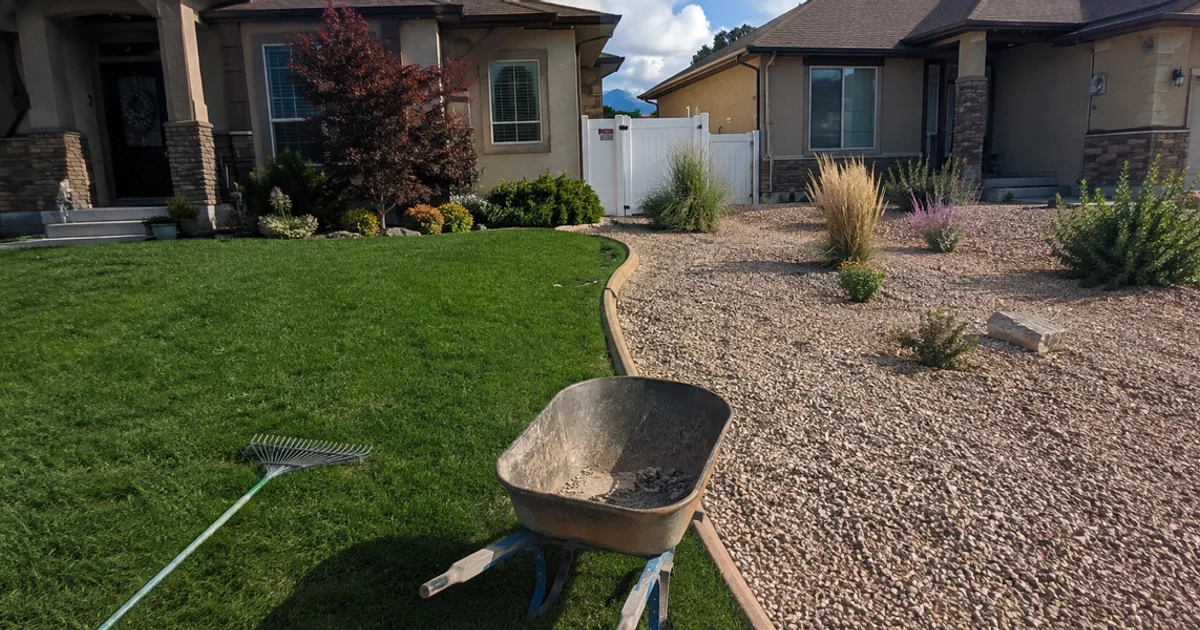
The question is rarely “lawn or xeriscape.” It’s how much lawn, and where. A modest turf panel where kids and dogs actually use it earns its water. Wall-to-wall turf across a front yard nobody walks on doesn’t.
That distinction is the heart of the Localscapes approach, and it’s how we approach most water-wise work in landscape design: a central open shape you actually use, defined activity zones, planting beds that do the visual work, and paths connecting them.
The trade-offs, side by side
| Traditional lawn | Water-wise / Localscapes | |
|---|---|---|
| Water use | Highest of any landscape surface | Substantially lower once established |
| Mowing | Weekly through the season | None |
| Fertilising | Regular through the season | Minimal to none |
| Weeding | Low in a healthy lawn | Ongoing, lighter with gravel and fabric |
| Up-front cost | Lower to install | Higher: removal, beds, drip, materials |
| Long-term cost | Ongoing water, mowing, inputs | Lower running costs |
| Rebate eligibility | None | Qualifying turf removal may qualify |
| Usability | Best surface for play and pets | Depends on design and paths |
| Summer appearance | Needs water to stay green | Holds up through heat |
Water: where the difference actually shows
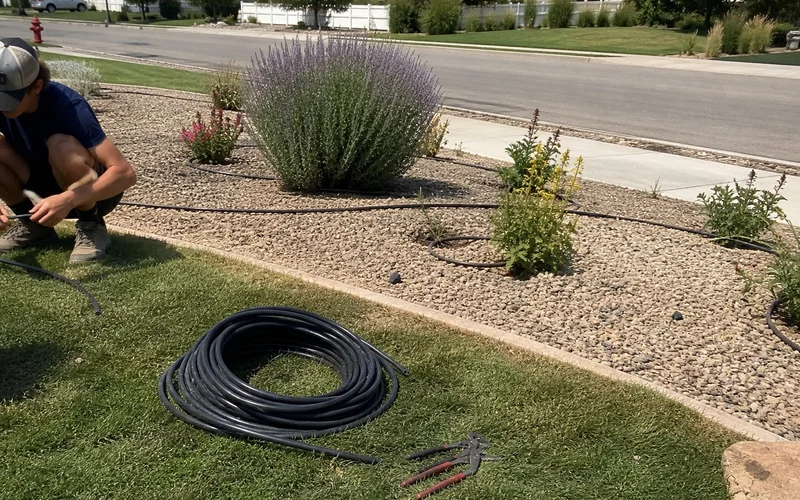
Outdoor irrigation is the largest share of residential water use in Utah during summer, and turf is the thirstiest surface in a typical yard. Replacing turf with drip-irrigated, hydrozoned planting cuts that demand meaningfully, not to zero, because established plants still need water, but by a large margin.
The saving is bigger where the turf was performing worst: park strips, narrow side yards, steep slopes and hot west-facing frontage. Those are areas where spray irrigation loses a lot to overspray, wind drift and runoff before it ever reaches roots. They’re also usually the first areas we’d convert.
Maintenance: different, not absent
Water-wise landscaping is often sold as maintenance-free, which sets people up for disappointment. What actually changes:
Goes away: mowing, edging the lawn weekly, regular fertilising, and the constant summer watering anxiety.
Stays or arrives: occasional weeding in gravel beds, seasonal pruning and cutting back of perennials and grasses, checking drip emitters, and topping gravel or mulch where it thins.
Net, it’s less work, but it’s a different rhythm rather than nothing.
Curb appeal and neighbours
The main hesitation we hear is that a water-wise yard will look bare or unfinished next to green lawns on the street. That’s a fair worry about bad water-wise design and not a fair worry about good design.
What makes the difference is layering: varied plant heights, contrasting foliage textures and colours, ornamental grasses for movement, and crisp bed lines with real edging. Sparse planting with lots of exposed rock is what people picture, and it’s what we avoid. Getting the species right is most of that work — see the best drought-tolerant plants and trees for Utah.
If your community has design guidelines, and several in Herriman, South Jordan and the Daybreak area do, we design to them. Increasingly those guidelines actively encourage or require water-wise treatment rather than discouraging it.
The middle path most people choose
Keep a usable lawn panel in the back where the family actually uses it. Convert the front yard, park strip and side yards to hydrozoned water-wise planting on drip. Lower bills, less mowing, and a lawn where a lawn is worth having.
Rebates
Utah Water Savers administers turf-replacement rebate programs that pay per square foot of qualifying lawn converted to water-wise landscape. Requirements typically cover minimum plant coverage, approved materials and sometimes pre-approval before work starts.
Program details, funding levels and participating districts change from year to year, so confirm current terms with your provider before committing. We build conversions to that standard regardless of whether you claim, because it’s a sensible specification.
Deciding for your yard
Ask yourself where the lawn is genuinely used, honestly. Most households find the answer is a smaller area than they have. Everything else is a candidate.
Our guide on converting sod to water-wise drip beds for a Utah rebate walks through what the conversion actually involves, and a free on-site visit will tell you what your specific yard would look like either way.