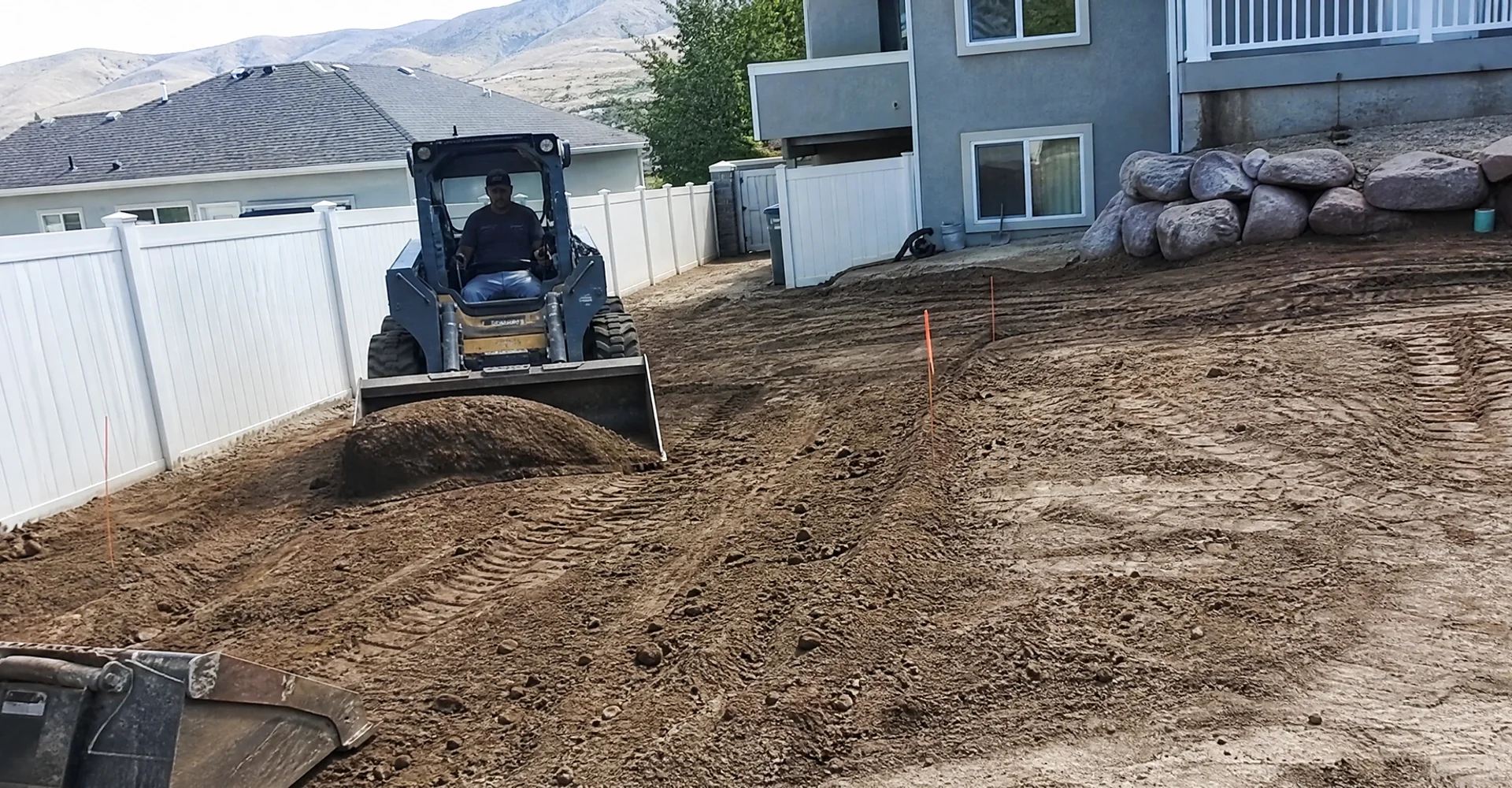
Grading is where a good yard is made or lost
Everything visible in a landscape sits on the grade. Get it right and water leaves the property the way it should, the lawn drains, and the foundation stays dry. Get it wrong and no amount of good sod, planting or hardscape fixes it. You just build a nicer surface over the same problem.
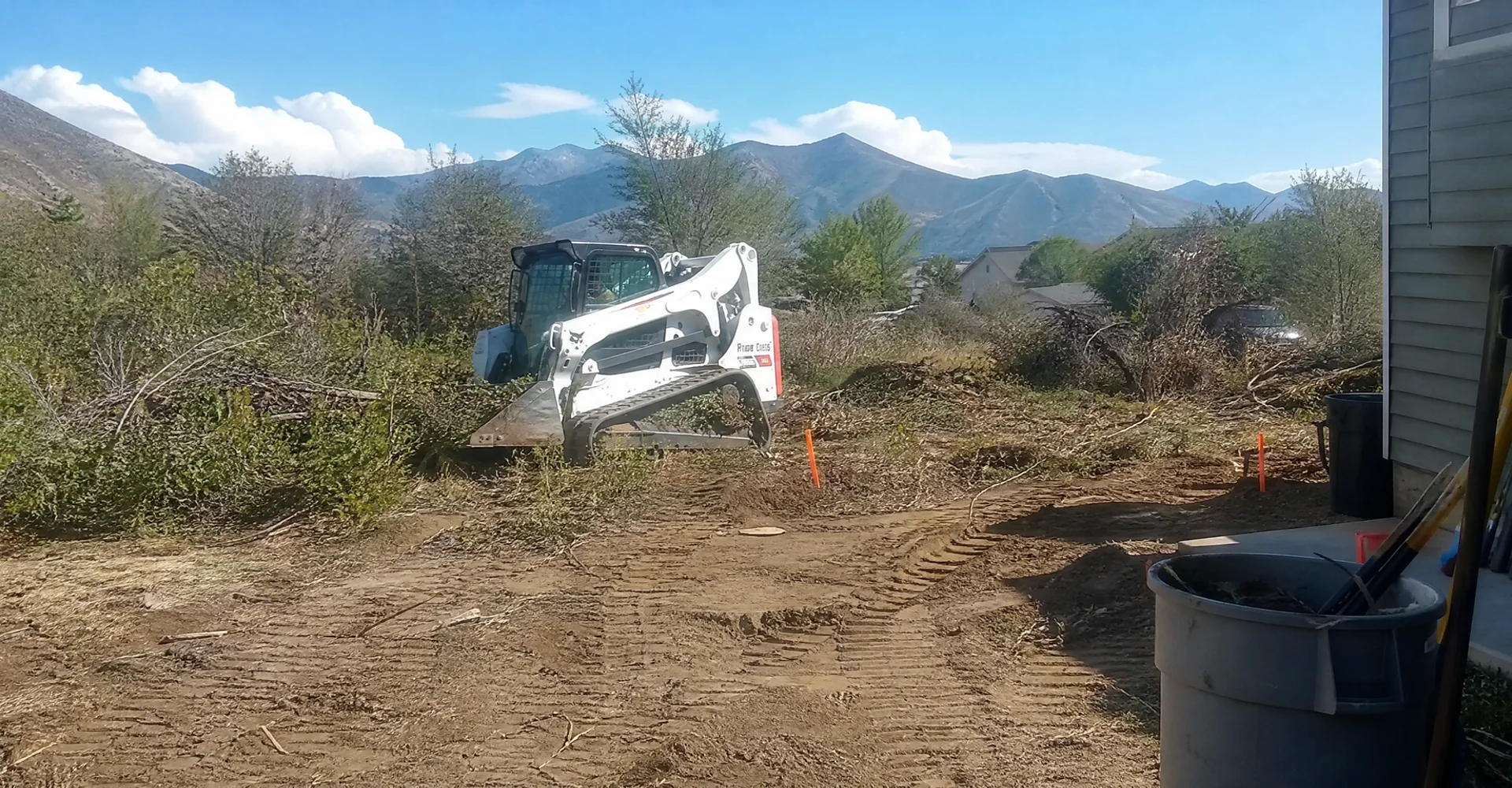
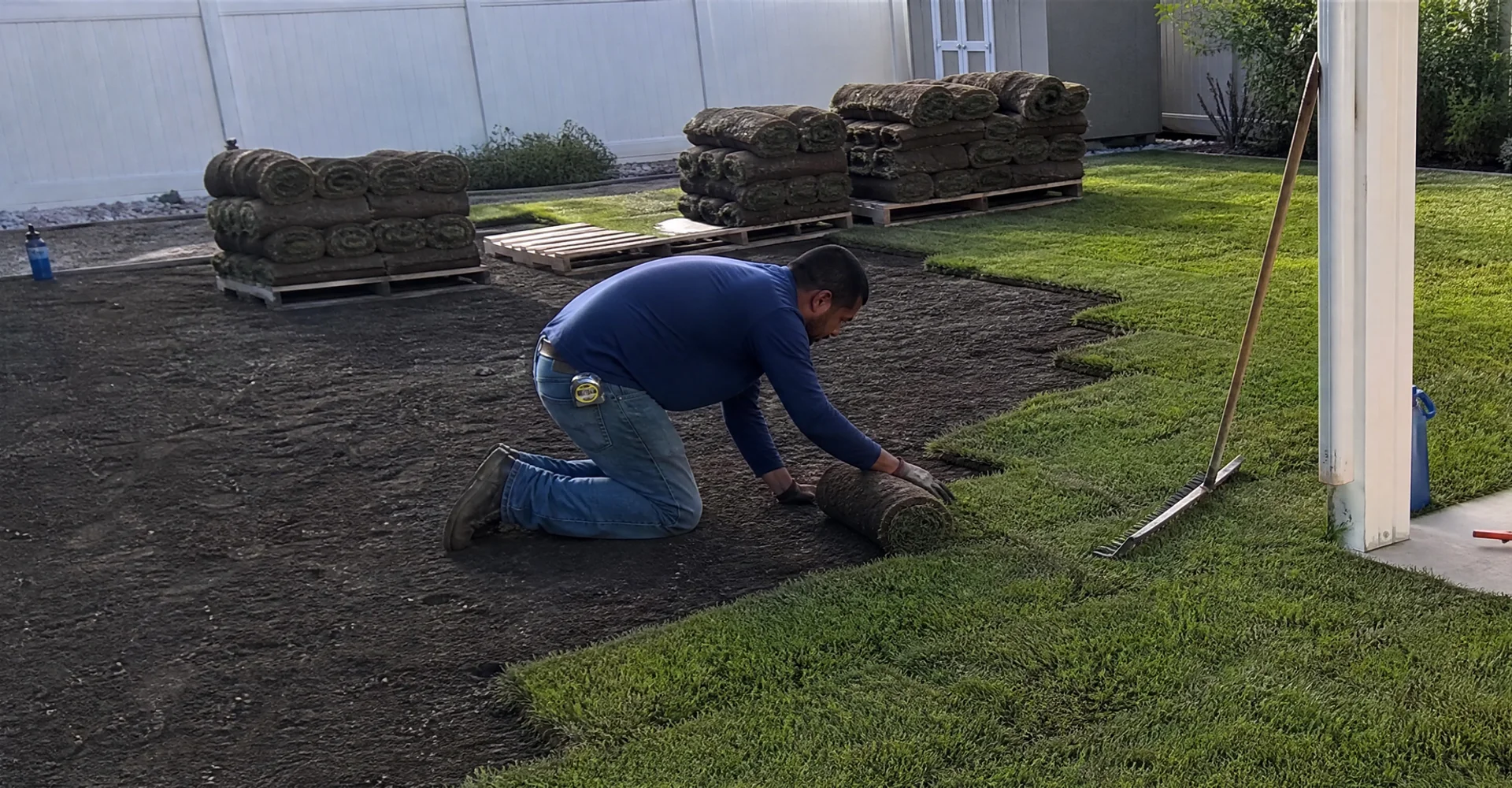
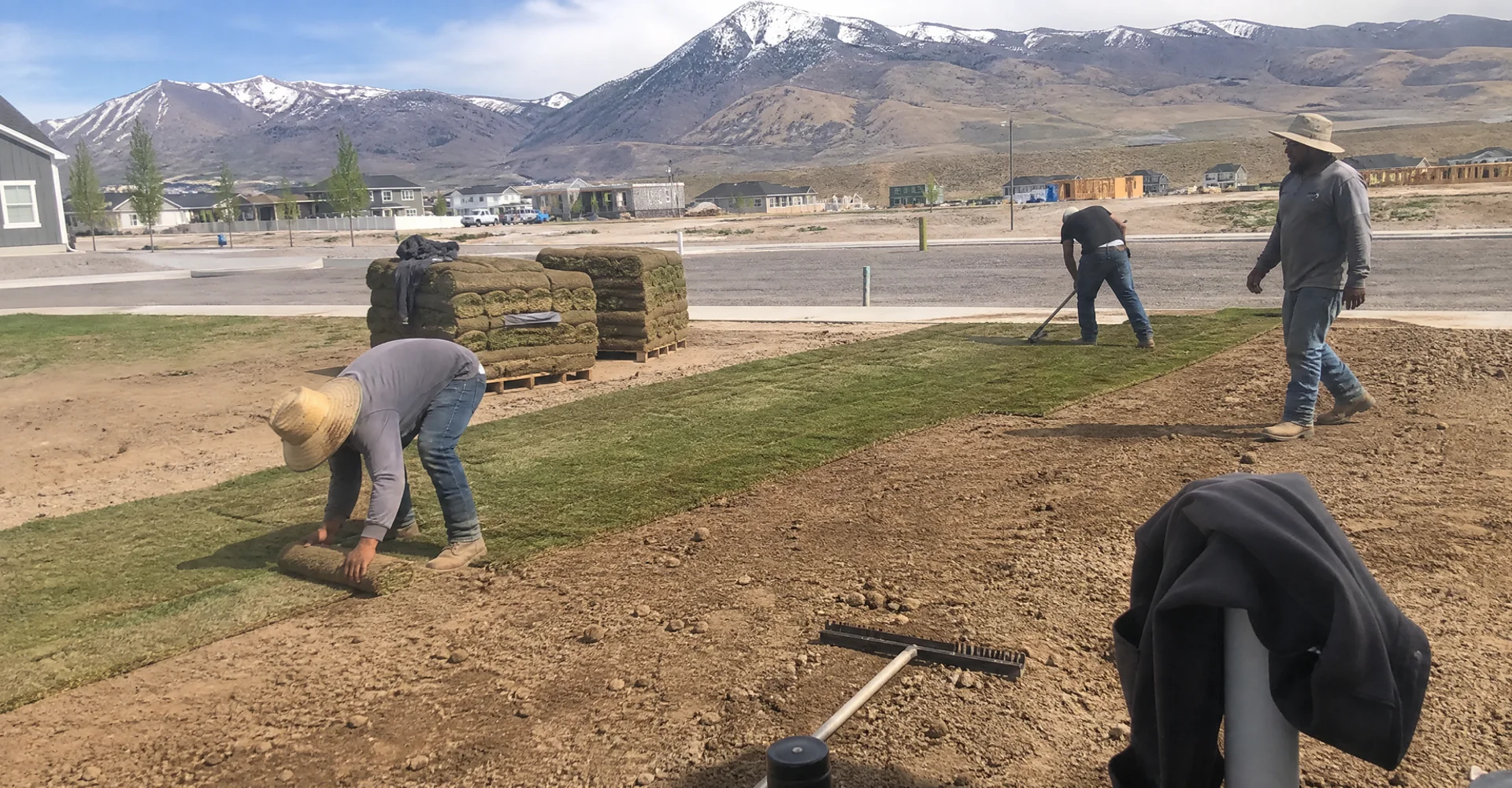
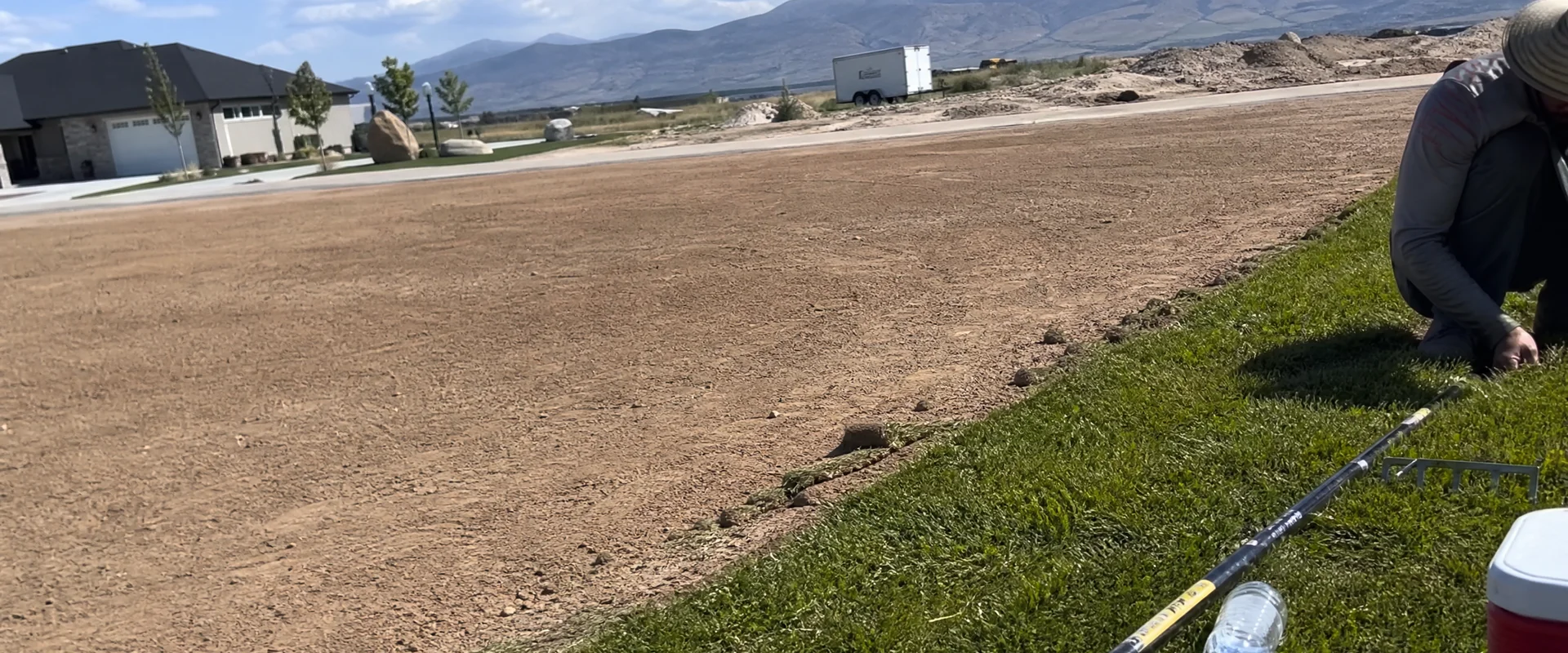
We do rough and finish grading for residential and commercial properties across the Tooele and Salt Lake valleys. Rough grading is the bulk earthmoving that sets the overall shape and fall. Finish grading is the precise final surface, raked smooth and free of rock, that sod or seed goes onto. New construction needs both, and lawn replacements usually need the finish work at minimum.
The starting point is always water. Before we cut anything we walk the property looking for pooling, staining or efflorescence on the foundation, washed-out soil, and where runoff arrives from uphill. A wet corner in the back yard often has an upstream cause two hundred feet away. Fixing the symptom without finding the source means doing it again.
From there we set grade stakes and shoot levels so the fall is consistent, not approximate. Where runoff concentrates, we cut a swale. A shallow channel that carries water to a safe outlet and disappears once grass grows over it. And on new builds, we rip the compaction that construction traffic leaves behind so the ground can actually absorb water rather than shedding it all at once.
What’s included
- Site assessment: pooling, foundation contact, runoff paths
- Grade stakes and laser-level shooting
- Cut and fill with skid steer and mini excavator
- Compaction relief and rock screening
- Swales and runoff channels where needed
- Positive fall established away from structures and window wells
- Finish grading raked smooth for sod, seed or hardscape
- Soil import or haul-off as required
Common problems we solve
Water pooling against the house
The most urgent version of a grading problem. Positive fall away from the building and clear window wells is the fix, and it is far cheaper than what happens if it’s left.
A lawn with soft, permanently wet patches
Low spots collecting water that has nowhere to go. Filling and reshaping, sometimes with a swale to move the volume, dries them out for good.
Soil washing off a slope every spring
Runoff moving faster than the surface can absorb. Grading to slow and redirect it, sometimes combined with a retaining wall or terracing, stops the loss.
New sod that never rooted evenly
Frequently a finish-grade issue: an uneven surface means some areas sit in water while high spots dry out and get scalped by the mower.
What affects the price
- Area to be graded
- Cut and fill volume. How much material actually has to move
- Soil import or haul-off and material costs
- Rock content and how much screening is needed
- Access for machinery
- Swales, drains or other drainage structures
- Obstacles: mature trees, existing irrigation, hardscape to work around
Where we grade
Grading work runs across Grantsville, Tooele, Erda, Stansbury Park, Lake Point and Pine Canyon, plus scheduled runs into Herriman, Bountiful and the Salt Lake Valley.
For more background, see our guide on why yard grading and drainage matter in Utah.