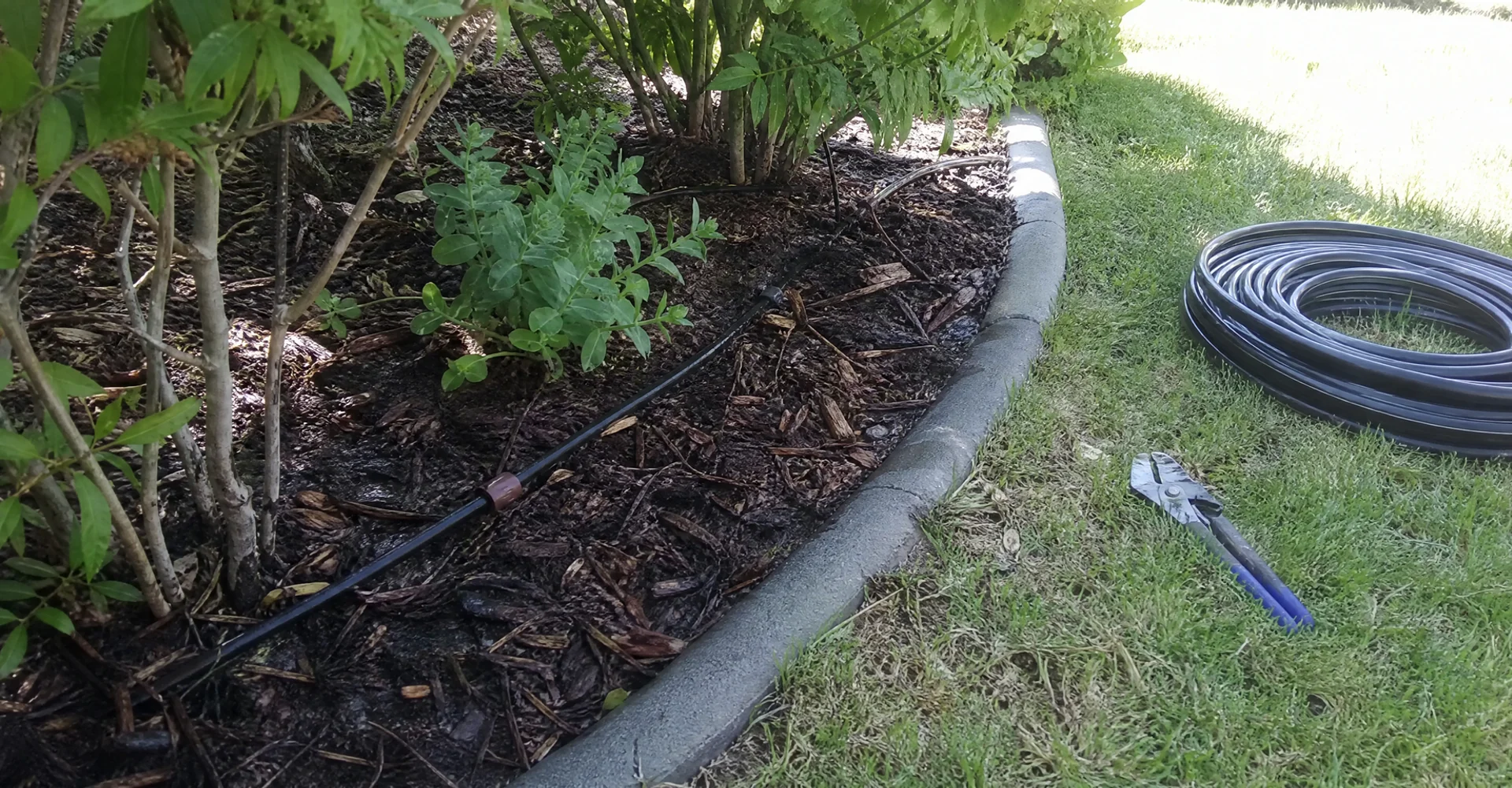
Water at the roots, not in the air
Drip irrigation does one simple thing extremely well: it puts water directly at the base of a plant, slowly enough that the soil can absorb it, with almost nothing lost to evaporation, wind or overspray. In a dry, windy Utah summer that difference is not marginal.
We design and install drip for garden beds, shrub borders, trees and containers, and we retrofit drip zones into existing sprinkler systems. The retrofit is the part most homeowners do not realise is affordable, in most cases a drip zone can run off a valve and controller you already have, with a filter and pressure regulator added at the zone.
The design principle that matters is hydrozoning: grouping plants by how much water they actually want. The most common irrigation fault we find in Utah yards is beds sharing a zone with the lawn. Turf wants short, frequent cycles. Beds and trees want deep, infrequent ones. Run them together and one of the two is always getting the wrong thing. Usually the beds, which is why shrubs sulk while the grass looks fine.
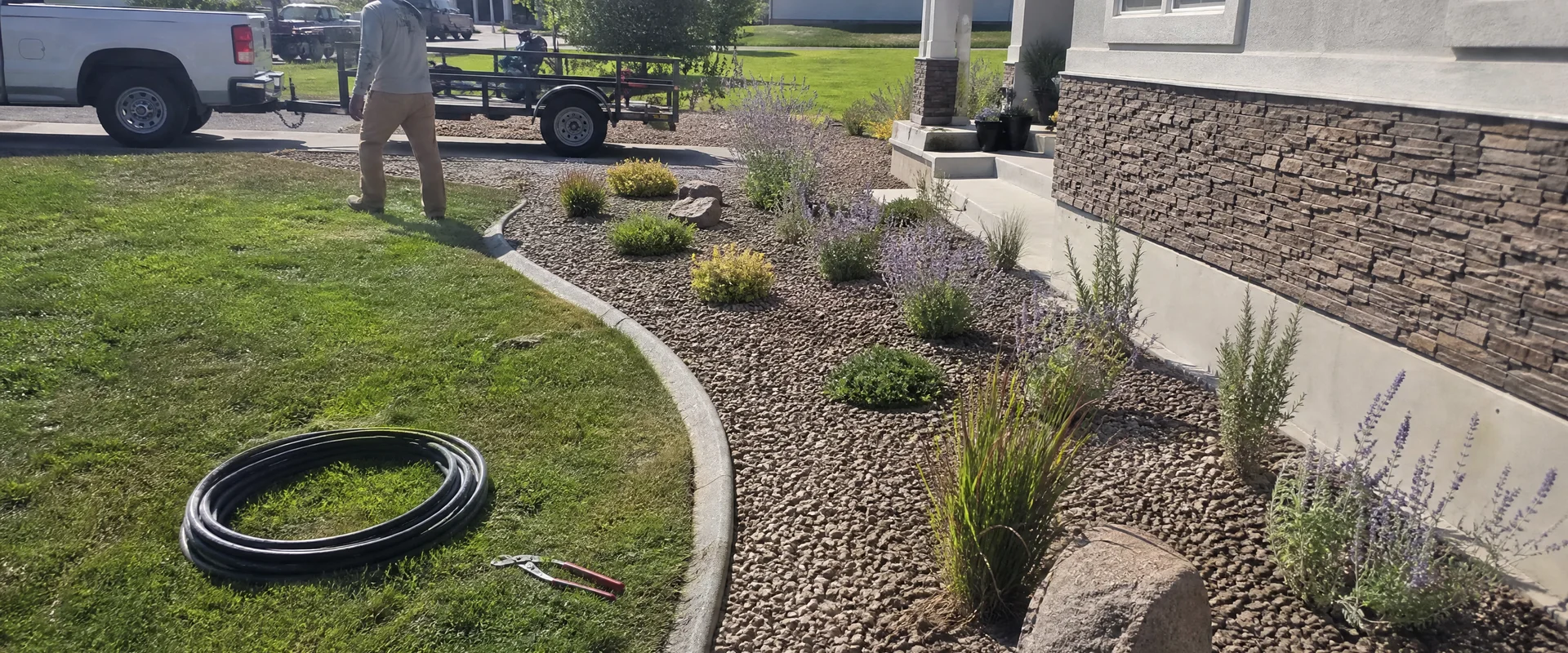
Drip is also the backbone of any water-wise conversion. If you are taking out thirsty turf and putting in drought-tolerant planting with gravel or mulch, the beds need drip underneath. Converting qualifying lawn area may be eligible for turf-replacement rebates through Utah Water Savers, and we build conversions to that standard.
What’s included
- Hydrozone planning so plants are grouped by water need
- Filter and pressure regulator sized for your water source
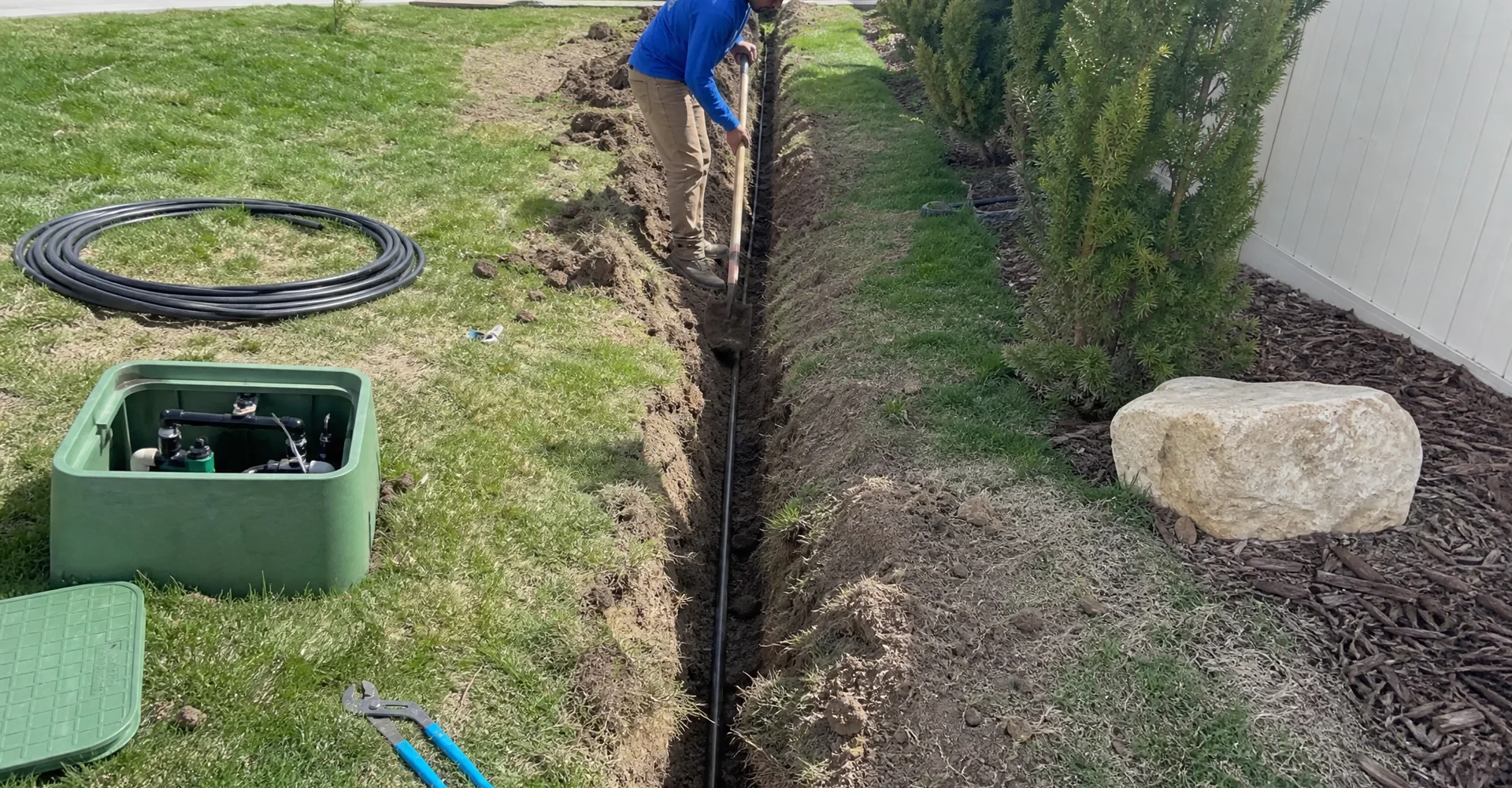
- Poly tubing routed through beds and around trees
- Emitters sized per plant rather than a single flow rate
- Integration with an existing controller and valves where possible
- Full zone test with every emitter checked
- Starting schedule set and explained
- Leak diagnostics and repair on existing drip systems
Common problems we solve
Shrubs struggling while the lawn thrives
Almost always beds running on a turf schedule. Short frequent cycles keep grass green and leave shrub roots shallow and thirsty. Splitting the beds onto their own drip zone fixes it without changing anything about the lawn.
Emitters that stopped working
Sediment from untreated secondary water, or pressure that was never regulated. Correct filtration and a regulator solve it, and cleaning the filter through the season keeps it solved.
A hidden leak nobody can find
Drip lines sit under mulch and gravel, so a split fitting can run for weeks unnoticed. Usually the first clue is the water bill. We trace it and repair it.
A lawn you no longer want to water
Converting all or part of the turf to drip-irrigated water-wise beds cuts outdoor water use substantially, and it looks intentional rather than bare when the planting and gravel are designed properly.
What affects the price
- Bed area and total tubing run
- Plant count and emitter quantity
- Whether we’re adding to an existing system or building a zone from scratch
- Water source. Secondary water needs heavier-duty filtration
- Turf removal if you’re converting an existing lawn area
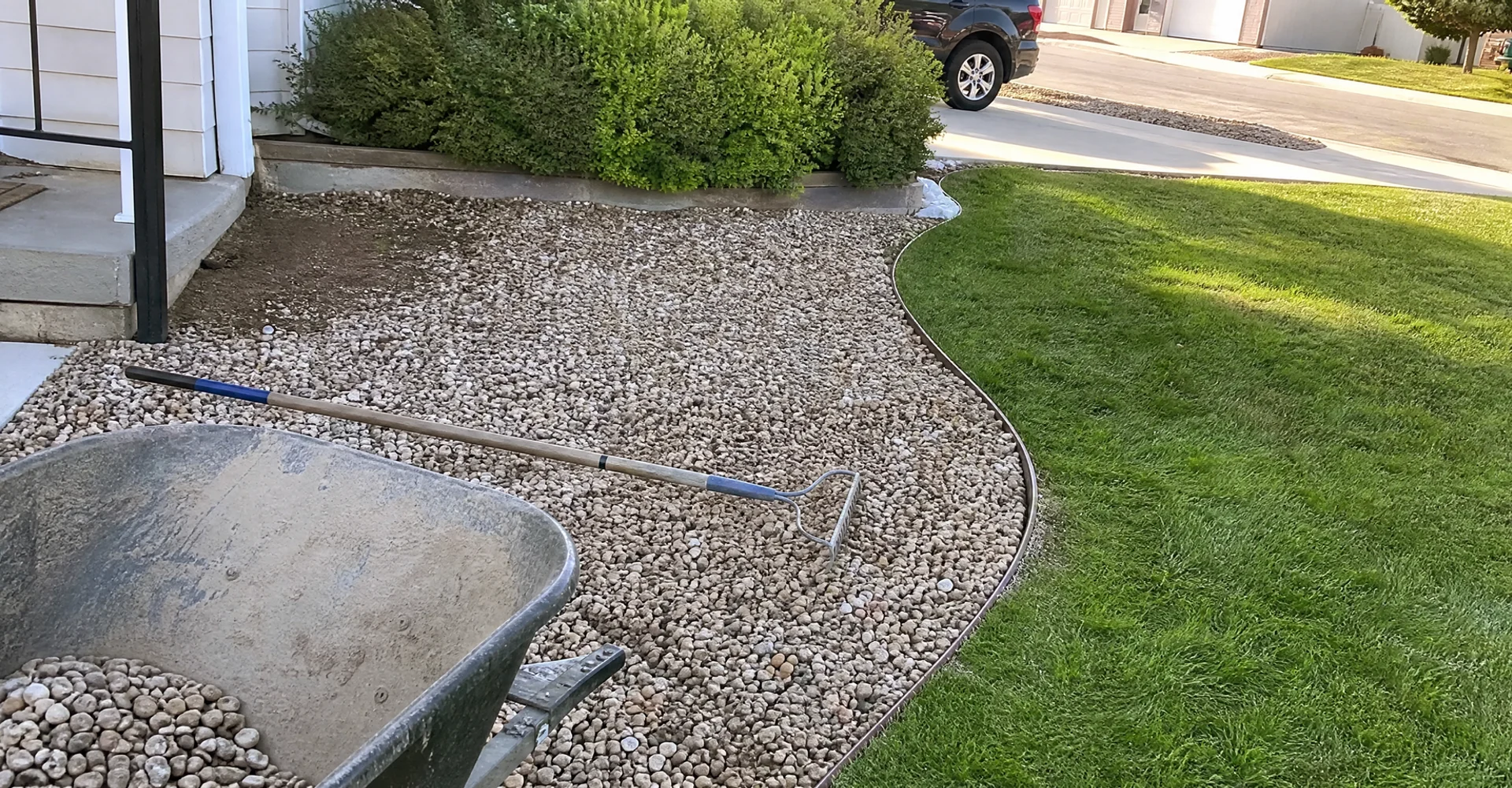
- Gravel or mulch installed over the finished lines
Where we install drip
Drip work runs across Grantsville, Tooele, Stansbury Park and Erda, and it’s especially busy in South Jordan and Eagle Mountain where water-wise conversions are the most common request.
Our guides explain how drip irrigation works, drip versus spray sprinklers for beds, and converting sod to water-wise drip beds for a Utah rebate.