
The short version
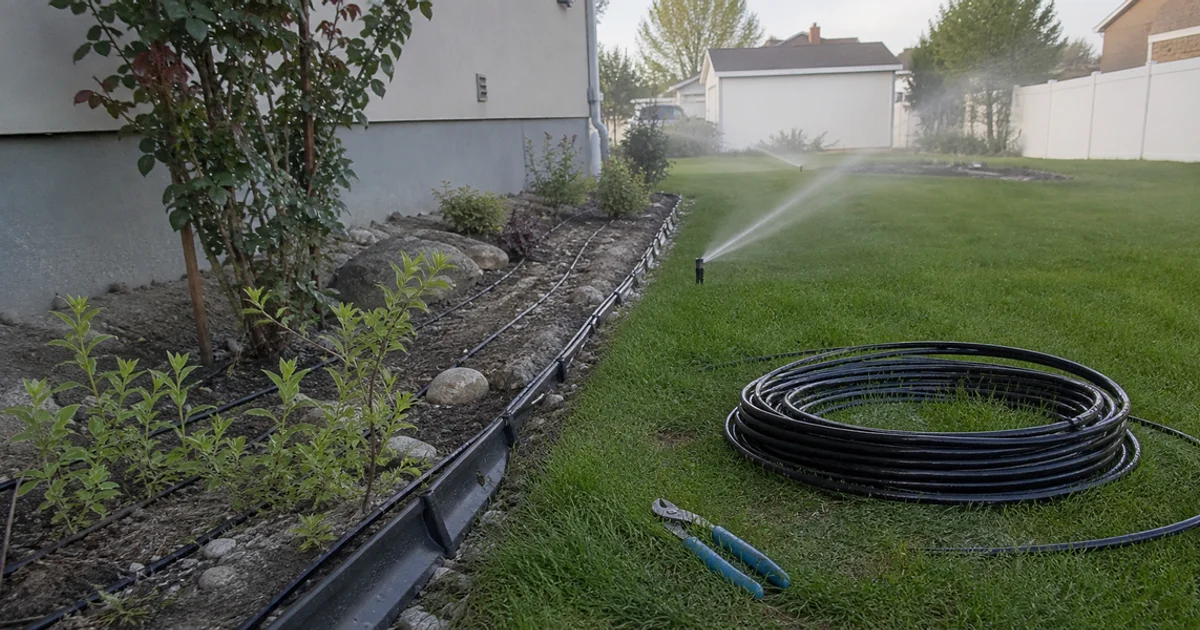
For lawns, spray. For beds and trees, drip. That’s the answer in most Utah yards, and the reasoning is worth understanding because it explains most of what’s wrong with older irrigation systems here.
Converting beds from spray to drip is one of the most common improvements we make, and it’s a core part of drip irrigation work. If you want the mechanics before the comparison, start with how drip irrigation works.
Side by side
| Drip | Spray | |
|---|---|---|
| Water efficiency | High, almost all reaches roots | Lower, evaporation, wind, overspray |
| Best for | Beds, shrubs, trees, containers | Lawn and continuous turf areas |
| Foliage | Stays dry, less disease | Gets wet, more fungal risk |
| Wind sensitivity | None | Significant in a Utah spring |
| Weed pressure | Waters only where you place emitters | Waters everything, including weed seed |
| Visibility of faults | Low, leaks hide under mulch | High, you can see a broken head |
| Filtration needed | Yes, essential | Less critical |
| Run time | Longer, less frequent | Shorter, more frequent |
| Cost to install in beds | Lower, less trenching | Comparable but with more head plumbing |
Where the water actually goes
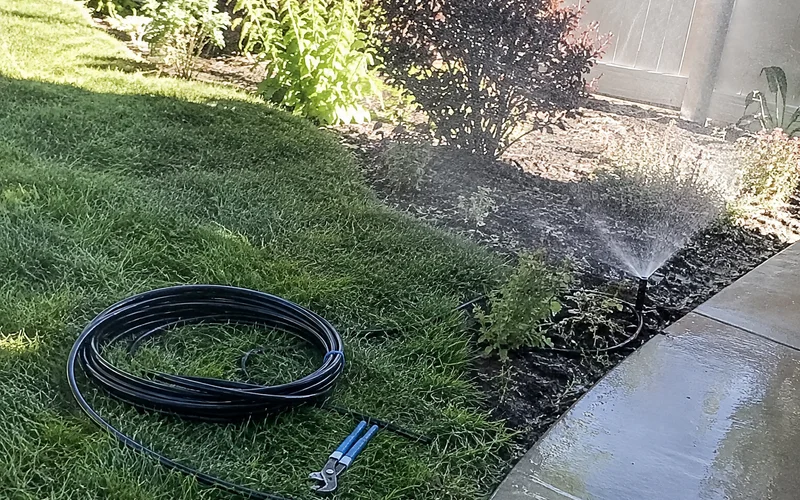
Spray irrigation loses water three ways before it reaches soil. Evaporation from droplets in the air, especially in low humidity and high temperature. Which describes a Utah summer afternoon precisely. Wind drift, which in Lake Point, Eagle Mountain or on any exposed rural lot can be substantial. And overspray onto driveways, paths and fences, where it does nothing at all.
Drip has none of those losses. Water leaves the emitter at soil level, slowly enough to soak in rather than run off.
The weed argument nobody mentions
Spray irrigates the entire bed surface uniformly, including all the bare soil between plants where weed seeds are waiting. Drip waters only the spots where you’ve placed emitters.
That means the bare areas of a drip-irrigated bed stay drier and germinate far fewer weeds. Combined with mulch or gravel over fabric, it’s a meaningful reduction in ongoing maintenance, and it’s a benefit people don’t anticipate until they experience it.
Plant health
Overhead spray wets foliage, and foliage that stays wet, particularly overnight, is more prone to fungal problems. Drip keeps leaves dry.
Drip also encourages better root architecture. Slow, deep application draws roots downward and outward. Frequent shallow spray keeps them near the surface, where they’re more vulnerable to heat stress and drying out between cycles.
The mistake in most older Utah yards
Beds sharing a turf spray zone. Turf wants short frequent cycles; beds want long infrequent soaks. One schedule cannot deliver both, so either the lawn is under-watered or the shrubs are drowning. Splitting the beds onto drip is the single highest-value change to most existing systems.
Maintenance differences
Drip needs filter cleaning through the season, periodic line flushing, and occasional emitter checks. Its main weakness is that faults hide. A split fitting under gravel can run for weeks before the water bill gives it away.
Spray is easier to inspect visually since you can watch it run, but heads get knocked out of alignment, clog, and sink below grade, all of which need adjustment.
Neither is maintenance-free. Drip’s maintenance is less frequent but requires more deliberate inspection.
When spray in beds is defensible
Dense ground cover planted edge to edge behaves more like turf, and spray can be reasonable. Very large mass plantings of a single species with identical water needs are another case. And if you have an existing spray zone in a bed that’s performing fine, there’s no urgency to change it.
But if you’re building new, converting, or dealing with an underperforming bed, drip is the right specification. For water-wise conversions in particular, drip is usually a requirement for rebate eligibility. See our guide on low-water beds for how bed surface choice fits alongside it.