
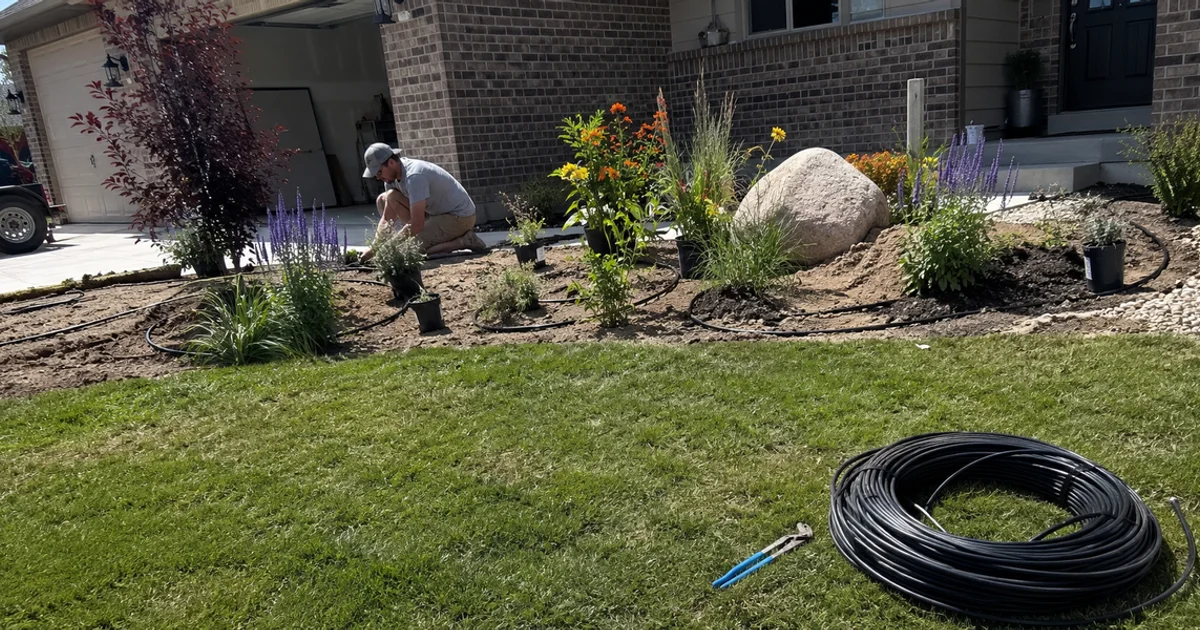
Start with pre-approval, not with a shovel
The single most common way people lose a rebate is starting work before applying. Most turf-replacement programs require pre-approval, and some require before-photos and a measured area submitted in advance.
So the order is: check your district’s current program, confirm eligibility, apply, get approval, then start. Doing it the other way round leaves money on the table for work you were going to do anyway. Once approved, the drip irrigation installation and bed build proceed normally.
Program terms, funding levels and participating districts change year to year, so verify current requirements rather than relying on what applied last season.
What typically qualifies
Requirements vary, but common conditions across Utah Water Savers programs include:
- A minimum converted area, measured in square feet
- Removal of live, irrigated turf. Dead lawn or bare dirt usually doesn’t count
- A minimum plant coverage percentage at maturity, so gravel-only conversions don’t qualify
- Approved plant material, generally drought-tolerant and adapted species
- Efficient irrigation in the converted area, which in practice means drip
- Sometimes a restriction on impermeable surfaces replacing the turf
That plant-coverage requirement is the one people trip on. Programs are trying to encourage genuine water-wise landscape, not gravel lots, so the design has to include real planting.
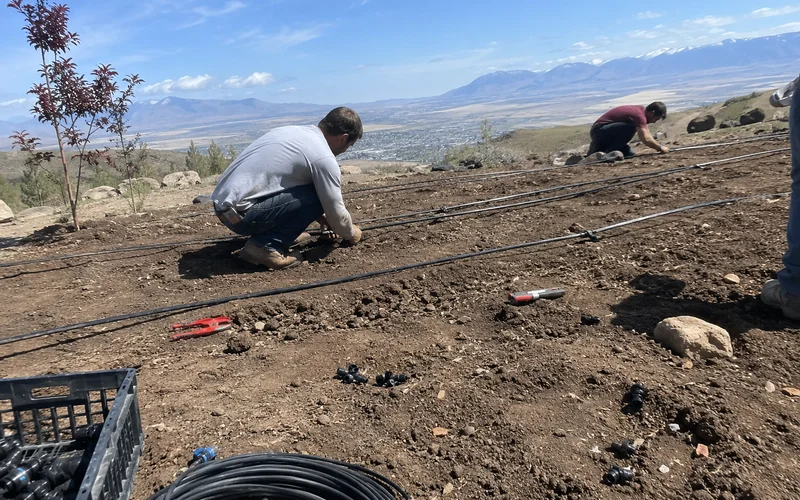
The conversion, step by step
1. Measure and design. Bed lines set out, plant selections chosen for coverage and water need, hydrozones planned. This is also what your rebate application needs.
2. Remove the sod. Cut, roll and haul the existing turf. We take it off site rather than tilling it in, because turf tilled under regrows through the new bed.
3. Prepare the base. Level the surface, remove rock and debris, and amend the soil where the planting needs it. This is also the moment to correct any grade problems that were hiding under the lawn.
4. Adjust the irrigation. Cap or reconfigure the spray heads that were watering the removed turf, and set up a drip zone with a filter and pressure regulator. In many cases the drip runs off an existing valve, so this is cheaper than it sounds. If you’re weighing whether the beds need drip at all, drip versus spray sprinklers for Utah beds makes the case.
5. Set the edging. Steel, poly or concrete curbing between the remaining lawn and the new bed. Without a physical edge, the line blurs within two seasons.
6. Run the drip lines. Poly tubing routed through the bed following the planting layout, with emitters sized per plant.
7. Plant. Drought-tolerant species with enough coverage to satisfy the program requirement and, more importantly, to look intentional.
8. Surface the bed. Fabric where appropriate, then gravel or mulch to a depth that suppresses weeds. Lines disappear underneath.
9. Document and claim. After-photos, final measurements and whatever else your program requires.
The design mistake to avoid
Sparse planting in a sea of rock. It fails the rebate coverage requirement and it’s what gives water-wise landscaping a bad name. Layered planting with varied heights and textures reads fuller than the lawn it replaced.
Plant selection for coverage
The program wants coverage at maturity; you want a bed that looks good now and better later. Balancing those means mixing:
- Ornamental grasses for structure, movement and reliable coverage
- Drought-tolerant perennials for seasonal colour
- Adapted shrubs for mid-layer mass and year-round presence
- A few larger specimens to anchor the composition
Everything should be alkaline-tolerant, since that’s what our soil is, and everything needs consistent water through its first season regardless of how drought-tolerant it becomes later.
What you’ll actually save
Turf is the highest water-demand surface in most yards, and the areas people convert first (park strips, narrow side yards, hot west-facing frontage) are usually the ones where spray irrigation was performing worst anyway.
Beyond the water, you stop mowing that area, stop fertilising it, and stop the weekly edging. The rebate offsets a chunk of the conversion cost, and the running-cost saving continues indefinitely.
Our guide comparing water-wise versus traditional lawn covers the broader trade-off if you’re still deciding how much to convert.