
The first two weeks decide everything
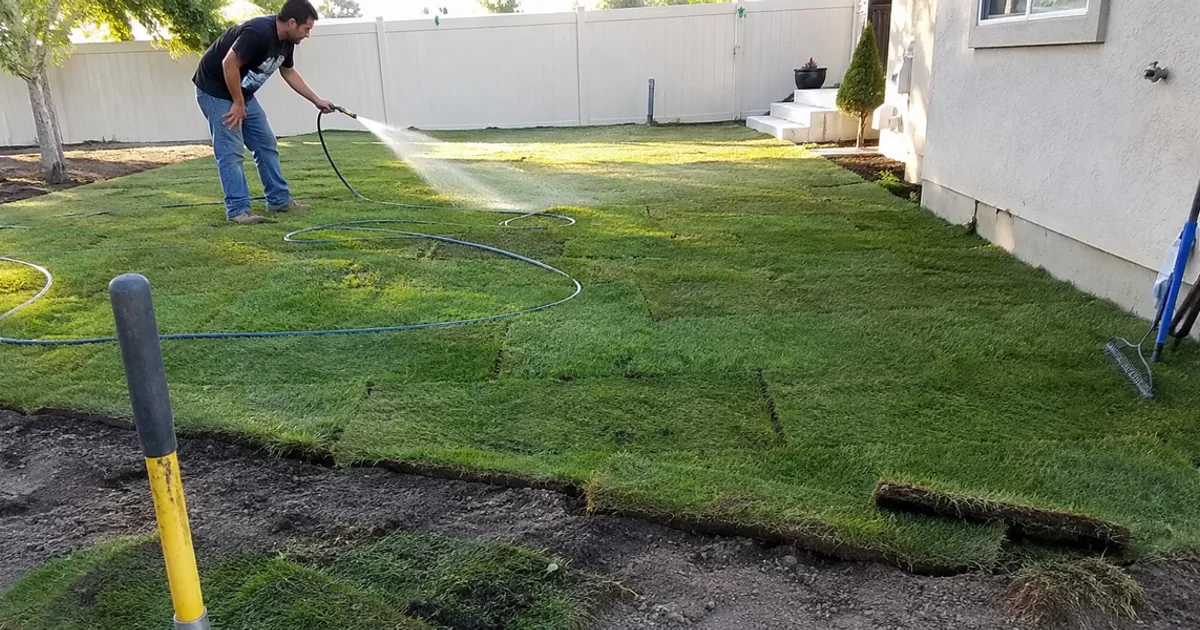
More new lawns fail from watering mistakes in the first fortnight than from anything else. The sod itself is fine when it’s delivered. What happens next determines whether it roots into your soil or slowly dries out on top of it.
The principle is simple: keep the sod and the soil directly beneath it consistently moist, without waterlogging it, until roots bridge the gap between them. Everything below follows from that. It’s the handover instruction we give on every sod installation, whichever of the best sod types for Utah lawns you went with.
Watering, week by week
Days one to seven. Frequent and light. In warm Utah weather that generally means multiple short cycles through the day. You’re not trying to soak deeply yet. The roots aren’t down there. You’re keeping the turf layer and the top of the soil damp so the roots have somewhere to grow into. Walk the lawn and check corners and edges, which dry out fastest.
Days seven to fourteen. Start reducing frequency and increasing duration. Roots are beginning to extend, and you want to encourage them downward by making them reach slightly.
Weeks three and four. Fewer cycles, longer each time. By now you should be able to lift a corner and feel resistance.
After establishment. Move to a normal deep, infrequent schedule. The pattern that produces a resilient lawn rather than a shallow-rooted one dependent on daily water.
Adjust all of this for conditions. Hot, windy, exposed lots in Lake Point or Eagle Mountain dry faster than a sheltered Tooele back yard. Spring and fall installs need less than mid-summer ones.
Signs it’s establishing
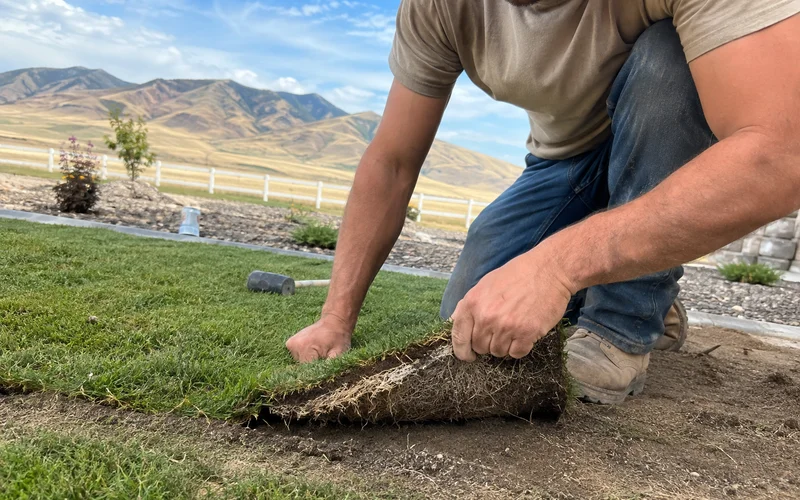
The tug test. Lift a corner gently. Loose and it lifts easily means roots haven’t taken. Resistance means they have. Do this in a few different places, since the edges and corners often lag the middle.
White roots. Lift a corner and look at the underside. Fresh white root growth extending into the soil is exactly what you want to see.
Colour holding between cycles. Sod that stays green rather than greying off between waterings is finding moisture on its own.
Seams closing. As the turf grows it knits across the joins. Visible seams mean it’s still early.
The first mow
Wait until it passes the tug test: usually two to three weeks in warm weather, longer in cool conditions.
- Let the surface dry slightly beforehand so the mower doesn’t rut soft ground or tear turf that isn’t anchored.
- Cut high. Never remove more than about a third of the blade height. Scalping a new lawn sets it back badly.
- Sharp blade. A dull blade tears rather than cuts, and torn tips brown off and stress the plant.
- Vary your direction on subsequent cuts so you don’t create ruts or a permanent grain.
The most common mistake after week two
Continuing the week-one watering schedule. Frequent shallow water past the establishment phase keeps roots at the surface permanently, which produces a lawn that needs constant water and can’t handle a hot week. Taper deliberately.
Fertilizing
Sod is typically laid over starter fertilizer, which supplies what it needs for the first stretch. After that, a normal feeding schedule appropriate to the season and grass type takes over.
Resist the urge to feed heavily early. Pushing top growth before roots are established works against you. The plant is putting energy into blades it can’t yet support.
Traffic
Keep off it as much as practical for the first couple of weeks. Foot traffic on unrooted sod shifts pieces, opens seams and compacts the soft soil underneath. Pets especially. A dog turning at speed on two-week-old sod will tear it.
Beyond the first season
Once established, a Utah lawn wants deep infrequent watering, mowing high, seasonal feeding and, in fall, a properly winterized irrigation system so the lines survive the freeze.
If you’d rather hand that off, landscape maintenance covers ongoing bed and lawn care alongside seasonal irrigation checks.