
What “best” means in this valley
There’s no single best tree for northern Utah, and any list that claims otherwise is ignoring the three things that actually decide it: alkaline soil, hardiness zones roughly 6 to 7 depending on elevation, and wind.
Wind is the one people underestimate. Lake Point sits where the valley funnels air off the Great Salt Lake basin. Eagle Mountain is high and open. Rural Erda and Grantsville acreage has nothing to break it. A tree that’s fine in a sheltered Tooele back yard can end up permanently leaning on those lots. That’s the first thing we assess on any tree and plant installation job.
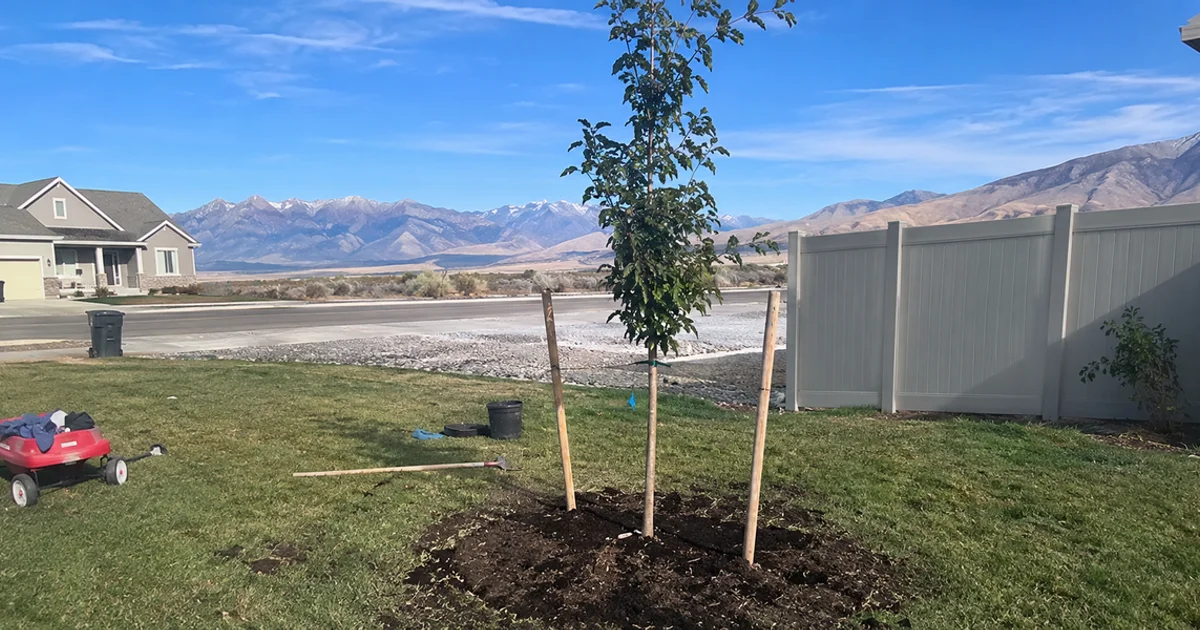
Shade trees
The highest-value tree category for a Utah yard. A mature canopy drops summer temperatures underneath it noticeably, reduces evaporation from beds and lawn below, and cuts cooling load on the house if it’s placed on the right side.
What to look for: alkaline tolerance, wind resistance, strong branch structure that doesn’t shed limbs in a storm, and a mature size that genuinely fits the space you have. Fast-growing shade trees are tempting and often weak-wooded. The growth rate you want is moderate, not maximum.
Placement for shade trees is a west or southwest position relative to the house for afternoon cooling, far enough out that the mature canopy clears the roof and gutters.
Ornamental trees
Smaller-stature trees that carry seasonal interest: spring flower, summer form, autumn colour. These suit front yards, courtyards, and anywhere a full-size shade tree would overwhelm the space.
The main mistake here is treating “ornamental” as “small forever.” Many ornamentals still reach a size that crowds a front window or a driveway. Check mature dimensions, not nursery-tag optimism.
Evergreens
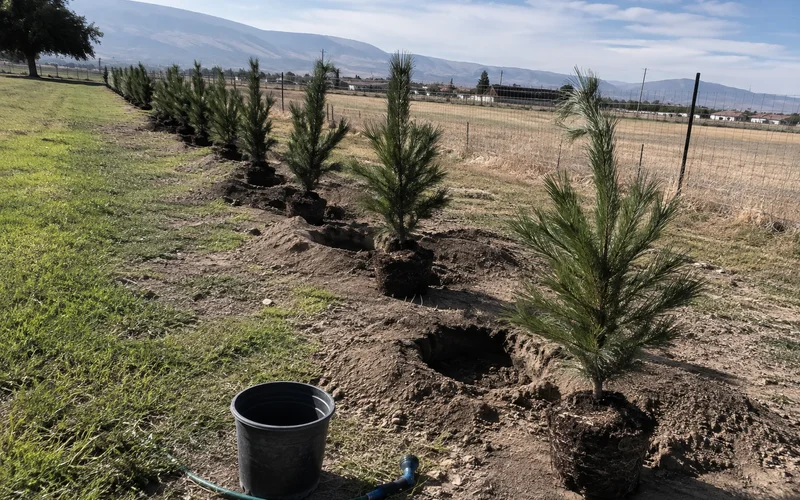
Underused in suburban Utah yards and essential on rural ones. Evergreens hold structure through winter when everything else is bare, screen views year-round, and, most usefully out here, break wind.
A windbreak row along the prevailing wind side of a rural property genuinely changes the microclimate behind it. Everything downwind experiences less desiccation, less physical damage, and lower water demand. On an exposed acreage lot in Erda or Lake Point, evergreens are less an ornamental choice than infrastructure.
The placement question that matters most
Before you fall in love with a species, find out its mature canopy width and root spread. Then measure that distance from your house, driveway, sewer line and property boundary. A surprising number of tree problems are actually placement problems.
Alkaline soil and what it rules out
Our soils tend to be alkaline, which makes iron and some other nutrients less available to plants that need them. Susceptible species show chlorosis, yellow leaves with green veins, and never really thrive regardless of feeding.
Rather than fighting it, choose from the wide range of alkaline-tolerant species that do well here. Amendments help at the margin and around individual planting holes, but they don’t change the soil the roots will eventually occupy.
Coordinating with irrigation
Trees want deep, infrequent watering out toward the drip line rather than a daily sprinkle at the trunk. A tree sharing the lawn’s spray zone gets exactly the wrong pattern.
We set drip emitters sized for the tree and positioned to encourage roots outward, and we adjust placement as the tree establishes. Through the first full season the watering has to be consistent regardless of how drought-tolerant the species is once mature.
First-season care
A newly planted tree is not yet a drought-tolerant tree. Deep, regular watering through the first full season, a proper mulch ring with the trunk flare left exposed, and staking on exposed sites, removed once the trunk has strengthened, are what get it established.
Timing matters too. Our guide on when to plant trees in Utah covers the spring versus fall question and how it affects survival.
If you want species recommendations for your actual lot rather than a general list, that’s what an on-site visit produces, and it’s free.