
The honest answer
A retaining wall built correctly lasts decades. Long enough that in most cases the property changes hands before the wall becomes a concern.
A retaining wall built without proper drainage or on an inadequate base can start showing problems within a few years, and can fail outright inside a decade. In our climate, with freeze-thaw cycling and a spring snowmelt that saturates soil, badly built walls do not get a long grace period.
That difference is almost entirely construction, not material. It’s the point we make on every retaining wall estimate.
Lifespan by material
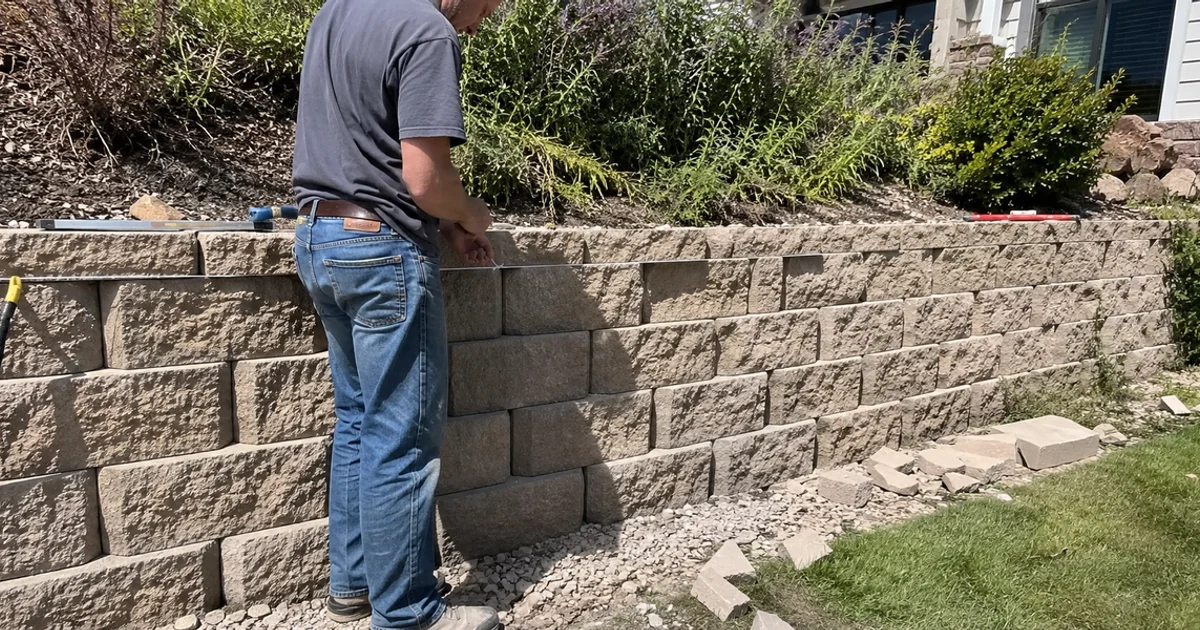
Segmental block. Manufactured to consistent strength and freeze-thaw rated. The units themselves last a very long time. Failures in block walls are structural, drainage or base, rather than the blocks deteriorating.
Boulder and natural stone. The material is effectively permanent. Rock does not degrade on any timescale that matters to a homeowner. What can change is position, if stones weren’t bedded properly and the ground beneath them settles or washes.
Natural cut stone. Same as boulder. The stone outlasts everything around it. Mortared walls have a mortar-maintenance component that dry-stacked walls don’t.
Notice the pattern: in every case the material is not the limiting factor. What fails is the system around it.
What actually shortens a wall’s life
No drainage, or inadequate drainage. The leading cause by a wide margin. Water accumulating behind the wall generates hydrostatic pressure, and in winter that water freezes and expands. Each cycle pushes the wall out slightly. Our guide on wall drainage covers what a proper system involves.
Clogged drainage. A drainage system built without filter fabric silts up over a few years and stops working. So does a drain tile with a blocked or buried outlet. The wall then behaves as though it never had drainage.
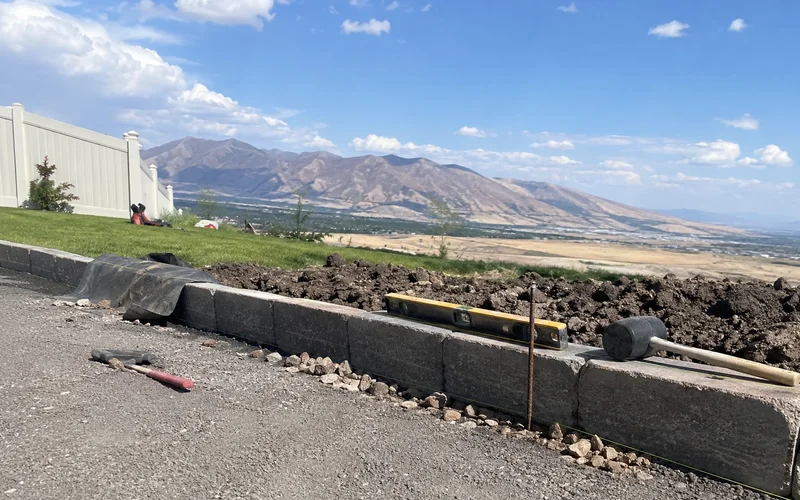
Inadequate base. Walls built on undisturbed native soil rather than compacted road base settle unevenly. Once courses lose alignment, the structure works against itself.
Missing reinforcement. Above certain heights, geogrid tying the wall back into the slope is what resists overturning. Leaving it out to save cost and excavation is a decision that shows up years later.
Uphill water nobody managed. A wall handling more water than it was designed for, from a driveway, roof drainage or a neighbouring property, is under constant load.
Over-irrigation above the wall. A well-watered bed sitting on top of a retaining wall is a slow, continuous version of the saturation problem.
What to look for in an existing wall
Leaning outward at the top. Bulging in the middle of a run. Blocks or stones out of alignment. Cracking. Soil or water seeping through the face. Any of those means the wall is under pressure it wasn’t designed for, and they get worse rather than better.
Maintenance
There genuinely isn’t much:
- Keep the drain outlet clear. Vegetation and soil block it over time. Check it annually.
- Watch after a wet spring. That’s when saturation is highest and movement becomes visible.
- Keep irrigation above the wall sensible. Don’t run a high-water bed directly on top of a retaining structure.
- Don’t add load above it. A wall designed for landscape isn’t designed for a driveway, a shed or a vehicle parked at the top.
- Address movement early. A slight lean caught early is sometimes correctable. A bulging wall is usually a rebuild.
Warranty
Ask any contractor what they warrant and for how long. A workmanship warranty is a reasonable thing to expect, and a contractor confident in their base and drainage will offer one without hesitation.
Ours is set out in writing on the estimate along with everything else, so you can see exactly what’s covered before you commit.