
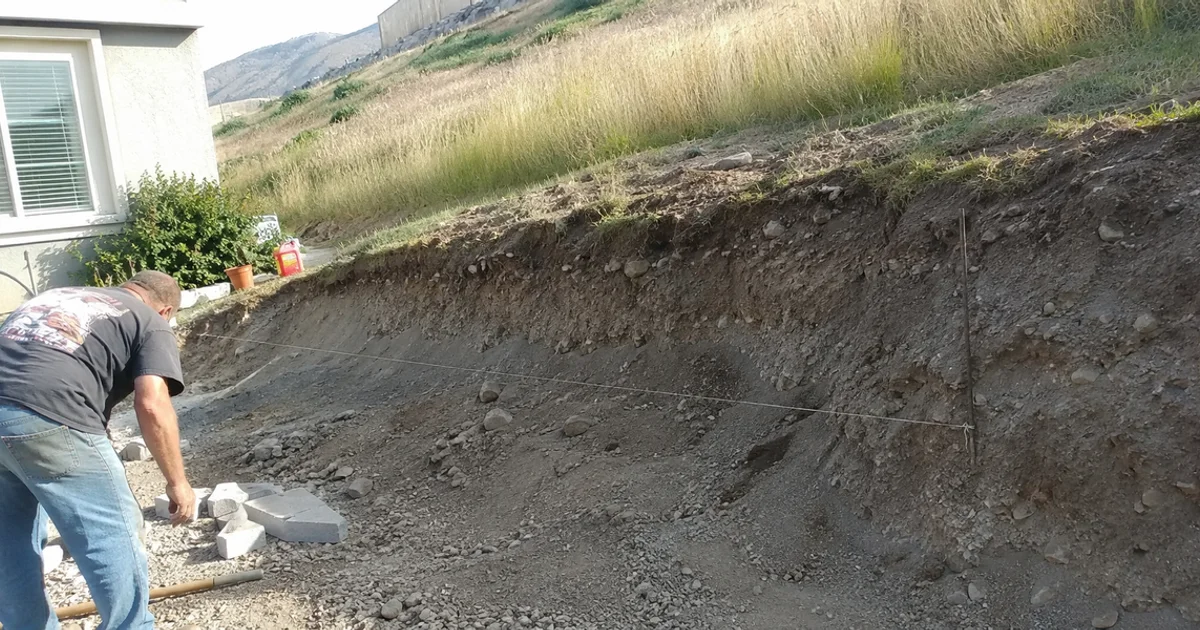
The signs that point to a wall
Not every slope needs a retaining wall, and plenty of yards with a grade change are fine as they are. Here’s what actually indicates one is warranted, and it’s the first assessment we make on any retaining walls enquiry.
Soil is moving. After a heavy storm you find soil at the bottom of a slope that used to be at the top. Bare patches appear where nothing will establish because the surface keeps washing. This is the clearest signal, because it’s actively getting worse.
Part of the yard is unusable. A steep bank behind the house that’s too sloped for furniture, play or anything except mowing awkwardly. Terracing it recovers usable square footage you’re currently paying property tax on and not using.
Water pools against the house. If the ground falls toward the foundation or into window wells, that needs correcting regardless. Sometimes reshaping the grade is enough; where the drop is too large to grade out, a wall holds the new profile.
A neighbouring grade is encroaching. Soil creeping from an uphill property onto your patio, driveway or beds.
A slope is too steep to plant. If nothing establishes because the surface won’t hold seed, mulch or water long enough, terracing gives planting a level bed to work with.
An existing wall is failing. Bulging, leaning, cracked blocks or displaced stones. That’s a wall that has to be dealt with, not watched.
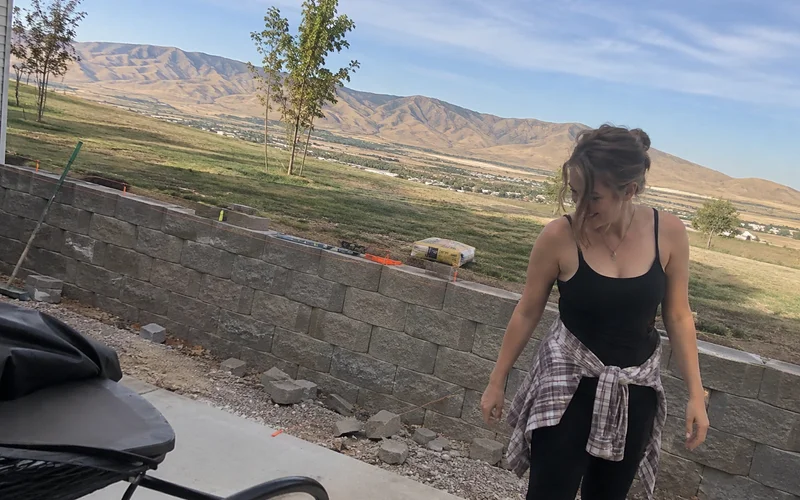
Structural versus decorative
This distinction matters more than any other in wall work, and it’s where a lot of bad advice gets given.
Decorative walls define a bed, edge a path, or add visual structure. They hold a few inches of soil at most and carry no meaningful load. Construction is straightforward, and a natural stone or low block wall is fine.
Structural walls hold back real grade. There’s soil weight behind them and, critically, water pressure when that soil gets saturated. These need a properly excavated and compacted base, a full drainage envelope, correct batter, and geogrid reinforcement above certain heights.
The problem is that the visual difference between the two isn’t obvious to a homeowner. A three-foot wall looks like a wall. Whether it needs engineering depends on what’s behind it, how tall it is, whether anything is loading the ground above it, and what the soil is.
The question that decides it
Is this wall holding something back? If yes, it’s structural regardless of how modest it looks, and it needs the base, drainage and reinforcement to match. If it’s just defining an edge, it doesn’t.
Rural Tooele County lots
Grade changes out here tend to be larger than in subdivisions, and the ground is rocky. That combination shows up constantly on properties in Erda, Pine Canyon and up on the benches.
What we typically see:
- Benched building pads where the house sits on a cut into a hillside, leaving a steep bank behind it
- Long runs rather than short walls, because acreage means the grade change extends
- Terracing being the better answer than one tall wall, both structurally and visually
- Boulder and natural stone suiting the setting where a wall is decorative or low-retaining
Our guide on retaining wall versus rock wall covers when each is appropriate.
When you don’t need one
A gentle slope that’s stable and planted. If nothing is moving and you can use the space, leave it. Ground cover and planting hold slopes well when the gradient is moderate.
A grade change that grading can resolve. Sometimes reshaping the yard is cheaper and less visually intrusive than building.
A slope you can terrace with planting alone. On modest gradients, layered planting with deep-rooting species does real work.
We’d rather tell you a wall isn’t necessary than build one you didn’t need. The free on-site visit is where that gets sorted out honestly.