
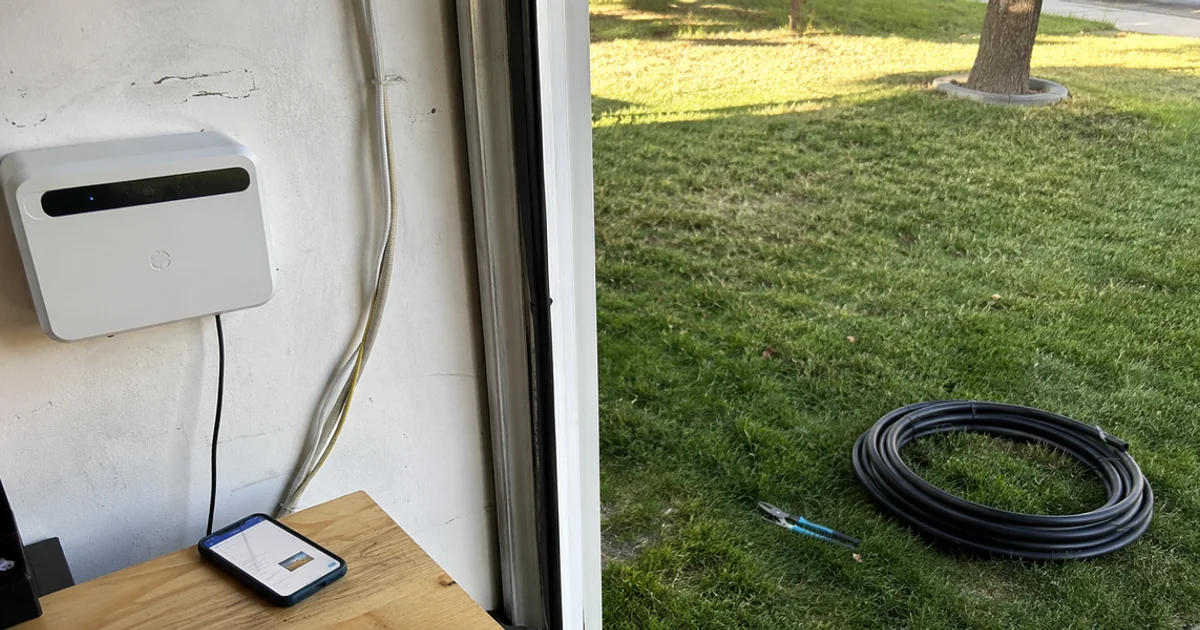
What makes a controller “smart”
A conventional timer does exactly what you programmed, regardless of conditions. If you set it to run four days a week in May, it runs four days a week in a cool, wet September too.
A smart WiFi controller connects to local weather data and adjusts. It skips a cycle after meaningful rain, scales back when temperatures and evapotranspiration drop, and increases during a heat wave. You set the parameters for each zone (plant type, soil type, sun exposure, slope and head type) and it works out the run times.
That’s the entire value proposition, and it’s why we recommend them on most sprinkler system installation jobs now.
Where the savings actually come from
Rain skips. The single biggest one. A fixed timer irrigating the morning after a storm is pure waste, and in a normal Utah spring and fall that happens repeatedly.
Seasonal adjustment. Water demand in June is nothing like water demand in September. Smart controllers scale automatically; most homeowners with a fixed timer adjust once or twice a year at best.
Cycle and soak. On slopes and heavy soils, running a long single cycle produces runoff. Smart controllers can split a zone’s run into shorter cycles with soak time between, so water actually infiltrates instead of heading for the gutter.
Zone-level configuration. Setting soil type, slope and plant type per zone means each zone gets what it needs rather than one schedule applied uniformly across a yard with wildly different conditions.
Visibility. Being able to see usage per zone in an app makes problems obvious. A zone quietly running twice as long as it should is invisible on a wall-mounted dial.
Aligning with Utah watering guidance
Utah water providers publish weekly watering guidance through the season, based on actual conditions rather than the calendar. It’s genuinely useful information and almost nobody acts on it week to week, because manually reprogramming a timer every Sunday is not something people sustain.
A smart controller effectively automates that discipline. The weather data driving its adjustments is the same underlying reality the guidance reflects, so a well-configured controller tracks it closely without you doing anything.
Configuration matters more than the brand
A smart controller set up with default settings and wrong zone information saves very little. The value comes from telling it the truth about each zone: soil, slope, sun, plant type and head type. That’s five minutes of setup that decides whether the device earns its cost.
Retrofit versus new install
Retrofitting onto an existing system is straightforward in most cases. Smart controllers are designed to work with standard valve wiring, so it’s a controller swap rather than a system rebuild. The practical constraints are WiFi signal at the mounting location, often a garage, sometimes an outbuilding, and having enough station capacity for your zone count. A smart controller won’t rescue failing hardware, though — if the system underneath is on its last legs, work through repair versus replace first.
On a new install, we specify it at design stage and configure it zone by zone as the system goes in, which is the ideal case because we know exactly what each zone contains.
Adding flow sensing or a rain sensor extends what the controller can do, and some systems support leak detection that flags a zone using more water than expected.
Rebates
Utah water conservation programs frequently include smart controller rebates. Amounts, approved device lists and eligibility rules vary by district and change from year to year, so confirm current terms with your provider before buying rather than assuming.
They pair naturally with turf-replacement rebates if you’re also considering water-wise landscaping. The two together compound the savings.
Worth it or not?
For a household with a reasonable amount of irrigated area, a smart controller typically pays for itself over a few seasons on water savings alone, faster if a rebate applies. It also removes a chore nobody enjoys and catches problems you’d otherwise pay for.
For a very small irrigated area, the payback stretches out and it becomes more about convenience than economics. We’ll tell you which situation you’re in.