
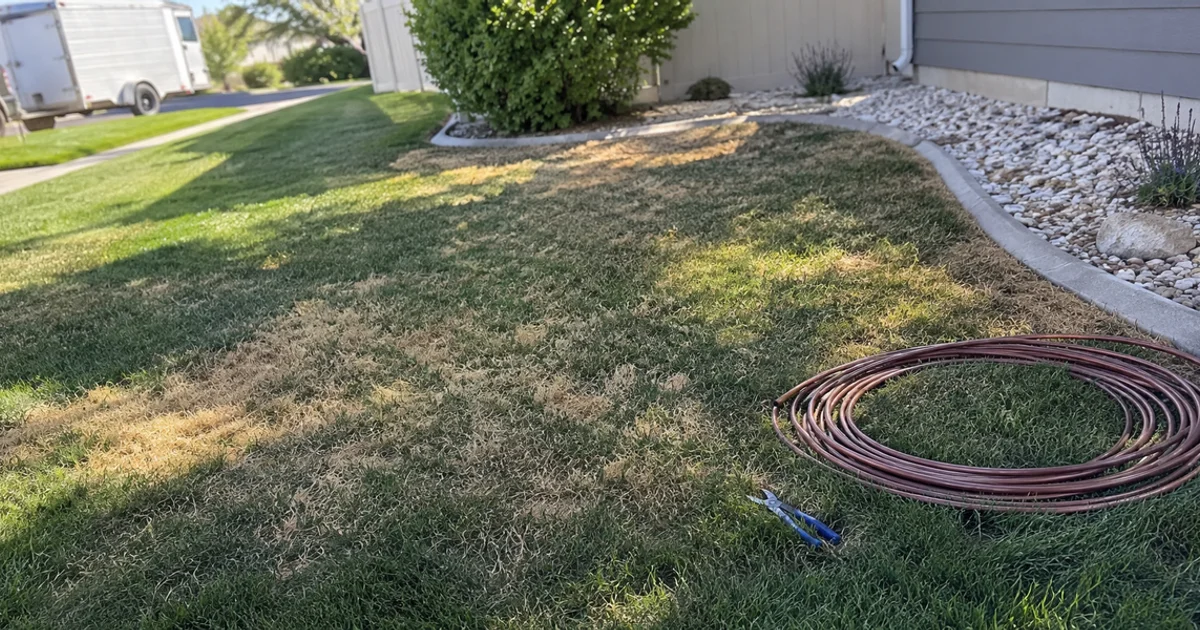
Dry spots and uneven coverage
The most common complaint, and the one with the most possible causes. Look at the pattern before assuming anything.
A circular dry patch around one head usually means that head isn’t rotating, has a clogged nozzle, or has sunk below grade so the spray hits the grass in front of it.
A dry strip between two heads points to spacing or pressure. The arcs aren’t overlapping the way they should.
A whole zone underperforming suggests a pressure problem, a partially closed valve, or too many heads on that zone for the supply.
Dry patches that moved since last season often mean a head has been knocked out of alignment by a mower or foot traffic.
Turning up the run time is the instinctive response and usually the wrong one. It drowns the areas that were already getting enough while barely helping the dry patch. Diagnosing the cause is the first step in any sprinkler repair.
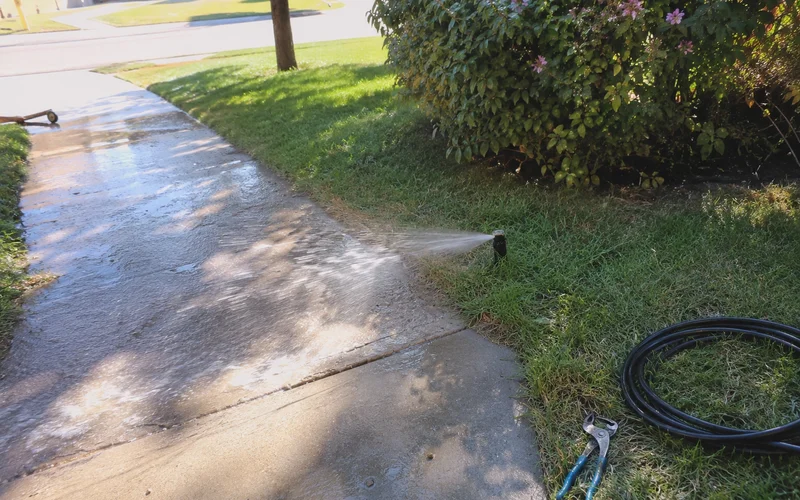
Low pressure and weak spray
If heads are misting rather than throwing, or arcs fall well short of where they should reach, something is restricting flow. Common causes include a partially closed isolation valve, a clogged filter on a secondary system, a mainline leak bleeding pressure, or debris in the valve.
On secondary water this is frequently the filter. Untreated canal water carries sediment, and a filter that hasn’t been cleaned this season will restrict flow noticeably.
Leaking heads and constant wet patches
A head that weeps between cycles, a permanently soggy area, or water surfacing somewhere unexpected all point to a leak. Low-head drainage. Where the lowest head in a zone drains the lateral line after each cycle. Creates a predictable wet spot and is fixable with check valves.
A patch that’s wet even when the system hasn’t run points to a mainline leak, which is the urgent one because it wastes water continuously.
A water bill that jumped
This is often the first sign of a problem you can’t see. A stuck valve that never fully closes, or a mainline leak underground, runs water around the clock with nothing visible at the surface.
If your usage climbed without a schedule change, shut the irrigation off at the isolation valve for a day and watch the meter. Movement with the system off means a mainline leak.
The five-minute check anyone can do
Run each zone manually from the controller and walk the yard while it’s going. Watch every head come up, throw its arc, and shut down. Ten minutes of that will find most faults faster than any amount of speculating from the kitchen window.
Stuck valves and zones that won’t shut off
A zone that runs when it shouldn’t, or won’t stop, usually means debris in the valve seat, a failed solenoid, or a diaphragm that’s perished. Valves are serviceable. Rebuilding one is far cheaper than the water a stuck-open valve wastes.
A zone that won’t come on at all could be the valve, the wiring, or the controller output for that station. Diagnosing which is a five-minute job with the right tools and an afternoon of frustration without them.
Heads that spray the driveway
Misaligned arcs waste water on hard surfaces, stain concrete, and starve the lawn they were meant to cover. Usually a simple adjustment. Worth fixing immediately because it’s free water going nowhere.
When to call and when to DIY
Reasonable to handle yourself: swapping a broken head for the same model, changing a nozzle, adjusting an arc, cleaning an accessible filter, and reprogramming the controller.
Worth calling for: pressure problems, valve faults, wiring diagnosis, mainline or lateral leaks, coverage redesign, and anything involving backflow prevention.
The dividing line is diagnosis. If you know exactly what’s wrong, fixing it is often straightforward. If you’re guessing, you can spend more on parts than the call-out would have cost.
If the list of faults is getting long, it may be worth reading our guide on repair versus replacement before spending more on an aging system.