
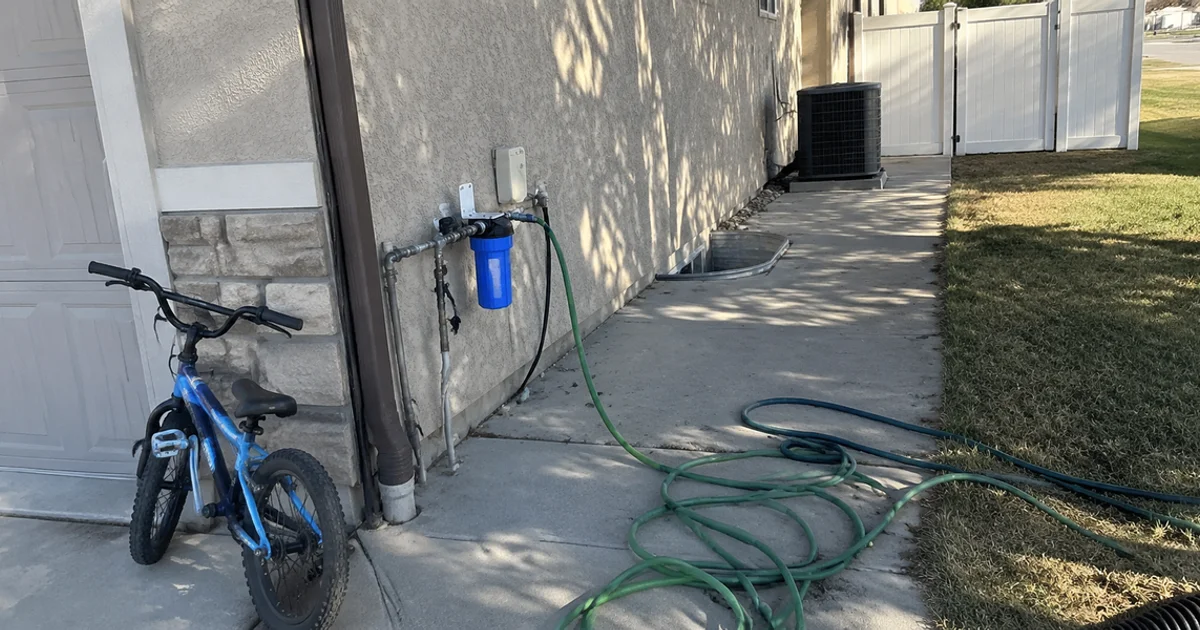
Two completely different water supplies
If you’re new to Utah, this catches people out. Many homes here have two separate water services: culinary water, which is treated to drinking standard and feeds the house, and secondary water, which is untreated and feeds outdoor irrigation only.
Secondary water is common across Tooele County, most of Grantsville runs on it, and across much of Stansbury Park and the wider Wasatch Front. Whether your property has it depends on your district and sometimes your specific street. It’s the first thing we establish on any sprinkler system installation, because almost every downstream decision depends on it.
Why the difference matters for your system
Culinary water is filtered and treated before it reaches you. It arrives clean, at a fairly consistent regulated pressure, year-round. A sprinkler system on culinary water is comparatively simple to design and forgiving to run.
Secondary water comes from canals, reservoirs or wells with minimal treatment. That means sediment, silt, organic matter, occasionally small debris, and pressure that can vary considerably by location within the district and by time of day when demand peaks.
Both of those characteristics have to be designed for:
Filtration. Non-negotiable on secondary. Sediment will clog nozzles, score valve seats and jam solenoids. The filter has to be sized for the flow and it has to be cleaned periodically through the season. This is the single most common piece of maintenance secondary-water owners skip.
Pressure regulation. Secondary pressure isn’t regulated the way municipal culinary supply is. Too high and you get misting, wasted water and blown heads. A pressure regulator ahead of the valves protects everything downstream.
Seasonal shutoff: the calendar you have to work with
Secondary systems don’t run year-round. Districts turn the water on in spring and off in fall, on dates they publish each year. Those dates move with conditions.
This matters practically in two ways:
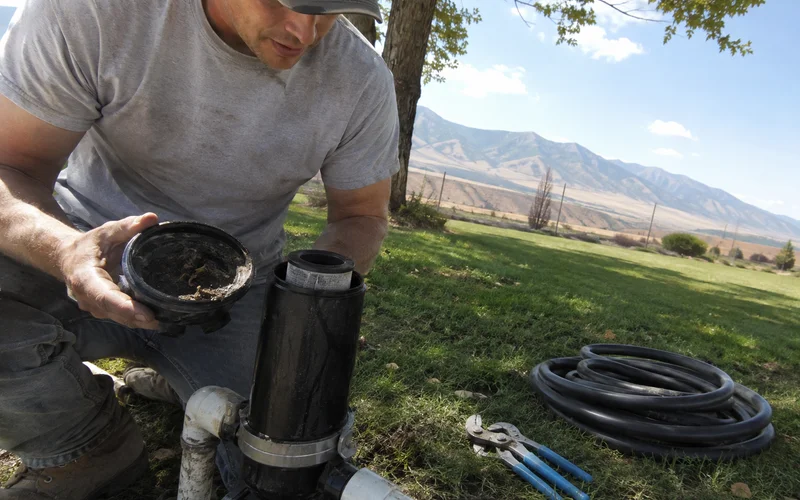
Spring startup. When the water comes back on, systems need to be brought up carefully: charged slowly, filters checked, heads inspected, and the whole thing run through before you rely on it. Turning it on hard after a winter of dormancy is how you find leaks the expensive way.
Fall winterization. Your system has to be blown out before freezing temperatures arrive, and ideally around the district shutoff. Water left sitting in lines, valves and backflow assemblies freezes, expands and splits things. Our guide on winterizing your system covers the timing.
Everyone in a district faces the same two windows, which is why both fill up fast with local contractors. Booking early is genuinely worth doing.
The shutoff also constrains your landscape
If your beds are on secondary water and the district shuts off in fall, anything needing autumn watering has to be handled another way. It’s a reason we sometimes run bed drip off culinary where a property has both.
Cost to run
Secondary water is substantially cheaper per volume than culinary water in most districts, which is the whole reason it exists. Irrigating a lawn with treated drinking water is expensive, and using untreated canal water for it frees up treated supply for actual drinking.
For a homeowner with a reasonable amount of lawn, that difference over a Utah summer is meaningful. It’s a real advantage, and it’s why secondary connections are valued.
The offset is the extra hardware, filter and regulator, plus periodic filter cleaning. That’s a modest one-time and ongoing cost against a recurring saving, so secondary generally wins on economics.
Backflow prevention
Where a system connects to potable culinary water, backflow prevention is required to stop irrigation water siphoning back into the drinking supply. This is a safety requirement, not an upsell, and the assembly type depends on the configuration.
Secondary connections have their own requirements depending on the district and whether there’s any possibility of cross-connection with the culinary system. Cross-connecting the two supplies is a serious problem, so if a property has both, they must stay properly separated.
What to ask a contractor
If someone quotes your system without asking which water you’re on, they haven’t thought about your design. Ask directly:
- Which supply is this system on?
- What filtration are you specifying and how do I clean it?
- Is there a pressure regulator, and what’s it set to?
- How does the seasonal shutoff affect my schedule?
- What backflow protection does this configuration need?
A contractor who works this valley regularly will have those answers immediately.