
What a blowout actually does
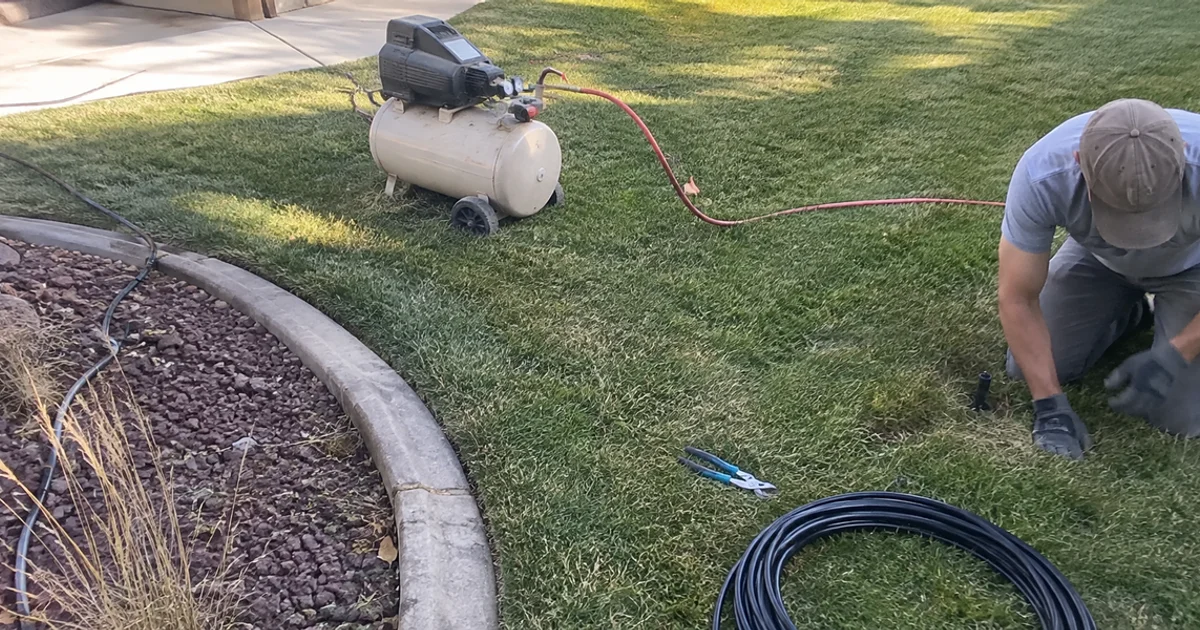
Winterization means pushing compressed air through the irrigation system, zone by zone, until water stops coming out of the heads. The goal is to leave as little water as possible sitting in the lines, valves and backflow assembly through winter.
It’s a normal seasonal service and part of what we do on any sprinkler service contract. It’s also one of the highest-return things you can spend money on as an irrigation owner.
Why freezing damages a system
Water expands as it freezes. Inside a closed pipe or valve body, that expansion has nowhere to go, so it goes into the material.
Lateral lines split, often in several places, and you don’t find out until spring startup floods the lawn.
Valve bodies and diaphragms crack. A cracked valve means either a rebuild or a replacement.
Backflow assemblies are the expensive one. They contain precision components in a metal body, they’re usually above ground where they’re most exposed, and a frozen one is typically a replacement rather than a repair.
Heads crack at the body or the riser.
None of that shows up until you charge the system in spring, at which point you’re paying for repairs and losing water while you find them all.
Timing in the Tooele and Salt Lake valleys
The target is after you’ve stopped needing to irrigate and before the first hard freeze. In practice that means mid-to-late fall for most of the valley floor.
Two things shift that:
Elevation. Heber City, Midway and Park City get hard freezes noticeably earlier. Those systems should be done earlier in the season, not on the same schedule as Grantsville.
Secondary water shutoff. If your irrigation runs on secondary water, the district turns it off on a published date. Winterizing around that shutoff is the natural rhythm, and it’s why everyone in a district ends up wanting a blowout in the same two weeks.
That bunching is exactly why booking early matters. The contractors who do this work locally have a finite number of slots in the window, and the last week before a freeze is the worst time to start calling.
The rule of thumb
If you’re wondering whether it’s too early, it isn’t. Nothing bad happens from winterizing two weeks early. Plenty of bad things happen from doing it two days late.
Why compressed air and not just draining
Manual drain valves help, and systems designed with consistent fall toward drain points shed a lot of water on their own. But most residential systems have low spots, level runs and components that simply hold water regardless of gravity.
Valves in particular retain water in the body. So do backflow assemblies. Those are also the two most expensive things to replace, which is a poor combination.
Compressed air pushes water out of the places gravity can’t reach. It needs to be done at appropriate pressure and volume for the system: too much pressure damages components, too little doesn’t clear the lines. Which is why it’s usually worth having someone with the right equipment do it.
What a blowout appointment involves
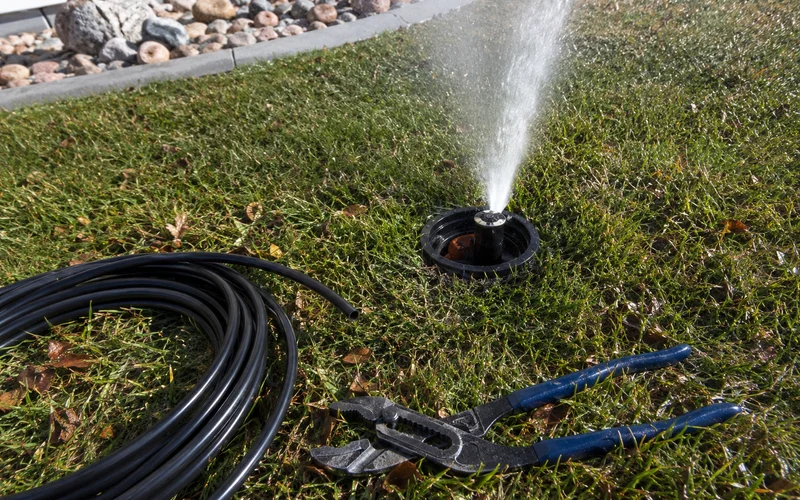
We shut off the water supply to the system, connect a compressor at the appropriate point, and run each zone in turn with air until the spray thins to a mist and stops. Then we open drains where fitted, protect or drain the backflow assembly as its type requires, and shut the controller down for the season.
It’s usually a short visit. On a standard residential system it’s well under an hour.
Spring startup
The other half of the cycle. When water comes back on, the system should be charged slowly rather than hit at full pressure, with filters checked and every zone run and inspected before you rely on it.
Bundling the blowout and the following spring’s startup is convenient and often better value. Our guide on sprinkler blowout cost covers how that pricing works.