
What builder-grade soil actually is
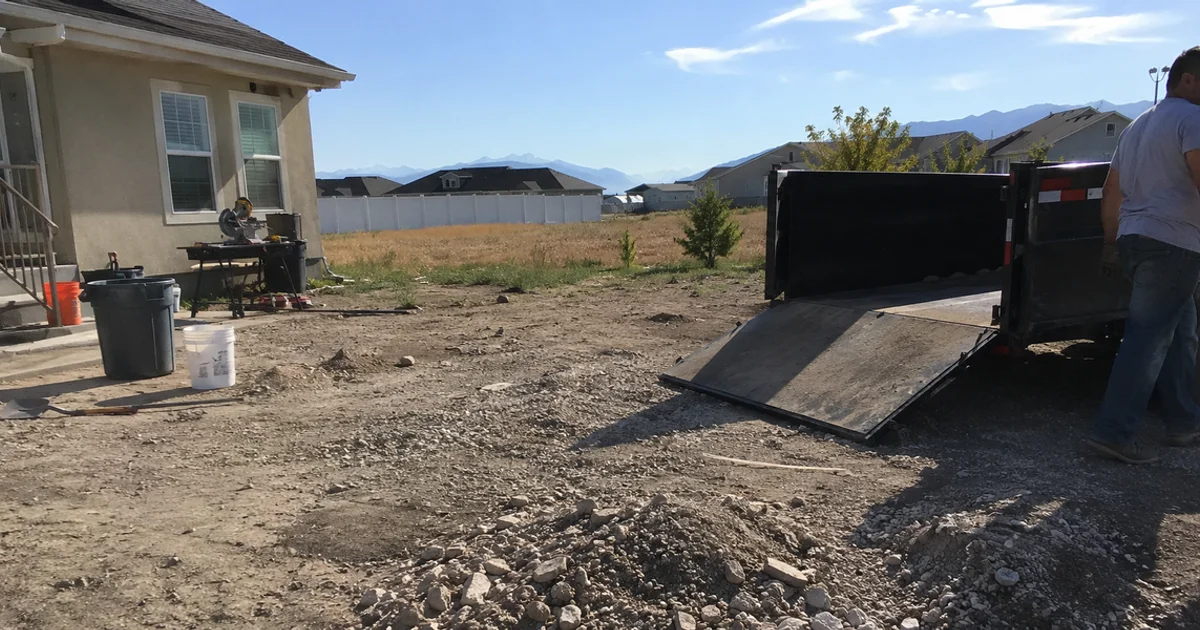
When a house goes up, the yard becomes a work site. Trucks, excavators, material stacks and foot traffic run across it for months. The good topsoil that was there originally is usually stripped, buried, or mixed with subsoil and construction spoil. What’s left when the fencing comes down is compacted, rocky, low in organic matter, and often has debris in it.
That’s the ground people are tempted to lay sod on directly, and it’s why we get called back to redo lawns for other companies. Understanding the soil is the first thing we look at on any new-construction landscaping job.
Why compaction kills a new lawn
Grass roots have to push through soil to find water and nutrients. Compacted ground resists that. The pore spaces that hold air and water have been squeezed out. A sod roll laid on compacted dirt sits on the surface like a mat. It stays green for a few weeks on the water it’s getting from above, then as temperatures climb it can’t reach anything deeper and starts to thin from underneath.
Homeowners usually respond by watering more, which makes it worse. Constant surface moisture on shallow roots invites disease and discourages the roots from going down. By the second August the lawn looks patchy, and by the following spring somebody is quoting to redo it.
What proper preparation involves
Ripping the compacted layer. Mechanical work to break up the hardpan that construction traffic created. This is the step that lets everything else function.
Screening out rock. New-build lots in Tooele County and along the Wasatch Front are frequently rocky, and construction adds more. Rock in the top layer means uneven sod contact, mower damage and roots hitting dead ends.
Removing debris. Wire, offcuts, concrete chunks and whatever else got buried. It settles differently to soil and shows up as dips.
Importing screened topsoil. How much depends on what’s there. This is a real, variable cost. Two lots on the same street can need very different volumes, and it’s the line item most often missing from an unusually cheap bid.
Amending. Organic matter improves structure and water-holding capacity in soils that have neither. Where our alkaline pH is limiting, amendments help broaden what will grow.
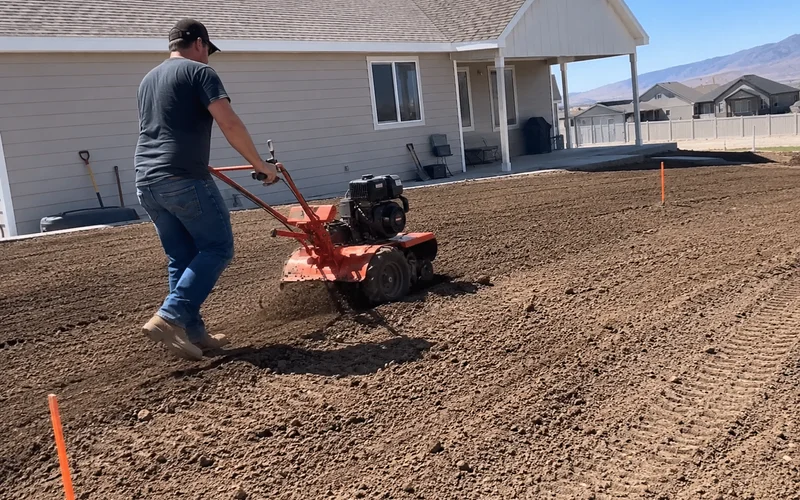
Rototilling and finish grading. Working the topsoil into the layer beneath rather than laying it on as a lid, then grading to a smooth, consistent surface at the right fall for drainage.
The Utah alkaline soil piece
Soils across the Tooele and Salt Lake valleys tend toward alkaline, and that has practical consequences. Some nutrients become less available to plants at higher pH, which shows up as yellowing in susceptible species even when the nutrient is present in the soil. Acid-loving plants that thrive elsewhere genuinely struggle here.
For lawns, this mostly means choosing grasses that tolerate it. Kentucky bluegrass and turf-type tall fescue both do, which is why they dominate here. For beds, it means selecting alkaline-tolerant species rather than fighting the soil chemistry every season. Amendments shift things at the margin; they don’t rewrite the underlying soil.
The one-sentence version
You’re not paying for topsoil because a contractor wants a bigger invoice. You’re paying for it because roots need somewhere to go, and on a new build there usually isn’t anywhere.
What good prep costs you versus what skipping it costs
Proper soil preparation is a meaningful share of a new-build install budget, and it’s worth seeing where it lands against the other phases in the cost to landscape a new-build yard in Utah. It’s also the difference between a lawn that establishes and thickens over its first two seasons and one you’re replacing.
We’ve done that replacement job. One customer had sprinklers and sod installed by another company that didn’t level or add topsoil; the sod died. We came in, corrected the grade, brought in topsoil, laid new sod, and hauled away three tons of debris the previous contractor had left behind. The second install cost more than doing it right the first time would have.
If you’re planning sod installation on a new build, the sod is the easy part. What’s underneath it decides everything.
Ask any contractor bidding your yard to show you the soil prep line specifically. If it isn’t there, or it’s suspiciously small, that’s your answer about the rest of the bid. A free on-site visit from us includes an honest read on what your ground actually needs.