
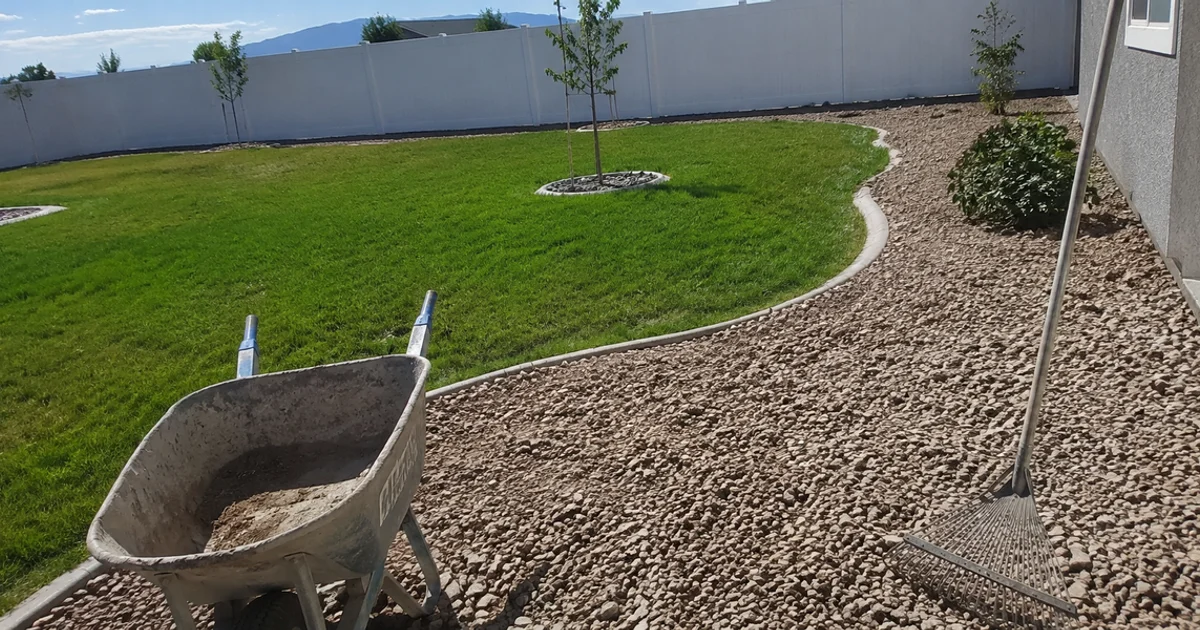
Utah price ranges by scope
Prices below reflect what we actually see across the Tooele and Salt Lake valleys for new-construction landscaping work. They are ranges, not quotes. Every lot is different, and anyone giving you a firm number over the phone hasn’t looked at your soil.
| Scope | Typical range | What it covers |
|---|---|---|
| Front yard, HOA compliance | From around $8,000 | Grading, front irrigation zones, topsoil, sod, starter trees, edging and gravel |
| Front and back, standard lot | Mid-teens to low twenties | Whole-property irrigation, grading and drainage, sod, planting beds, gravel and edging |
| Full property with hardscape | $30,000 and up | The above plus a patio, seating wall, retaining wall or terracing |
| Large or acreage lots | Quoted individually | Extended mainlines, more zones, significant grading, longer schedules |
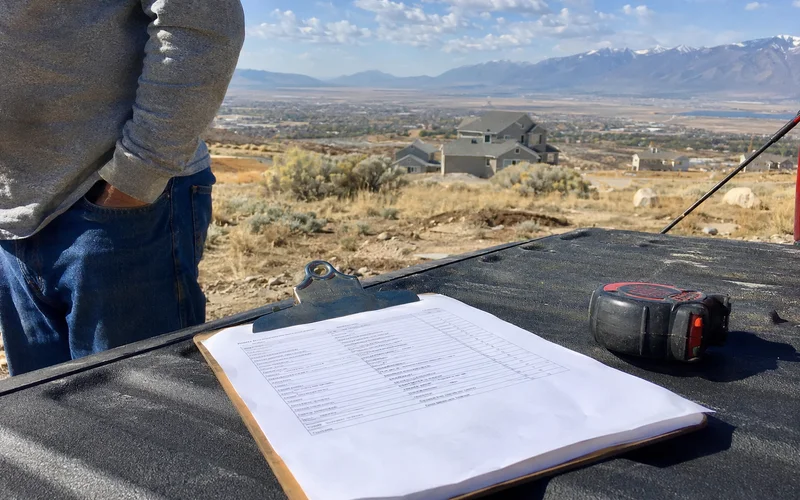
What actually drives the number
Irrigation scope. Usually the single largest line on a new-build bid. Zone count comes from measured water pressure, yard square footage and head type, not a per-acre rule. More zones means more valves, more trenching, more wire and more heads. Secondary water adds filtration and pressure regulation.
Sod area. Straightforward square footage, but it drags soil prep and topsoil volume along with it. A large lawn is expensive twice: once for the turf, once for what has to go underneath it.
Grading and drainage. A flat, workable lot with no drainage issues is cheap to grade. A lot with a real grade change, a foundation-drainage problem, rock, or a swale requirement takes equipment time, and equipment time is the cost.
Topsoil volume. Highly variable and genuinely site-specific. Two lots on the same street can need very different amounts depending on what the builder stripped or left. This is the line most often missing from a lowball bid.
Hardscape. Patios, seating walls and retaining walls are priced separately and can easily match the cost of the soft landscaping on the same project.
Access. Whether a skid steer and material deliveries can reach the work area, or whether everything has to come through a side gate by barrow. It changes labour hours substantially.
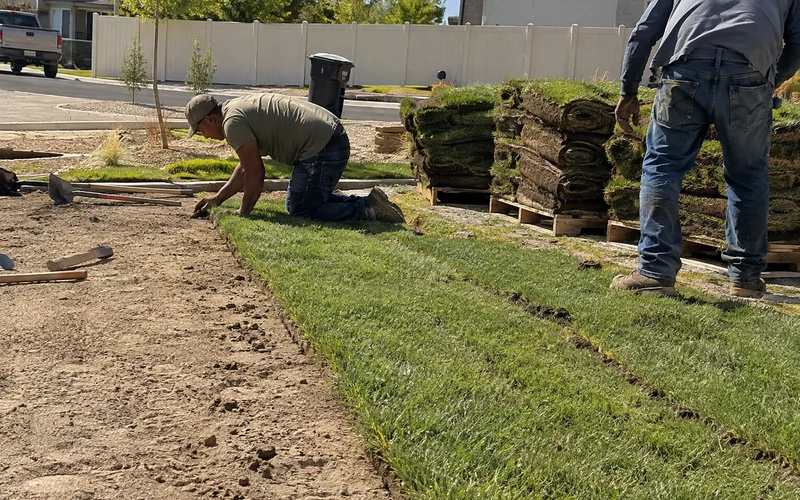
Why the cheapest bid often costs more
When a bid comes in dramatically below the others, something has been left out. In our experience it’s almost always one of three things, and all three are invisible on handover day:
Soil preparation. No ripping, no rock screening, minimal or no topsoil. The lawn looks perfect in week one and thins out by its first August. We’ve been hired to redo exactly this, including one job where we corrected the grade, brought in topsoil, laid new sod and hauled away three tons of debris the previous contractor left behind.
Irrigation coverage. Fewer zones than the pressure supports, so heads never throw their full arc. You get dry patches the owner spends years trying to water away.
Drainage. No grade correction, no swale where one is needed. Water pools against the foundation and nobody connects it to the landscaping bid two years later.
Ask any bidder to show you the soil prep and irrigation lines specifically. A contractor confident in their work will happily walk you through them.
What an itemized bid gives you
Every phase priced separately means that if the total is higher than you hoped, you can see exactly what to trim, drop the back-yard planting, simplify the hardscape, phase the patio, rather than asking for “a better price” and getting a quietly worse job.
Payment and terms
We accept PayPal, Venmo, Zelle and check. Deposit and progress-payment terms are confirmed in writing on your estimate before any work starts, so there are no surprises about timing.
Getting a number for your lot
Ranges are useful for budgeting and useless for deciding. The variable that moves your specific number most, soil condition, cannot be assessed from a photo or a plat map.
Our on-site estimate is free and carries no obligation. We walk the property, check the water source and pressure, look at the soil and the grade, and send back a bid broken down line by line. From there you can adjust scope, phase it, or get a free estimate and simply compare it against whatever else you’re holding.
If you’re weighing doing it all at once against splitting it up, our guide on full-yard install versus phasing covers what phasing actually costs in total.