
Typical durations by yard size
The honest answer is that it depends on scope more than square footage, but here’s what we actually see across the Tooele and Salt Lake valleys on new-construction landscaping jobs.
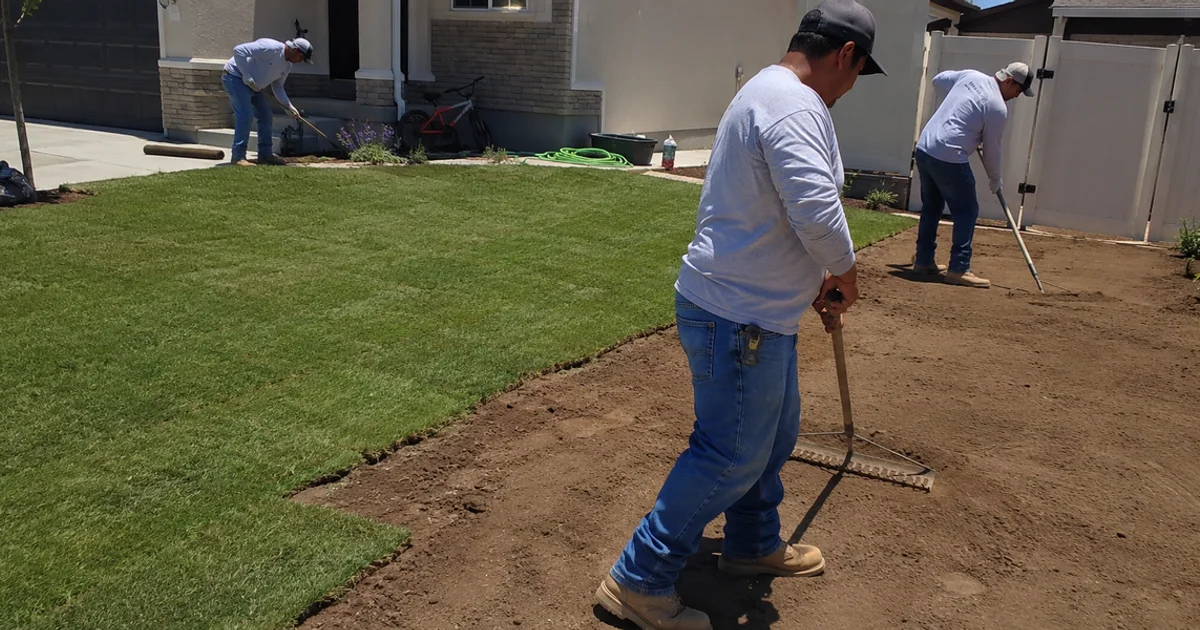
A front yard on a standard subdivision lot is commonly a few working days. Day one is clearing and grading. Day two is irrigation. Day three is topsoil, sod and finishing the beds. That’s the compliance package most new-build owners start with.
Front and back on the same standard lot usually runs about a week. There’s more of everything, more trenching, more zones, more sod, more edging, and the back yard often carries a grade change the front doesn’t.
Larger lots and acreage properties in Erda, Grantsville or rural Tooele take considerably longer, sometimes two to three weeks. Long mainline runs, more irrigation zones, significant grading, and simply more ground to cover all add days.
Adding hardscape, a paver patio, a retaining wall, terracing, extends the schedule beyond the landscape work itself, because base preparation and curing sequences have their own pace.
What weather and season do to the schedule
Utah’s climate genuinely dictates parts of this, and any contractor who says otherwise is setting you up for a disappointment.
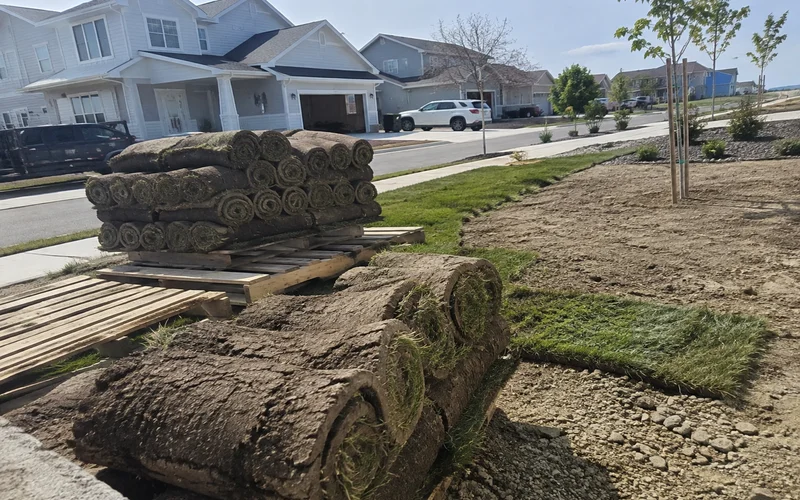
Frozen ground stops grading and sod outright. You cannot properly work frozen soil, and sod laid on it will not root.
Saturated ground is the sneakier problem. Working wet soil destroys its structure, leaving you with compaction you’ll be fighting for years. We wait rather than push through it.
Peak summer heat doesn’t stop the work but it narrows the margin. New sod in August needs a tighter, more frequent watering schedule and is less forgiving of a missed cycle.
Spring and fall are the best windows: workable ground, moderate temperatures, easier establishment. They’re also the busiest, which is why booking ahead matters.
Phasing and what it costs you in time
Splitting the job into a front yard now and a back yard later is completely reasonable, and it’s what a lot of budget-conscious owners do. What it costs is total time and total money: we mobilise twice, deliver materials twice, and set up twice.
The one thing worth doing in a single pass regardless is grading and the irrigation mainline for the whole property. Both are far more expensive to retrofit once there’s finished landscape on top, and both dictate what’s possible later.
What actually speeds a job up
Some of this is on us and some of it is on you:
- Book early. Not for pressure, because our calendar fills for spring and fall well ahead, and a date booked in February is a real date in April.
- Decide the scope quickly. Jobs stall waiting on a decision about whether the patio is in or out far more often than they stall on weather.
- Clear the access. If we can get a skid steer and a material delivery to the work area without threading a gate, days come off the schedule.
- Tell us the deadline up front. If you have an HOA compliance date, say so on the first call. Our guide to HOA deadlines covers how those windows typically work.
- Let us do it in one pass. A single coordinated install is meaningfully faster than the same scope split across phases.
What a realistic date looks like
When we quote, you get a start date rather than a season. If weather or material supply moves it, we tell you as soon as we know rather than letting it drift. That’s the whole difference between a schedule and a hope.
If you’re working against a compliance clock, the free on-site visit is the fastest way to find out whether your date is achievable, and if it isn’t, what the shortest compliant path looks like instead.