
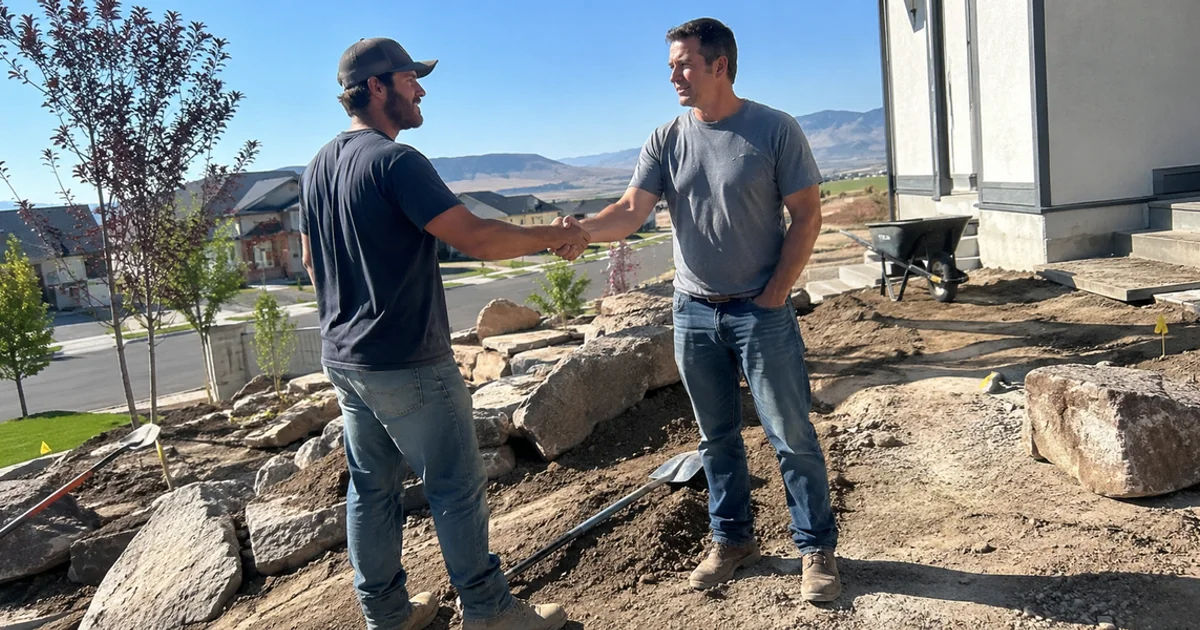
Start with what you’re actually buying
A new-build yard install is one of the larger discretionary purchases most homeowners make, and unlike a kitchen you can’t inspect the important parts afterwards. Grading, compaction relief, topsoil depth and irrigation design are all buried under the finished surface within days.
That means you’re mostly buying judgement and honesty, which is exactly what’s hardest to assess from a quote. Here’s what to actually check when you’re comparing bids for new-construction landscaping.
Questions worth asking every bidder
“Is the bid itemized?” If the answer is a single lump sum, you have no way to compare it against anyone else’s, and no way to adjust scope if it comes in high. Every phase should be priced separately.
“What soil preparation is included?” Listen for ripping the compacted layer, rock screening, and a specific topsoil approach. Vagueness here is the biggest red flag in new-construction work, because it’s the most common thing to skip. Our guide to preparing builder-grade soil for a Utah lawn covers what a complete answer should include.
“How many irrigation zones, and why that number?” A good answer references measured water pressure and yard size. A bad answer is a round number with no reasoning behind it.
“Am I on secondary or culinary water, and what does that change?” In Tooele County and much of the valley this is a real design question. A contractor who doesn’t ask about your water source hasn’t thought about your system.
“Who actually does the work?” Subcontracted crews aren’t automatically bad, but you should know whether the person quoting will be on site.
“What happens if you find something unexpected?” The right answer is that they stop, show you, and agree a revised price before continuing. The wrong answer is silence or an assurance it never happens.
“Can I see recent local work and reviews?” Photos of finished yards are easy. Ask about a job that went sideways and how they handled it.
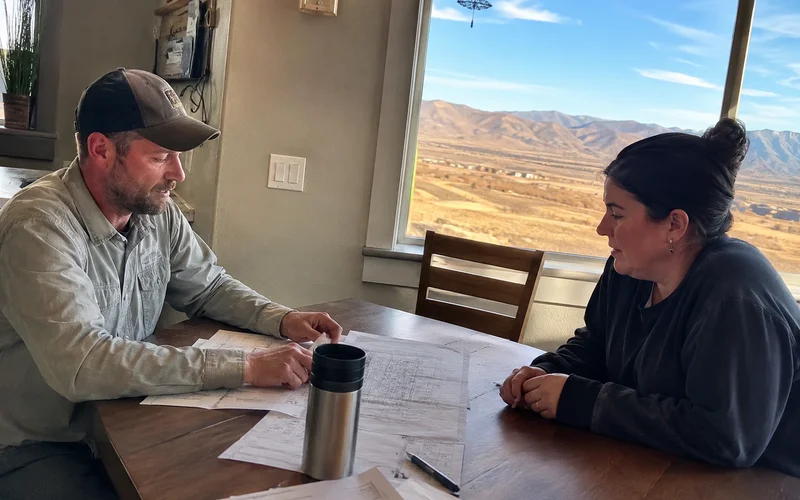
Licensing and insurance: verify, don’t assume
Ask for proof of both, and actually look at it. Licensing matters because it’s a baseline of accountability. Insurance matters more than people realise: if an uninsured crew damages your neighbour’s property or somebody is injured on your lot, that exposure can land on you.
It takes one email to request certificates. Any legitimate contractor sends them without hesitation.
Red flags worth walking away from
- A bid dramatically below the others. Something’s missing, and it’s almost always soil prep, irrigation coverage or drainage. All three come due later.
- Pressure to sign today. Real schedules fill, and a contractor can honestly say “this date goes if you don’t book it.” That’s different from a discount that expires this afternoon.
- Large deposits demanded up front. A reasonable deposit is normal. A majority of the job value before anything happens isn’t.
- No written scope. If it isn’t specified, it isn’t included, and you’ll discover which at the worst moment.
- Reluctance to discuss what’s underneath. Contractors proud of their prep talk about it unprompted.
- No local track record. Utah soils, secondary water and HOA timelines are specific. Somebody who works mostly elsewhere will learn on your lot.
The test that reveals the most
Ask each bidder to explain how they’ll handle your builder’s soil. The answers will separate them faster than any other single question.
Why one-stop reduces your risk
A new-build install is a sequence, not a list. Irrigation goes in before topsoil. Grading has to be correct before irrigation. Bed lines are set before gravel. When separate contractors handle those phases on separate schedules, the handovers are where things go wrong, and when they do, you’re the one mediating between companies that each blame the other.
One crew running the whole sequence means the grade the irrigation was designed for is still the grade when the sod arrives. It also means one point of accountability if something needs fixing next spring. That coordination is why we built the business as a one-stop shop rather than specialising in a single phase.
What we’d want you to compare us on
Ask us all of the above. We’ll show you the licence and insurance, walk you through an itemized bid line by line, tell you exactly what soil prep your lot needs and why, and give you a real date rather than a season. If another bid does that better, take it.
The estimate is free and there’s no obligation attached to it. Request a free estimate and use it as a benchmark even if you end up going elsewhere. An itemized bid from someone who walked your property is useful information regardless of who does the work.