
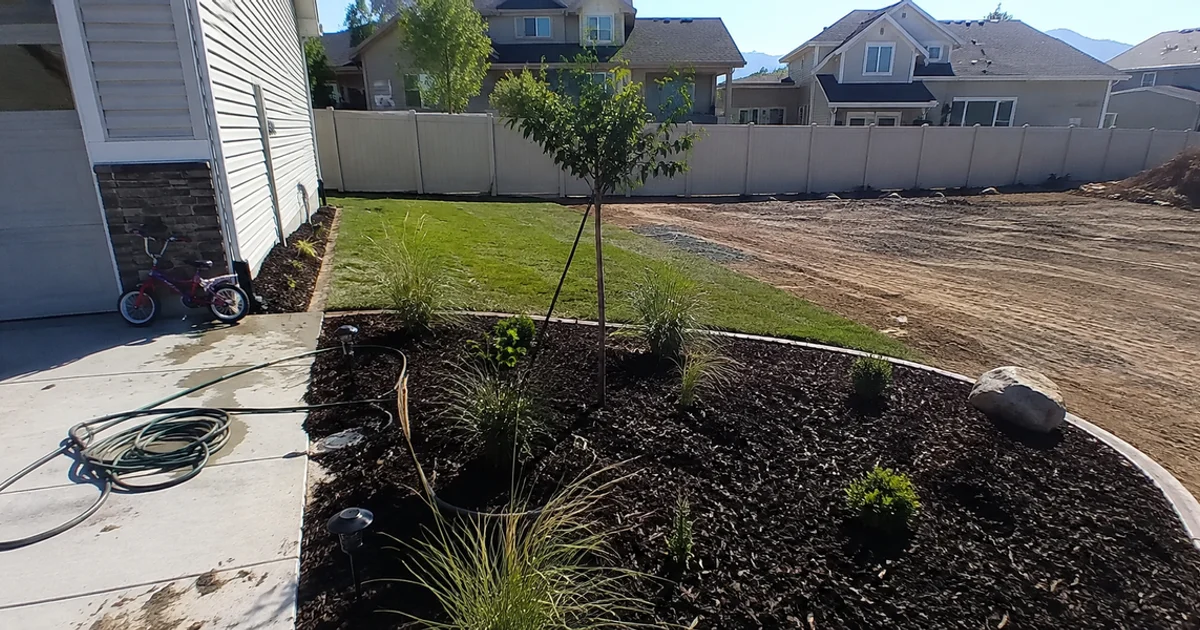
The real trade-off isn’t cost, it’s total cost
Phasing feels cheaper because each cheque is smaller. That’s true, and for a lot of households it’s the deciding factor. Spreading a project across two seasons is genuinely easier than finding the whole amount at once.
What phasing doesn’t do is reduce the total. Every phase carries its own mobilisation: getting equipment to site, material deliveries, setup and cleanup. Those costs are largely fixed per visit, so splitting one job into two means paying them twice. On a typical new-construction landscaping project, doing the same scope in two phases commonly costs noticeably more overall than doing it in one pass.
Side by side
| Full install | Phased install | |
|---|---|---|
| Total cost | Lower per square foot | Higher overall |
| Cash flow | One large payment | Spread across seasons |
| Disruption | One concentrated period | Repeated, over months or years |
| Sequencing risk | None: one crew, one plan | Later phases must work with earlier ones |
| Time to finished yard | Weeks | Seasons |
| Irrigation efficiency | Designed once, complete | Risk of retrofit and compromise |
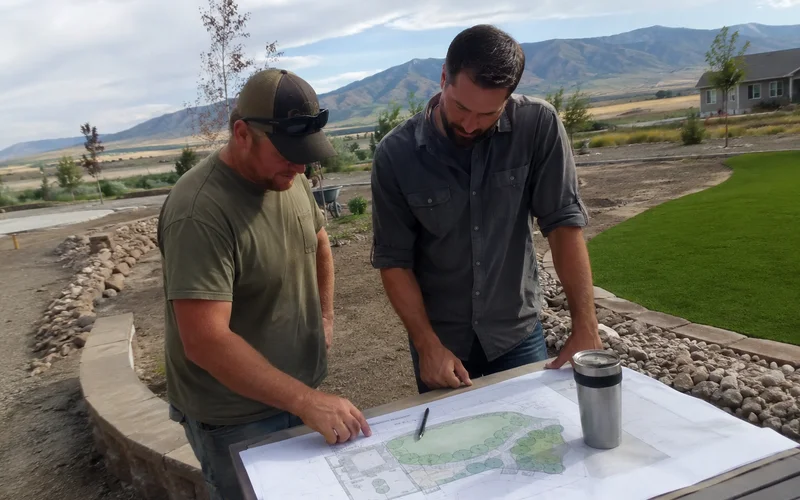
What to do first if you phase
If you’re phasing, the order matters more than anything else. Two things should happen in phase one regardless of where the finished landscape ends up:
Grading for the whole property. Once there’s sod, beds and hardscape in place, correcting grade elsewhere means tearing things out. Doing the earthwork across the full lot while it’s all open costs a fraction of coming back.
The irrigation mainline for the whole property. Trenching a mainline through an established lawn is destructive and expensive. Running it while the ground is open, even to zones you won’t connect for another year, is cheap insurance. Cap the stubs and connect them when you’re ready.
Beyond those two, the usual order is front yard first (HOA compliance and street appeal), then the primary back-yard living area, then secondary planting and hardscape.
What phasing costs you beyond money
Living with a construction site longer. A yard that’s half done for two years is a yard your family doesn’t fully use for two years.
Weed pressure. Bare or unfinished ground grows weeds, and those seed into the finished sections. What you save in phase two you partly spend in weed control.
Erosion and drainage. Unplanted, ungraded areas move soil when it rains. That soil ends up somewhere, often on the part you just finished.
Matching. Sod laid two years apart from different batches can differ slightly. Materials get discontinued. Rock colours vary between quarry runs. It’s usually minor, but it’s real.
When phasing is genuinely the right call
We’re not against it, and we phase plenty of jobs. It makes sense when:
- The full scope is genuinely out of reach this year and waiting would mean a dirt yard through another summer
- Your HOA deadline covers the front yard only, and the back can wait without penalty
- The back yard depends on a decision you haven’t made yet: a future addition, a pool, kids’ ages changing what the space needs
- Doing it all at once would mean cutting the soil prep or irrigation quality to fit budget, in which case a smaller, properly built phase beats a larger, compromised one
That last point is the important one. A well-built front yard now is a better outcome than a whole-property install where the topsoil and irrigation were trimmed to hit a number.
When full install wins clearly
If the budget is there, do it in one pass. You pay less per square foot, the yard is finished in weeks rather than seasons, the irrigation is designed as a complete system rather than assembled in stages, and there’s a single crew accountable for the whole result.
For the actual numbers behind either approach, our guide on the cost to landscape a new-build yard in Utah breaks down what drives the price.
The most useful next step either way is a free on-site visit. We’ll price the full scope and a sensible phase-one scope side by side, itemized, so you can see exactly what the difference is before deciding.