
Stage one: the walk and the plan
Every install starts with somebody standing in the yard. We look at the grade and where water currently goes, what the soil is actually like under the surface, whether the property is on secondary or culinary water, where the meter and connection sit, and how easily we can get equipment and material deliveries in. If you’re working to an HOA compliance date, that’s the moment to tell us, because we plan backwards from it. This is the first step of any new-construction landscaping project.
From that visit you get an itemized bid. Every phase priced separately so you can adjust scope before anything starts.
Stage two: clearing and site prep
Construction leaves more behind than most owners expect. Offcuts, wire, chunks of concrete, sometimes whole buried piles. It comes out first, because anything left under the surface settles unevenly and shows up as a dip in your lawn two summers later.
Stage three: grading
This is where the yard is really made or lost, and it deserves its own attention. Our grading work covers it in more depth. Builders grade for construction access, not for your landscape. We set positive fall away from the house and out of window wells, cut a swale where runoff concentrates, and rip the compacted layer that construction traffic left behind.
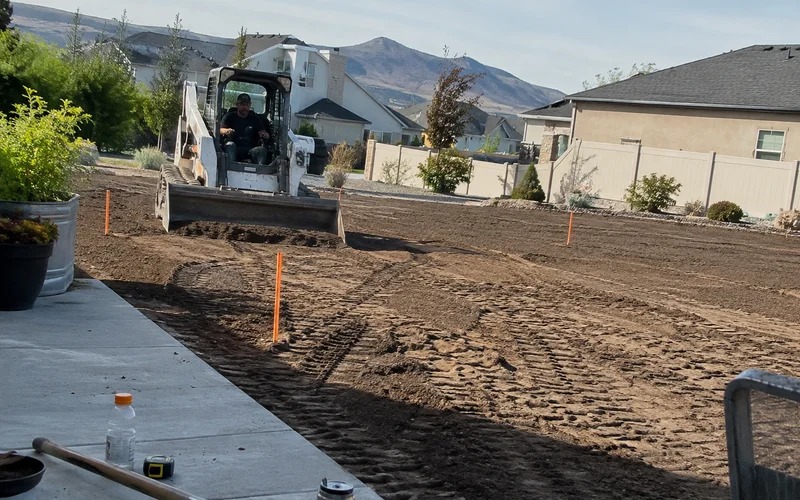
Rough grading sets the shape. Finish grading produces the smooth, rock-free surface that sod goes onto. Both get shot with a laser level and set to stakes rather than eyeballed, because a grade that’s “about right” pools water in the low spots and scalps on the high ones every time you mow.
The most expensive corner to cut
If a bid comes in dramatically low, the missing line is almost always soil prep or grading. Both are invisible once the sod is down, and both come due within two seasons.
Stage four: irrigation
Trenching, mainline, valve manifold, zones, heads, wiring and controller. Zone count comes from measured pressure and yard size rather than a rule of thumb, and beds and trees get their own drip zones instead of sharing the lawn’s schedule.
On secondary water, which covers much of Tooele County and many valley communities, the system also gets a properly sized filter and a pressure regulator ahead of the valves. Skip those and untreated canal water will clog and blow nozzles within a season.
Stage five: soil and sod
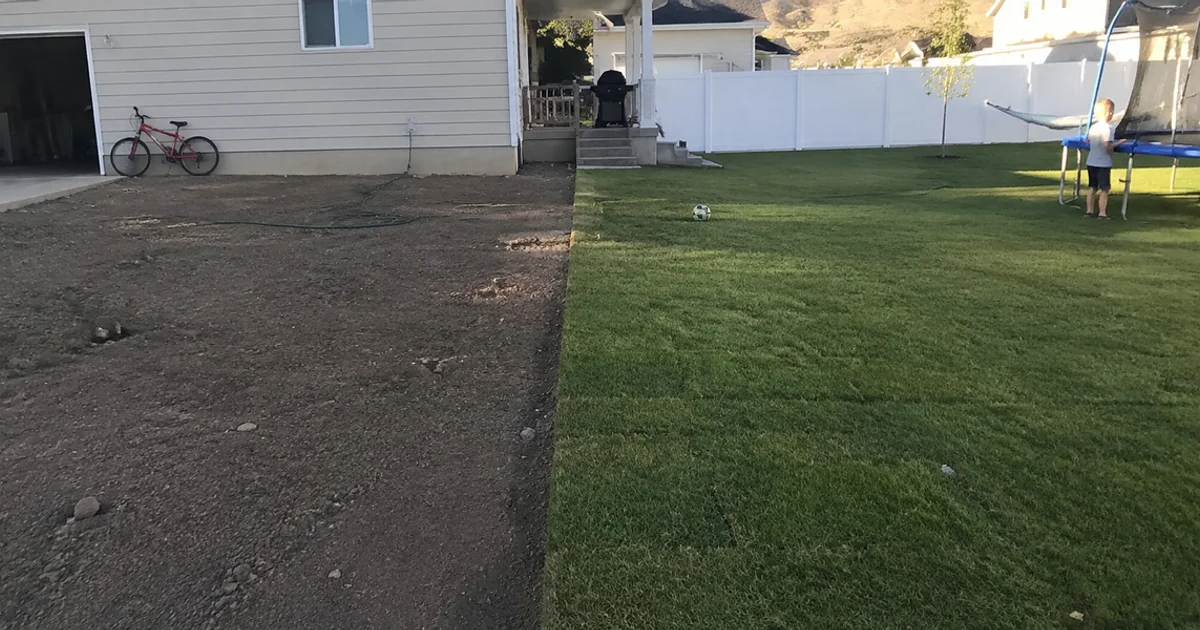
Screened topsoil goes in, gets tilled through, and is raked to the finish grade. Then sod arrives and goes down the same day it’s delivered, in tight staggered seams with no gaps, cut cleanly at bed lines and hardscape, and rolled so roots make contact with soil rather than sitting on an air gap.
The yard changes completely in a few hours at this stage, which is why it’s the photo everybody takes. The reason it stays looking like that is everything in stages three and four.
Stage six: planting, edging and gravel
Trees and shrubs go in with proper bed prep, placed for mature size rather than how they look on delivery day. Bed edging is set, steel, poly or concrete depending on the look and budget, then quality geotextile fabric, then decorative rock spread to a depth that actually blocks light and suppresses weeds.
Stage seven: walkthrough and handover
We program the controller for the current season, walk the finished yard with you, show you where the drip zones run and what each one waters, and leave a written watering plan covering the first few weeks and when to make the first cut.
What you decide, and when
- At the estimate: overall scope, front-only or whole property, hardscape in or out, sod versus seed. If budget is the constraint, this is the point to weigh a full-yard install against phasing the work.
- Before grading: any drainage concerns you already know about, and whether you want a swale or a wall on a grade change.
- Before irrigation: how much lawn versus water-wise bed you want, since that changes the zone layout.
- Before planting: species and placement: we bring recommendations, you make the call.
- At handover: nothing, other than following the watering plan.
How weather and season shift the sequence
Frozen ground stops grading and sod. Saturated ground ruins soil structure if you work it, so we wait. Extreme summer heat is workable but the establishment watering gets tighter and less forgiving. Spring and fall are the easiest windows, and they’re also the busiest, so booking ahead matters more than people expect.
None of that is a reason to wait indefinitely. It’s a reason to have the conversation early, so your date is real rather than optimistic. A free on-site visit is where that starts, and it costs nothing to find out where your yard actually stands.