
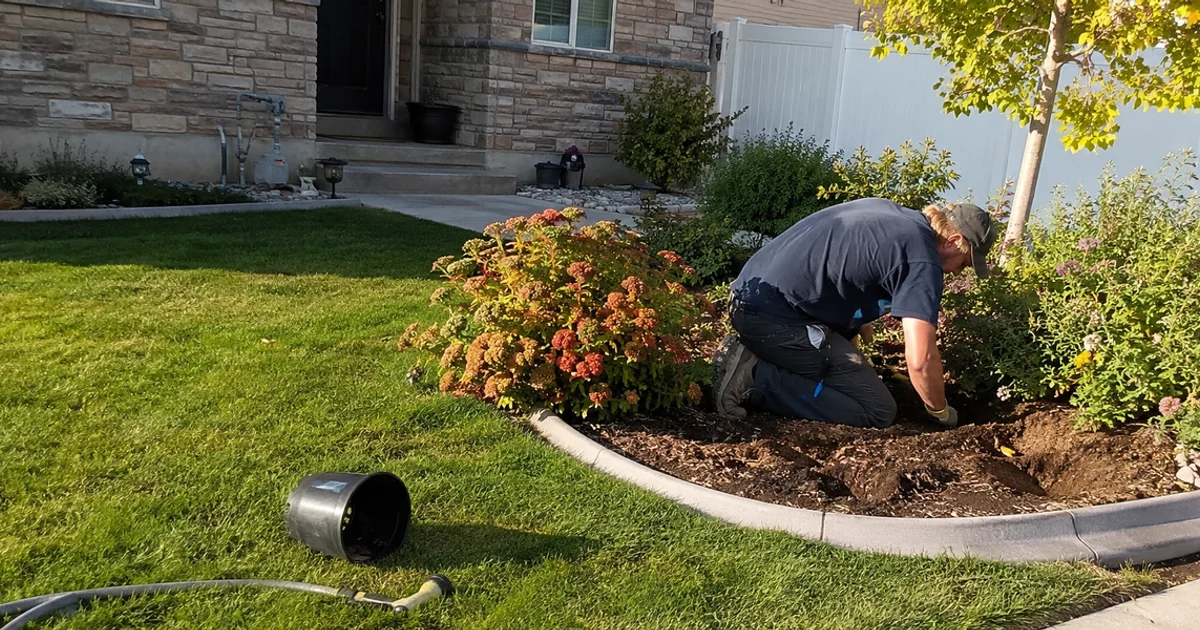
Spring: waking the yard up
Spring is the season that pays off most. What you do in March and April determines how much work the yard needs in July.
Irrigation startup. If you’re on secondary water, this happens when the district turns the supply back on. Charge the system gradually rather than at full pressure, clean the filter, then run every zone and watch it. Broken heads and split lines from winter show up here. Better now than in a heat wave.
Bed cleanup. Clear whatever accumulated over winter, cut back perennials and grasses that were left standing, and pull the first flush of weeds while they’re small and shallow.
Edge recut. Bed lines blur over winter. A recut edge is the fastest way to make a yard look cared for.
Mulch or gravel top-up. Check depth. Organic mulch will have thinned; top it back up before weed seeds find the gaps.
First feeding. Appropriate to your grass type and timing.
Tree and shrub check. Look for winter damage, broken branches and anything that’s shifted. Remove stakes from trees that have been in a full season.
Spring is also when we do most of our landscape maintenance catch-up visits, because a yard that’s been neglected shows it most obviously at this point.
Summer: keeping ahead of it
Summer maintenance is mostly about consistency, and about watching for problems rather than waiting for them.
Adjust irrigation with the season. Water demand in June is not water demand in September. Fixed timers that never change are how people end up with big bills and unhappy plants. Smart controllers handle this automatically.
Mow high. Longer grass shades its own root zone, reduces evaporation and outcompetes weeds. Cutting short in a Utah summer is actively counterproductive.
Watch for dry spots. They’re a coverage or component fault, not a signal to increase run time everywhere.
Keep weeding little and often. Fifteen minutes a week beats four hours in August.
Clean the filter. On secondary water this needs doing through the season, not once in spring.
Deadhead and light trim where the planting benefits from it.
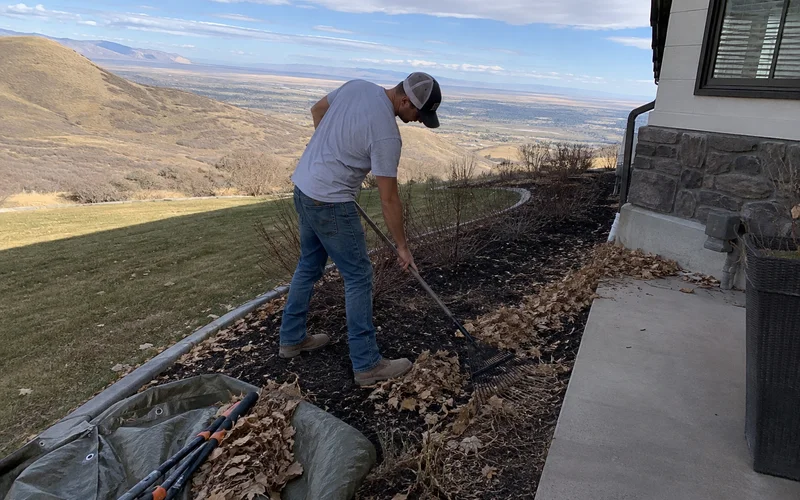
Fall: the season that actually matters
Fall is where skipping maintenance has real financial consequences.
Winterize the irrigation. Before the first hard freeze, and around your district’s secondary shutoff. Frozen lines, cracked valves and a destroyed backflow assembly cost far more than the blowout. See our guide on winterizing sprinklers for timing.
Clear leaf litter from beds. Left in place it mats down, holds moisture against crowns, and smothers what’s underneath.
Cut back where appropriate. Some perennials benefit from being left standing through winter for structure and wildlife; others are better cut back. It varies by plant.
Last deep watering. Trees and shrubs go into winter better with moisture available in the root zone. Do this before the water goes off.
Fall feeding where the grass type calls for it.
Book next spring’s startup while you’re arranging the blowout.
The one thing not to skip
Everything else on this list is about how the yard looks. Winterization is about whether your irrigation system survives to next season. If you do one thing in fall, do that.
Winter: mostly leave it alone
Not much happens, and that’s fine. Avoid walking on frozen turf, which damages the crowns. Keep an eye out for snow load breaking branches on evergreens. Plan any projects for spring, and book early. Spring schedules fill fast.
When to call a professional
Anything involving irrigation diagnosis, a system blowout, structural pruning on established trees, drainage problems, or a yard that has got far enough ahead of you that a normal weekend won’t reset it.
Routine weeding, mowing and light trimming are entirely reasonable to do yourself. The value in handing maintenance over is usually consistency. The yard stays ahead rather than cycling between tidy and overgrown.