
Why clearing comes first
Until an overgrown lot is cleared, you cannot see what you’re actually dealing with. The real grade is hidden. Drainage paths are invisible. Buried debris, old fence lines, abandoned structures and rock outcrops all stay unknown.
That’s why land clearing is step one on rural and neglected properties, and why any design or grading plan produced before clearing is provisional.
Stage one: walk and assess
We walk the property and look at what’s genuinely there:
- Vegetation density and type. Light scrub clears fast. Dense established growth with mature root balls does not.
- Tree size. Small volunteer trees come out easily. Larger established ones are a different job and may be worth keeping.
- What’s hidden. Old dumping, burn piles, buried fencing, abandoned equipment. Rural lots frequently have decades of accumulation.
- What stays. Mature trees worth keeping, fence lines, structures, and anything you’ve told us matters.
- Utilities. Public locates where required, plus anything private you know about. Rural properties often have irrigation, water lines or electrical runs nobody has a record of.
- Access. Whether machines can move around the property freely, which affects cost more than most factors.
Stage two: clear the vegetation
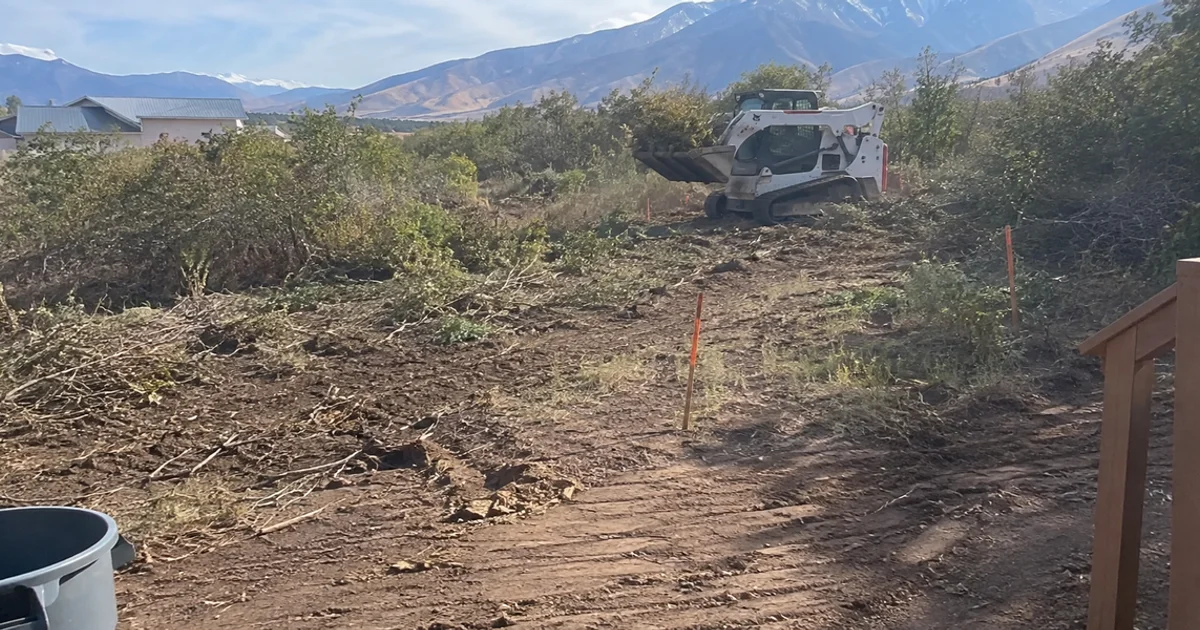
Skid steer and mini excavator work. Brush and scrub come out, unwanted trees are removed, and root balls get pulled where they would interfere with future grading, building or planting.
Root balls left in the ground are the one thing people are tempted to skip, and it’s a mistake on any area that will later be built on or graded. They decompose over years, and the ground above them settles into a dip.
Where you’re keeping mature trees, we work around them carefully, protecting root zones from machine traffic and avoiding damage to trunks.
Stage three: load and haul
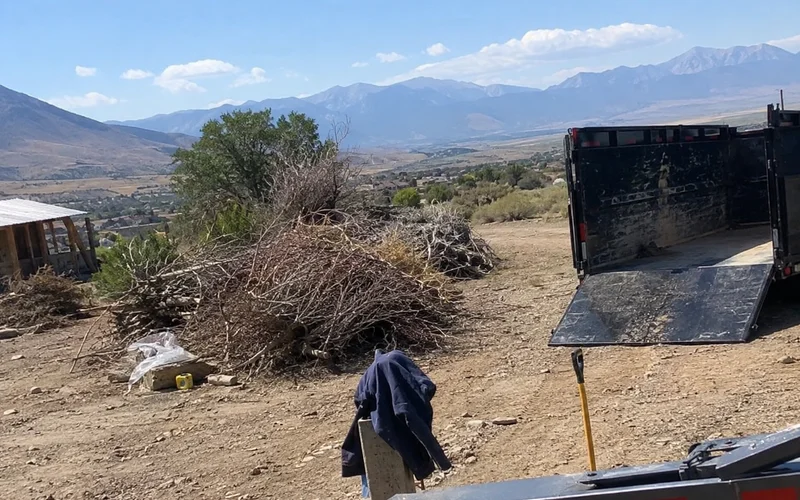
Everything gets stacked, loaded and hauled to appropriate disposal. Green waste and general debris go to different places, and the volume is a real line item on your estimate rather than something added later.
We don’t leave burn piles. Aside from being someone else’s problem next spring, dry stacked material on a rural lot in a Utah summer is a genuine fire consideration.
The standard we hold
One customer hired us after a previous contractor left three tons of debris behind. We hauled it. We would much rather never be the company that generated that story than save a few hours on a load-out.
Stage four: hand off to grading
With the site open, you can finally see the property. That’s when the real planning starts: the actual grade, where water moves, what the soil is, and what’s possible.
Grading follows immediately in most cases, because it’s the phase that determines everything built afterward. If we’re doing both, there’s no handover gap and no second mobilisation.
Permits and constraints
Clearing isn’t always unregulated. Depending on the jurisdiction and the property, there may be requirements around protected vegetation, proximity to waterways, erosion control on slopes, or setbacks.
We flag anything we believe applies at the estimate stage so you can confirm with the county before work begins. That’s much easier than resolving it retrospectively.
Timing
Clearing can be done in most conditions, which makes it a useful winter or shoulder-season job when sod and planting aren’t practical. Getting the clearing done in late winter means the property is ready for grading and installation as soon as spring conditions allow, and spring schedules fill fast.